SOC 101: Conformity as a Sociological Variable
Автор: James Cook
Загружено: 2015-02-19
Просмотров: 1515
Описание:
Most undergraduate textbooks treat conformity as a phenomenon of psychology, noting how uncanny it is that researchers Solomon Asch and Stanley Milgram were able to manipulate their subjects into agreeing with a majority in making a statement that was obviously untrue, or into apparently shocking people to death. My, my, aren't people such conformists, the standard treatment concludes.
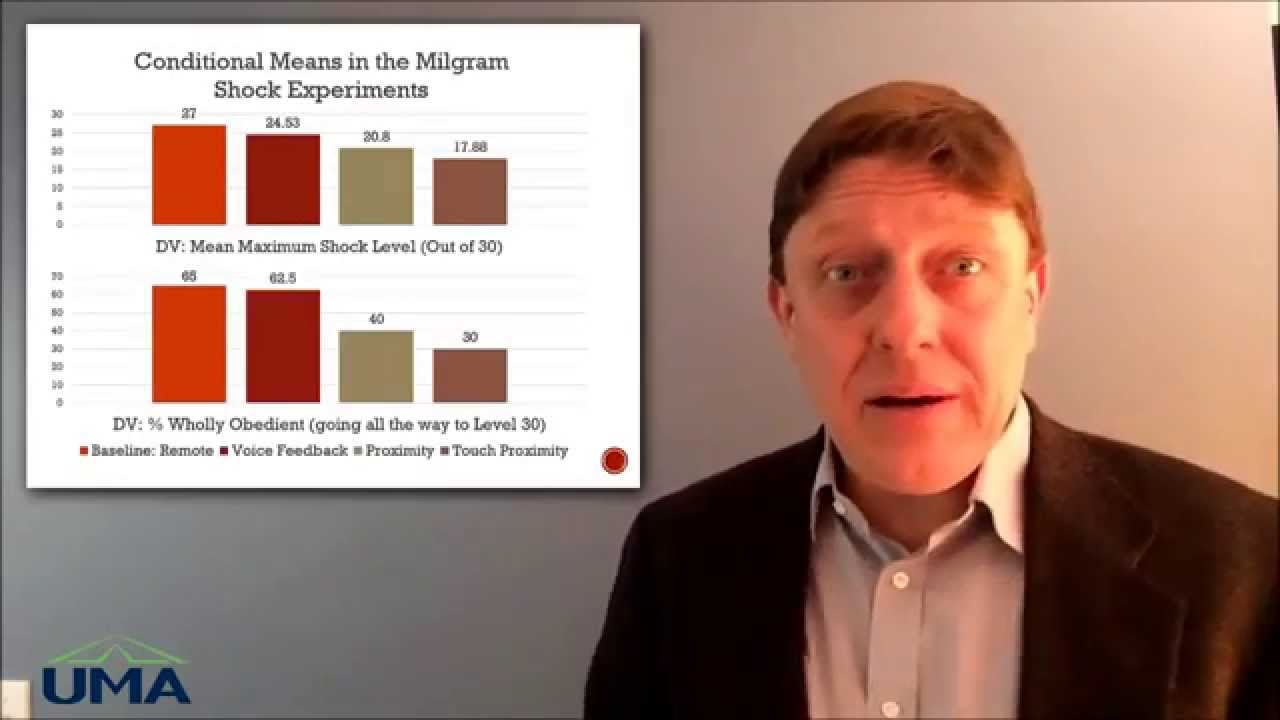
I believe this standard textbook treatment of conformity is misguided in two aspects. First, conformity is not a constant in Asch's and Milgram's studies. Some people do conform to expectations, but very importantly others do not. Conformity is a variable. Second, if conformity is a dependent variable, the independent variables in the Asch and Milgram studies are NOT psychological, and so the label of "psychological experiment" is inappropriate. At best, the experiments are social psychological, and the action here is all in the social. The individual-level psychological distress expressed by subjects in Asch's and Milgram's experiments was to no avail. What predicted conformity or non-conformity was the structure of the social situation engineered by the experiments.
In short, the conformity experiments involve sociological explanations for what appears to be a psychological phenomenon. If conformity is a sociological outcome involving independent variables of social structure, then understanding the elements of social structure that impact conformity is vitally important for the individual who wishes to avoid conformist pressures or for the social engineer who wishes to manufacture consent. This video, produced for an Introduction to Sociology class at the University of Maine at Augusta, presents those independent variables and considers their relevance to micro- and macro-level questions of social living.
Повторяем попытку...
Доступные форматы для скачивания:
Скачать видео
-
Информация по загрузке: