5 Evolutionary Remnants Every Horse Person Should Know (Especially #5)
Автор: The Equine Code
Загружено: 2026-02-02
Просмотров: 177
Описание:
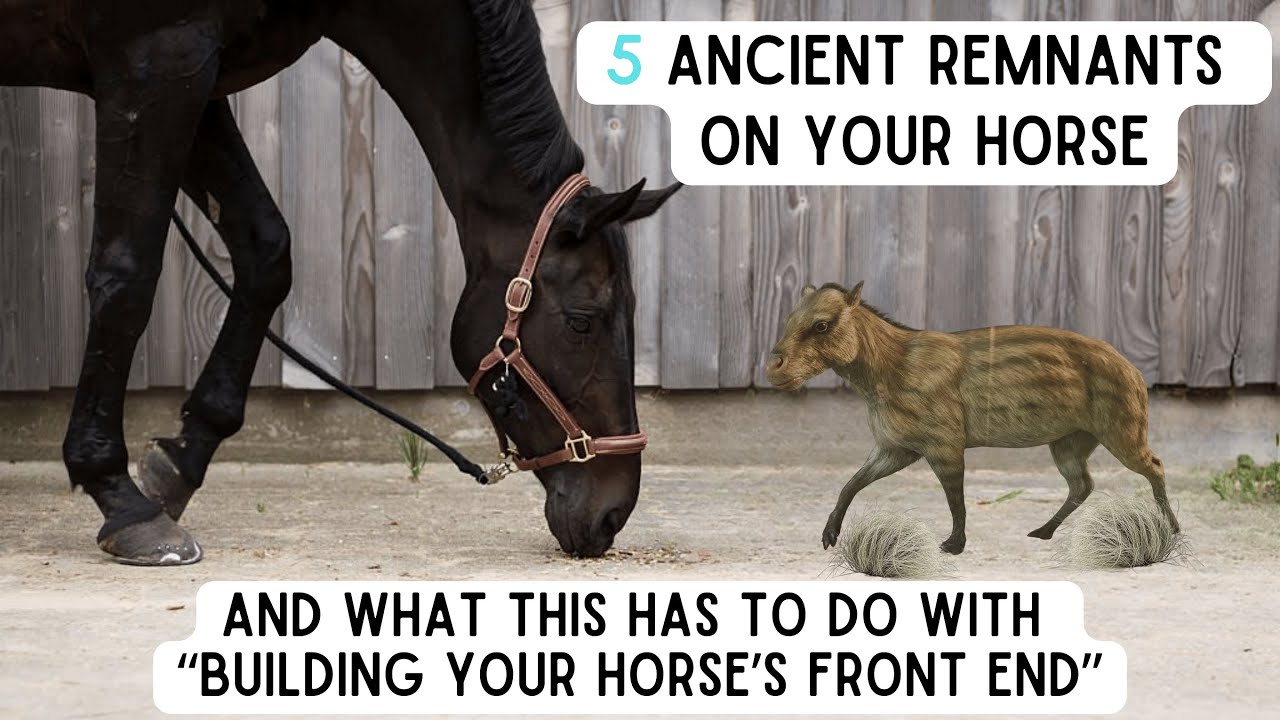
Your horse is carrying evolutionary secrets from 55 million years ago. In this video, I reveal 5 fascinating remnants that prove how horses evolved from small, multi-toed forest dwellers into the speed machines we know today.
🐴 THE 5 EVOLUTIONARY REMNANTS:
1. Chestnuts - The ghost toes on your horse's legs
2. Splint Bones - Hidden remnants of ancient side toes
3. The Single Hoof - Evolution's masterpiece of speed
4. Tooth Structure - Built-in grinders that never stop growing
5. Collarbone - The secret to your horse's stride (and WHY this matters for training!)
🔬 SCIENCE-BACKED INSIGHTS:
Discover why understanding these remnants isn't just fascinating - it's essential for proper training. Learn how the missing collarbone creates a muscular "sling" that affects your horse's ability to carry weight, engage their core, and move with true collection.
⏱️ TIMESTAMPS:
00:00 Hook
01:03 Introduction to Horse Evolution
01:48 REMNANT #1: Chestnuts – The Ghost Toes
02:55 REMNANT #2: Splint Bones – The Hidden Toes
04:16 REMNANT #3: The Single Hoof – The Ultimate Adaptation
05:31 REMNANT #4: Tooth Structure – The Grass Grinders
06:55 REMNANT #5: Collarbone – The Freedom to Run
07:59 Training Connection - Thoracic Sling
09:25 Conclusion
💡 WHY THIS MATTERS:
Understanding your horse's evolutionary biology helps you become a better rider and trainer. When you know WHY your horse's body works the way it does, you can train more effectively and with greater empathy.
---
📚 SCIENTIFIC SOURCES & REFERENCES:
*Horse Evolution:*
• MacFadden, B. J. (2005). "Fossil horses—evidence for evolution." Science, 307(5716), 1728-1730.
• Janis, C. M., Damuth, J., & Theodor, J. M. (2004). "The species richness of Miocene browsers, and implications for habitat type and primary productivity in the North American grassland biome." Palaeogeography, Palaeoclimatology, Palaeoecology, 207(3-4), 371-398.
*Chestnuts & Splint Bones:*
• Sondaar, P. Y. (1968). "The osteology of the manus of fossil and recent Equidae." Verhandelingen der Koninklijke Nederlandse Akademie van Wetenschappen, Afd. Natuurkunde, Tweede Reeks, 25(1), 1-76.
• Budras, K. D., Sack, W. O., & Röck, S. (2009). "Anatomy of the Horse." Schlütersche, 6th edition.
*Hoof Evolution & Biomechanics:*
• Thomason, J. J. (1985). "Estimation of locomotory forces and stresses in the limb bones of recent and extinct equids." Paleobiology, 11(2), 209-220.
• Mihlbachler, M. C., Rivals, F., Solounias, N., & Semprebon, G. M. (2011). "Dietary change and evolution of horses in North America." Science, 331(6021), 1178-1181.
*Dental Evolution:*
• Strömberg, C. A. (2006). "Evolution of hypsodonty in equids: testing a hypothesis of adaptation." Paleobiology, 32(2), 236-258.
• Famoso, N. A., Feranec, R. S., & Davis, E. B. (2013). "Occlusal enamel complexity in middle Miocene to Holocene equids (Equidae: Perissodactyla) of North America." PLoS One, 8(8), e71039.
*Thoracic Sling & Biomechanics:*
• Clayton, H. M., & Nauwelaerts, S. (2014). "Effect of blindfolding on centre of mass movement and ground reaction forces during walking." Equine Veterinary Journal, 46(S46), 16-17.
• Payne, R. C., Hutchinson, J. R., Robilliard, J. J., Smith, N. C., & Wilson, A. M. (2005). "Functional specialisation of pelvic limb anatomy in horses (Equus caballus)." Journal of Anatomy, 206(6), 557-574.
• Watson, J. C., & Wilson, A. M. (2007). "Muscle architecture of biceps brachii, triceps brachii and supraspinatus in the horse." Journal of Anatomy, 210(1), 32-40.
*General Equine Anatomy:*
• Dyce, K. M., Sack, W. O., & Wensing, C. J. G. (2010). "Textbook of Veterinary Anatomy." Saunders, 4th edition.
• Ashdown, R. R., & Done, S. H. (2011). "Color Atlas of Veterinary Anatomy, Volume 2: The Horse." Mosby, 2nd edition.
*Additional Reading:*
• Simpson, G. G. (1951). "Horses: The Story of the Horse Family in the Modern World and Through Sixty Million Years of History." Oxford University Press.
• Budiansky, S. (1997). "The Nature of Horses: Exploring Equine Evolution, Intelligence, and Behavior." Free Press.
CREDITS:
“Evolution of horses limbs”, by Anastasiya Kurilova, licensed under CC BY 4.0 (https://creativecommons.org/licenses/..., via Wikimedia Commons
Image: “Natural History Museum, London Hyracotherium” by Ricardalovesmonuments, licensed under CC BY‑SA 4.0
Source: https://commons.wikimedia.org/wiki/Fi...
License: https://creativecommons.org/licenses/...
---
#HorseEvolution #EquineScience #HorseBiology #EquineAnatomy #HorseTraining #TheEquineCode #EvolutionaryBiology #HorseFacts #EquestrianEducation #HorseOwner
---
🔔 SUBSCRIBE for weekly videos about horse science, behavior, and training
📤 SHARE with fellow horse lovers
---
DISCLAIMER: This content is for educational purposes. Always consult with qualified equine professionals for specific training or veterinary advice.
Повторяем попытку...
Доступные форматы для скачивания:
Скачать видео
-
Информация по загрузке: