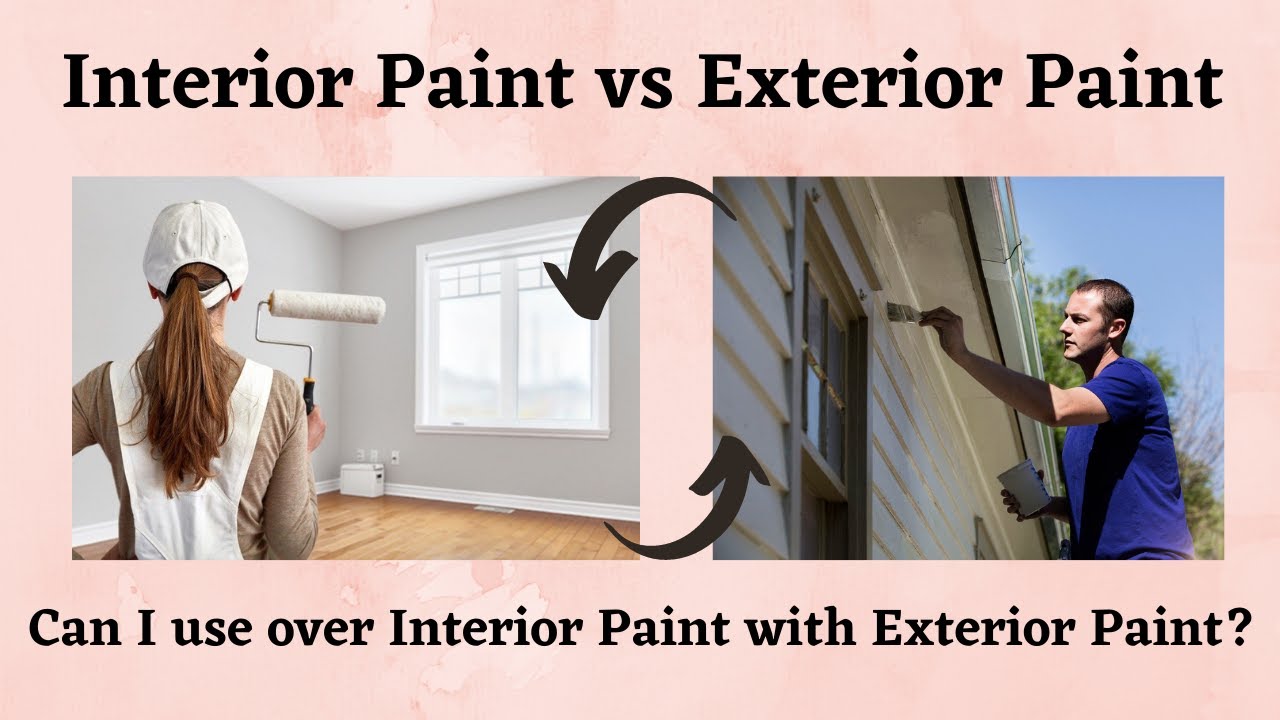
Interior paint vs Exterior paint | Can be they Interchanged?| Exterior paint vs Interior paint |
Автор: The Sarang Builders
Загружено: 2022-02-25
Просмотров: 1298
Описание:
Interior and exterior paints have different formulations designed for their specific environments. While they may look similar, their composition and durability vary significantly.
*Key Differences:*
1. *Binders & Durability*
**Interior Paint**: Designed for smooth, washable surfaces with less exposure to harsh weather. It prioritizes stain resistance and easy cleaning.
**Exterior Paint**: Contains flexible resins to withstand temperature changes, moisture, and UV rays. It resists fading, peeling, and mildew.
2. *Additives & Resistance*
**Interior Paint**: Low or no additives for mold/mildew resistance since interiors are controlled environments.
**Exterior Paint**: Enhanced with additives to fight mold, mildew, and extreme weather conditions.
3. *Volatile Organic Compounds (VOCs) & Safety*
**Interior Paint**: Lower VOCs for safer indoor air quality.
**Exterior Paint**: Higher VOCs for durability but may emit strong odors.
---
*Can They Be Interchanged?*
*Using Exterior Paint Indoors?* 🚫 *Not Recommended*
High VOCs can be harmful to indoor air quality.
Stronger fumes and slow curing time make it unsafe for enclosed spaces.
*Using Interior Paint Outdoors?* 🚫 *Not Recommended*
Lacks weather-resistant properties, leading to quick fading, cracking, and peeling.
Cannot handle moisture or temperature changes effectively.
*Conclusion*
For the best results and longevity, use *interior paint for indoor spaces* and *exterior paint for outdoor surfaces**. If you need a paint that works in both settings (like in a covered patio or garage), look for **specialized multi-surface paints* that are formulated for both environments.
Повторяем попытку...
Доступные форматы для скачивания:
Скачать видео
-
Информация по загрузке: