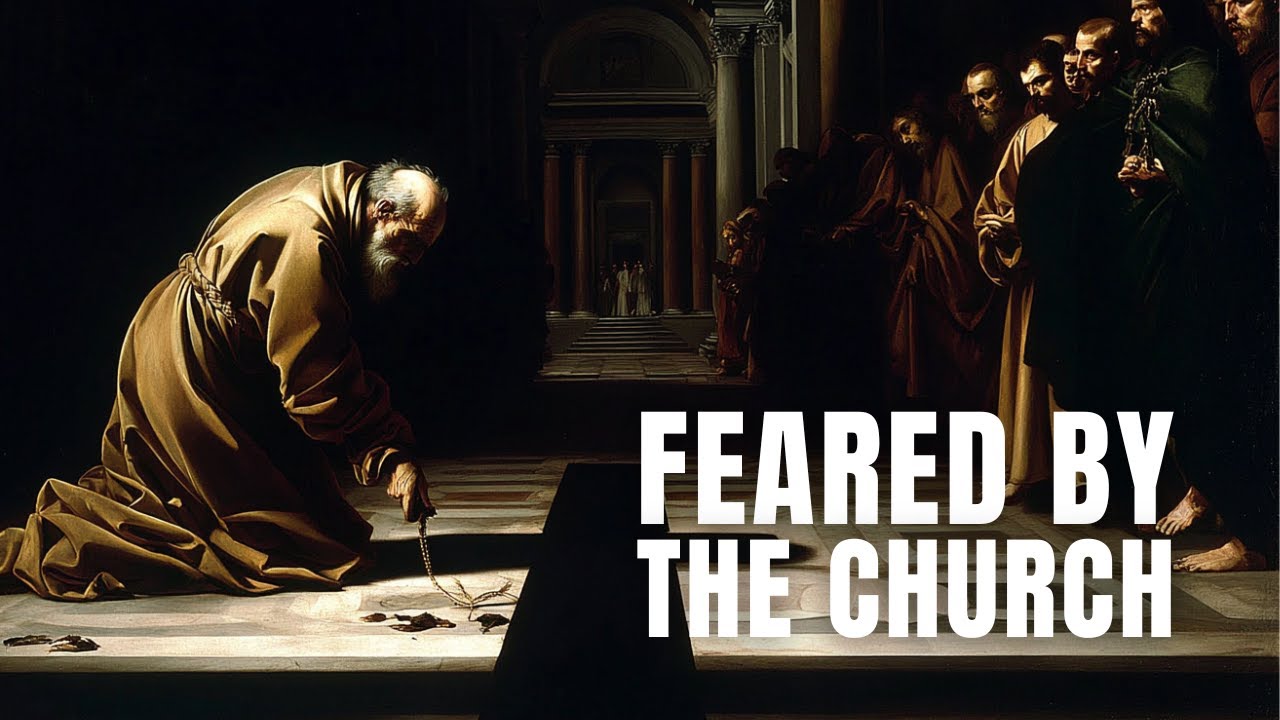
Clement of Alexandria: When Faith Met Greek Philosophy
Автор: Vox Temporis
Загружено: 2026-02-22
Просмотров: 4
Описание:
In a time when Christian orthodoxy was still being shaped, one man dared to say what others wouldn’t: that Greek philosophy and Christian faith were not enemies—but allies. Clement of Alexandria stands as one of the earliest Christian thinkers to challenge the division between reason and revelation, drawing fire and admiration alike. This video explores the depth and daring of his ideas—ideas that shaped the path of Christian theology but also led to his exclusion from its official story.
0:00 – Clement’s Bold Path Begins
We begin with Clement’s early life, likely born around 150 AD. Little is known about his childhood, but what is clear is the restless search that defined his youth—a journey that took him across the Mediterranean, through cities like Athens and Jerusalem, in pursuit of teachers who could answer both his spiritual and intellectual questions. That journey led him to Alexandria, the cultural crossroads of the ancient world.
1:10 – From Student to Leader of the Alexandrian School
There, he studied under Pantaenus, a former Stoic turned Christian philosopher. Under his mentorship, Clement not only mastered scripture but also developed a powerful framework for connecting biblical truths with classical thought. When Pantaenus stepped down or passed away, Clement assumed leadership of the famed catechetical school of Alexandria—a place that welcomed the curious and the committed alike, blending inquiry with devotion.
2:52 – Writings That Shaped Christian Thought
Clement’s major works—Protrepticus, Paedagogus, and Stromata—revealed his vision. In Protrepticus, he addressed pagan audiences, inviting them toward faith. Paedagogus guided new believers in Christian living, while Stromata explored the depths of theology and ethics. Through these writings, he argued that Christ is the true Logos—the divine reason behind all existence—and that philosophy, far from being a threat, prepared the soul to receive the Gospel.
4:23 – The Logos as Bridge Between Worlds
Clement’s tone was never harsh. He invited debate, emphasized the value of learning, and viewed wisdom as a path rather than a fixed destination. Knowledge without virtue, he warned, is hollow; virtue without thought, rigid. His teaching positioned Christianity not in opposition to reason, but as its natural fulfillment. This radical synthesis laid the groundwork for later thinkers, most notably his student, Origen.
5:13 – Exile, Influence, and Final Years
Despite his contributions, Clement’s openness to pagan ideas eventually proved too controversial. During the persecution under Emperor Septimius Severus, he likely fled the city. He died around 215 AD, outside the canon of saints, largely forgotten by later doctrinal authorities. Yet his dangerous wisdom lived on—in texts that still provoke and inspire, and in the ongoing dialogue between faith and reason.
Let this journey through Clement’s life challenge your assumptions. Can faith grow through questioning? Can reason deepen belief? Clement thought so—and the world is still grappling with his answer.
Повторяем попытку...

Доступные форматы для скачивания:
Скачать видео
-
Информация по загрузке: