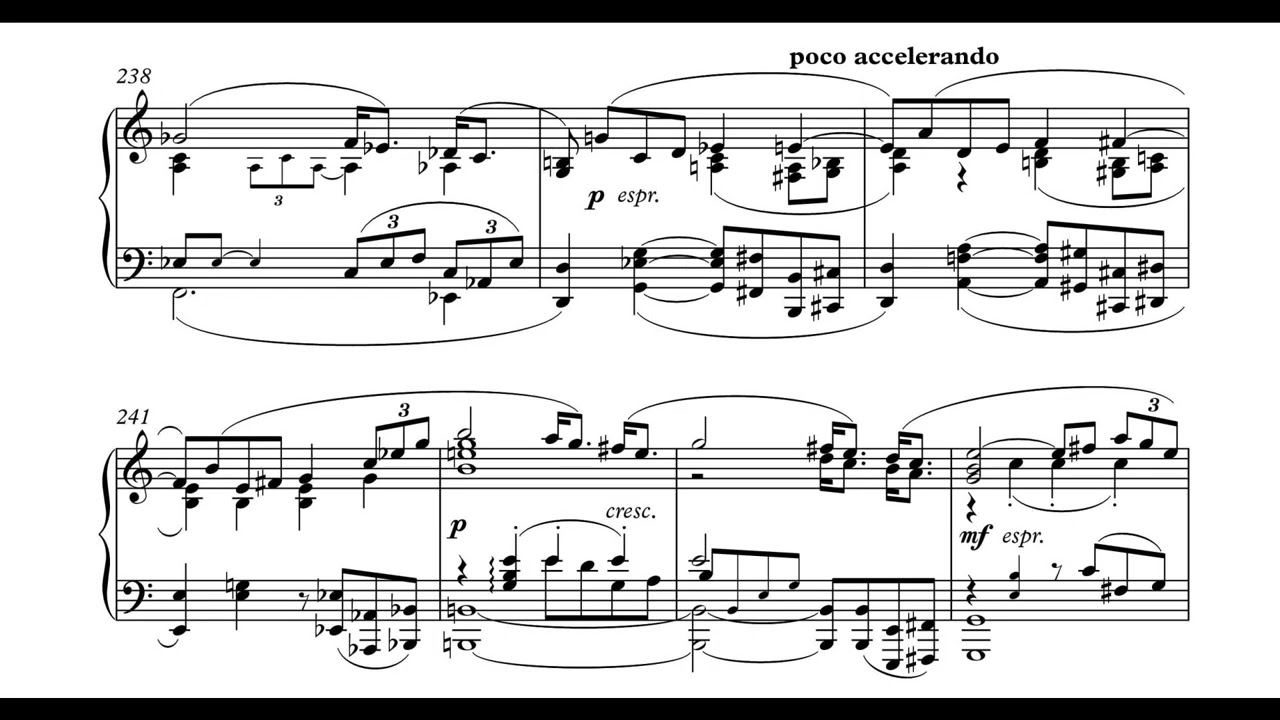
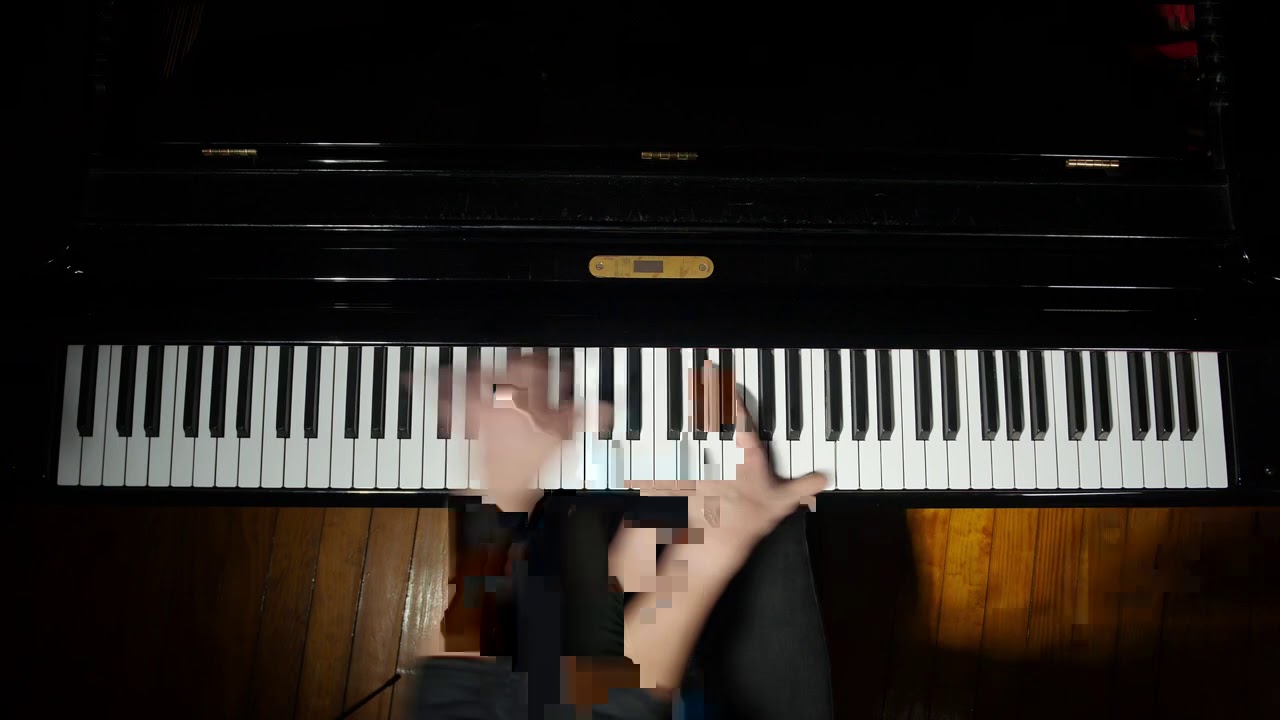
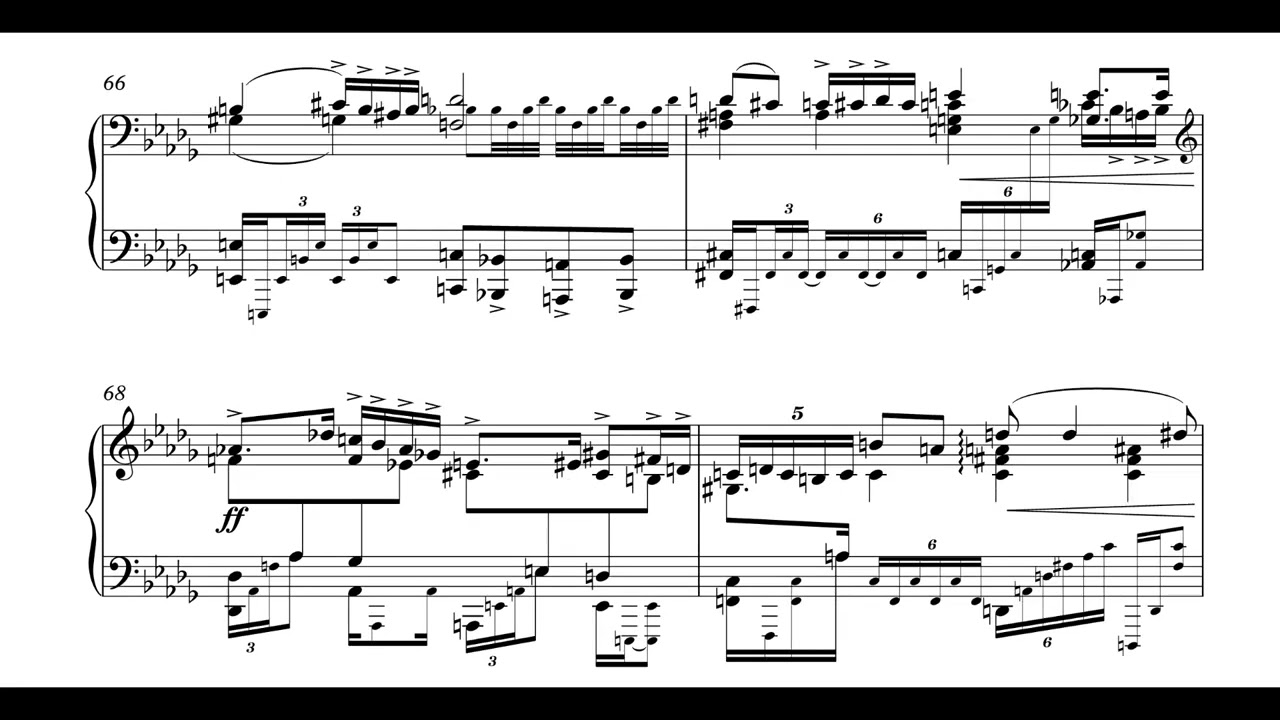
Mahler - 3rd Symphony, 6th mvt (piano solo)
Автор: Iain Farrington
Загружено: 2021-06-14
Просмотров: 13958
Описание:
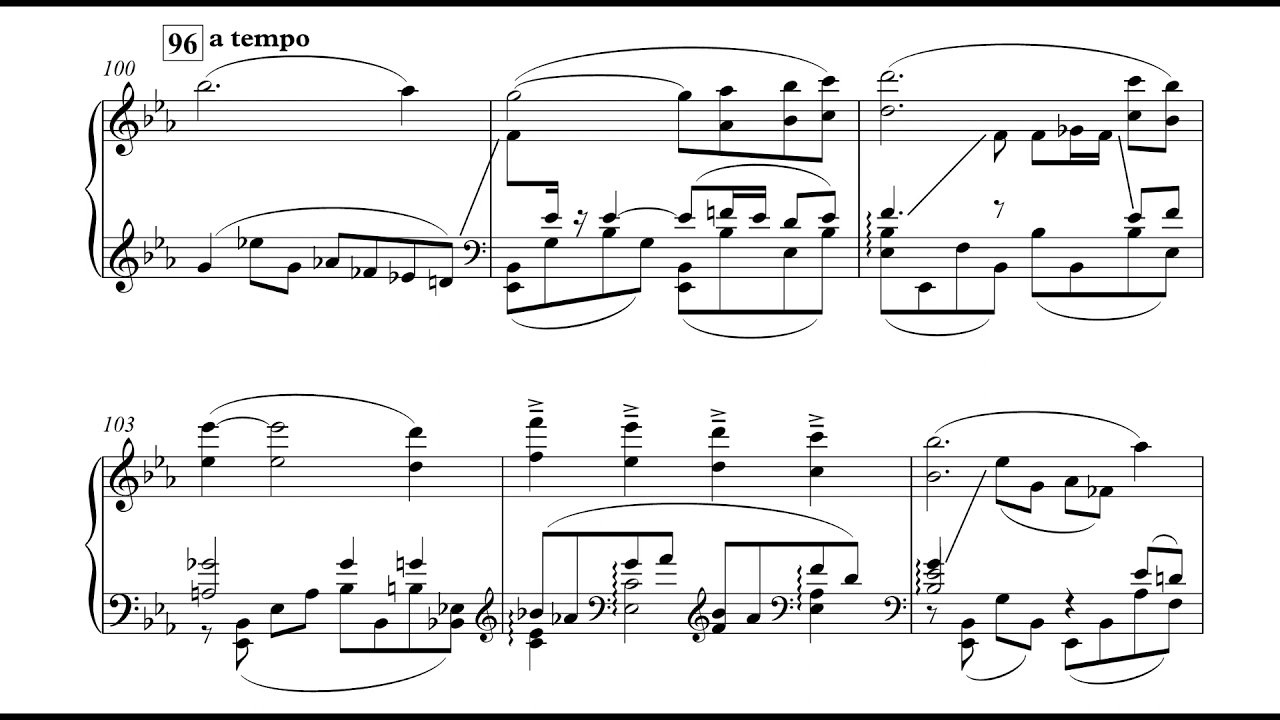
Gustav Mahler - 3rd Symphony, 6th movement (piano solo) with score
Langsam. Ruhevoll
Arranged and performed by Iain Farrington
Published by Aria Editions: https://www.ariaeditions.org/store/c7...
http://www.iainfarrington.com
Gustav Mahler (1860-1911) composed his 3rd Symphony in 1893-6 while he was chief conductor at the Hamburg Stadttheater. It was premiered in Krefeld, Germany in 1902. Mahler gave each movement a programmatic title, although these were only shared with friends:
A Summer's Midday Dream
Part One
Introduction: Pan awakens.
1. Summer marches in (Bacchic procession)
Part Two
2. What the flowers of the meadow tell me
3. What the animals of the forest tell me
4. What man tells me
5. What the angels tell me
6. What love tells me
Mahler also described the piece as 'a major work, liberally reflecting the whole world – one is oneself only, as it were, an instrument played by the whole universe... In it Nature herself acquires a voice and tells secrets so profound that they are perhaps glimpsed only in dreams!' The third movement is derived from Mahler's song 'Ablösung im Sommer', a setting of a text from Des Knaben Wunderhorn. Mahler draws on the Wunderhorn for the text of the fifth movement, here presented either for choirs and soloist, or in Mahler's own version for soprano solo. He considered adding a seventh movement, the Wunderhorn setting 'Wir geniessen die himmlischen Freuden', which ended up as the last movement of his Fourth Symphony.
An arrangement for solo piano of Mahler's work brings the music close to its compositional origins. In each one of his composing 'huts', Mahler had a piano at his disposal. His sketches are often on two or three staves of music, and can be read directly on the piano. Mahler often played his latest works on the piano to friends and colleagues, and his early training as a pianist left him with a good virtuoso technique. By performing the music in this way, it enabled the first listeners to hear the melodies and harmonies unadorned.
Mahler also 'recorded' some of his music onto piano rolls: the first movement of the 5th symphony, the last movement of the 4th symphony and several songs. These demonstrate Mahler's 'orchestral' piano technique, full in texture and tone, carrying the general sweep and drama of the music.
This solo piano arrangement of Symphony No. 3 is not just a literal transcription of the notes onto two staves, but a transformation into pianistic texture of the full sonic landscape. Hearing Mahler's music in this way allows us to take in the content as 'pure' music. In Mahler's lifetime, piano duet versions of the Symphonies were published, but very few for solo piano. This arrangement allows one player the opportunity to perform and study them.
Повторяем попытку...

Доступные форматы для скачивания:
Скачать видео
-
Информация по загрузке:



![Wagner/Liszt - Tannhäuser Overture (Audio+Sheet) [Cziffra]](https://imager.clipsaver.ru/13zFjZ7OLDw/max.jpg)




![R. Schumann, J. Brahms, A. Dietrich - F-A-E Sonata [With score]](https://imager.clipsaver.ru/QoyziXiaqDo/max.jpg)