China’s $200 Billion Low-Altitude Economy: Are Air Taxis Ready for Takeoff?
Автор: China Gateway
Загружено: 2025-10-15
Просмотров: 128
Описание:
China is betting big on the future of flight. The country’s Low-Altitude Economy (LAE), fueled by ambitious industrial policy, is projected to reach $200 Billion (1.5 trillion RMB) by 2025. But is this unprecedented speed coming at the expense of safety and economic stability?
In this deep-dive analysis, we explore how China achieved a major global first in the burgeoning air taxi market and what that means for the global competition, regulatory standards, and the Chinese economy itself.
🚀 China's Unstoppable Speed and Global Firsts
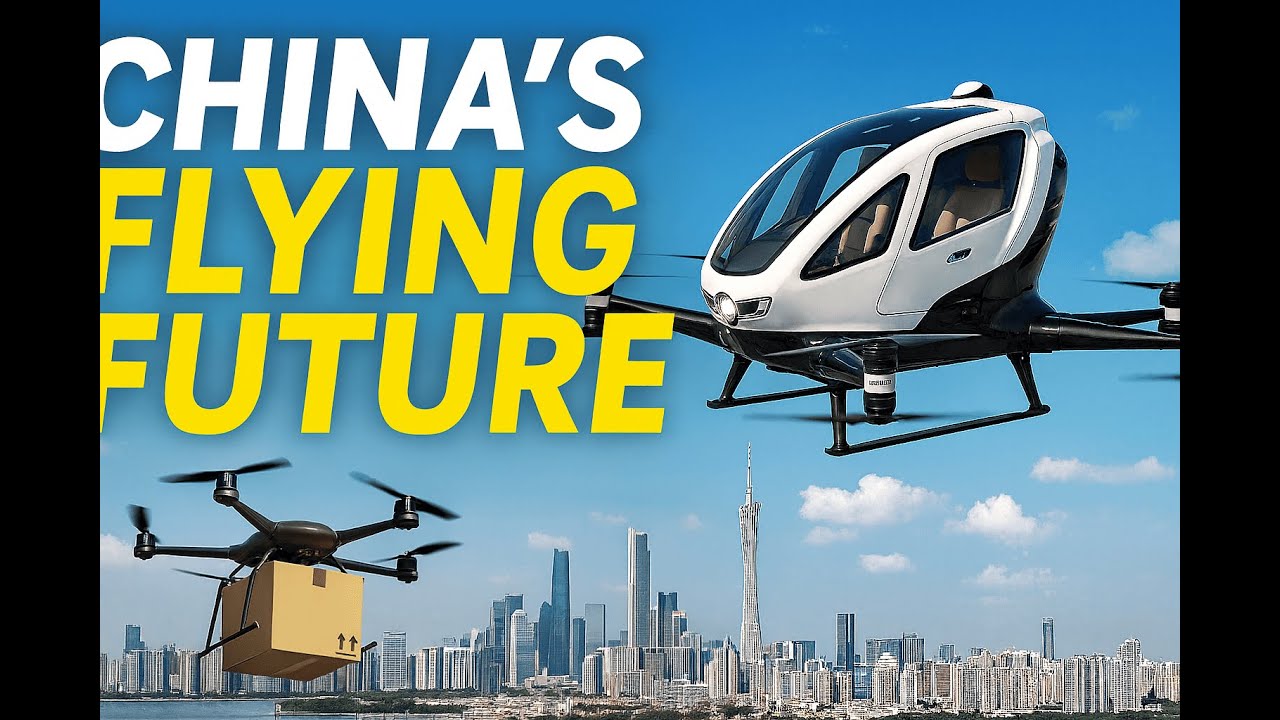
Chinese company EHang has become the first globally to secure full operational qualifications for its crewed aerial vehicle (eVTOL). This milestone signifies China’s shift from mere pilot projects to formal commercialization, making air travel a three-dimensional reality for short urban commutes.
While drone technology (UAVs) remains "sci-fi" in many parts of the world, it is becoming routine in China. We show how companies like Meituan in Shenzhen are already completing millions of delivery orders via drone, often at costs competitive with manual delivery.
🚨 Policy Over Safety? The Regulatory Divide
China’s breakneck speed is driven directly by national policy, placing LAE alongside AI and quantum computing as a key development engine. The goal? To replicate the success of the EV industry and secure global market dominance.
We compare the regulatory paths of the US and China. While US companies like Joby must adhere to the traditional certification process under the FAA (a process that can take many years), EHang secured full certification in just five years. We investigate if China’s approach is "flexible" or if the rapid approval process constitutes "regulatory watering down," especially considering the lack of specific airworthiness technical standards for these new aircraft.
⚠️ Hidden Costs and the Overcapacity Trap
Despite possessing clear advantages in battery and supply chain production, China’s rapid expansion is not without immense risk.
• Safety Trade-Offs: Unlike the global mainstream (including Joby), which uses triple redundancy for flight control and power systems to enhance safety, EHang continues to use only single or double redundancy. Current certified vehicles are often limited in range and capacity, arguably functioning more as expensive tourist toys than viable air taxis.
• The Paradox of Success: China continues to create powerful "star industries" (drones, EVs, solar), yet the public faces growing issues of consumer downgrading and unemployment. We analyze the core economic paradox: macro success is built on heavy policy support that requires immense cost, resource waste, and market distortion. Is the low-altitude economy destined for the same overcapacity crisis currently plaguing other Chinese industries?.
Watch to find out if China's aggressive push into the Low-Altitude Economy is a masterstroke of industrial policy or a costly race to the bottom!
--------------------------------------------------------------------------------
Key Topics/Tags: #ChinaEconomy #AirTaxi #EHang #eVTOL #DroneTechnology #LowAltitudeEconomy #ChinesePolicy #JobyAviation #RegulatoryArbitrage #IndustrialPolicy #FutureofFlight
Повторяем попытку...
Доступные форматы для скачивания:
Скачать видео
-
Информация по загрузке: