Penetrating Trauma: Do You Know How to Respond in Emergencies?
Автор: Australia Wide First Aid
Загружено: 2024-12-05
Просмотров: 367
Описание:
How much do you know about responding to penetrating trauma?
Take this quiz to test your knowledge on how to handle emergencies involving puncture wounds. For more detailed information, visit:
https://www.australiawidefirstaid.com...
What is considered a penetrating trauma?
a) A blunt force injury
b) A sharp object puncturing the skin
c) A sprain or strain
d) A broken bone
Correct Answer: b) A sharp object puncturing the skin
Explanation: Penetrating trauma occurs when an object, such as a knife or bullet, breaks the skin and enters the body.
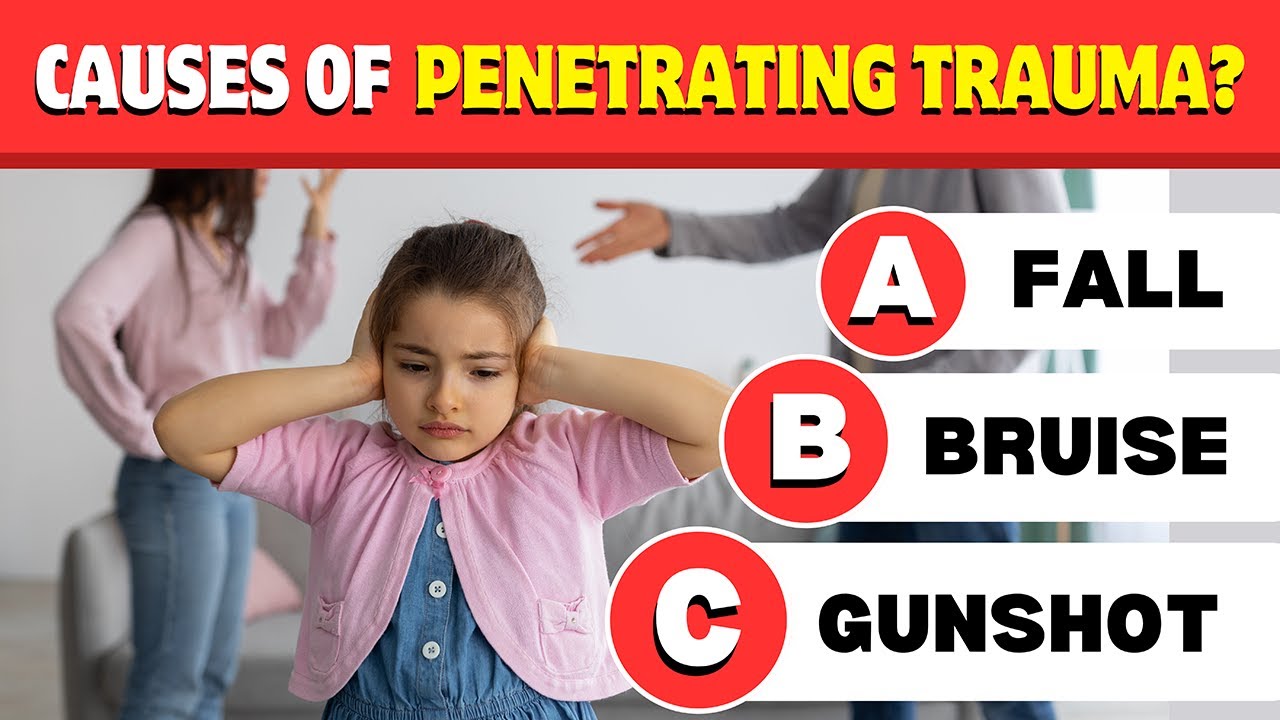
Which of the following is an example of penetrating trauma?
a) A sprained ankle
b) A gunshot wound
c) A bruise from a fall
d) A fractured bone
Correct Answer: b) A gunshot wound
Explanation: A gunshot wound is a classic example of penetrating trauma as the bullet pierces the skin and underlying tissues.
What is the immediate first aid step for a penetrating trauma?
a) Remove the object
b) Apply direct pressure to the wound
c) Pour water on the wound
d) Apply a band-aid
Correct Answer: b) Apply direct pressure to the wound
Explanation: Applying direct pressure helps control bleeding, which is crucial in cases of penetrating trauma.
Which of these should you NOT do when treating penetrating trauma?
a) Call emergency services
b) Stabilize the object if it's still in the body
c) Remove the penetrating object
d) Keep the injured person still
Correct Answer: c) Remove the penetrating object
Explanation: Never remove the object, as this can increase bleeding and cause more damage.
What is a potential complication of penetrating trauma?
a) Infection
b) Hair loss
c) Muscle cramps
d) Nausea
Correct Answer: a) Infection
Explanation: Penetrating trauma can introduce bacteria into the body, making infection a common complication.
What type of bleeding is commonly associated with penetrating trauma?
a) Internal bleeding
b) Capillary bleeding
c) Arterial or venous bleeding
d) Superficial bleeding
Correct Answer: c) Arterial or venous bleeding
Explanation: Penetrating trauma can cause significant arterial or venous bleeding, which requires immediate attention.
How should you position someone who has suffered penetrating trauma to the chest?
a) Laying flat on their back
b) Sitting or semi-reclined
c) Standing upright
d) Laying face down
Correct Answer: b) Sitting or semi-reclined
Explanation: Positioning someone sitting or semi-reclined helps prevent further injury and allows for easier breathing.
When should you attempt to remove a penetrating object from the body?
a) As soon as possible
b) Only if instructed by a medical professional
c) If the object is small
d) If the bleeding stops
Correct Answer: b) Only if instructed by a medical professional
Explanation: Removal of the object should only be done by medical professionals to prevent further injury and excessive bleeding.
What can be used to stabilize an object that has caused penetrating trauma?
a) Cotton swabs
b) Bandages and padding
c) Plastic wrap
d) Water
Correct Answer: b) Bandages and padding
Explanation: Bandages and padding can be used to stabilize the object and prevent it from moving, which can reduce the risk of further damage.
#penetratingtrauma #firstaid #traumacare #emergencies #injuryresponse #health #safety
Повторяем попытку...
Доступные форматы для скачивания:
Скачать видео
-
Информация по загрузке:


![Penetrating Injury by Dr. Saurabh Dixit - PrepLadder [Surgery NEET SS]](https://image.4k-video.ru/id-video/oXB0PzlET2Q)


![Wstawaki [#2140] Zmiana](https://image.4k-video.ru/id-video/9bCwtIEGcss)