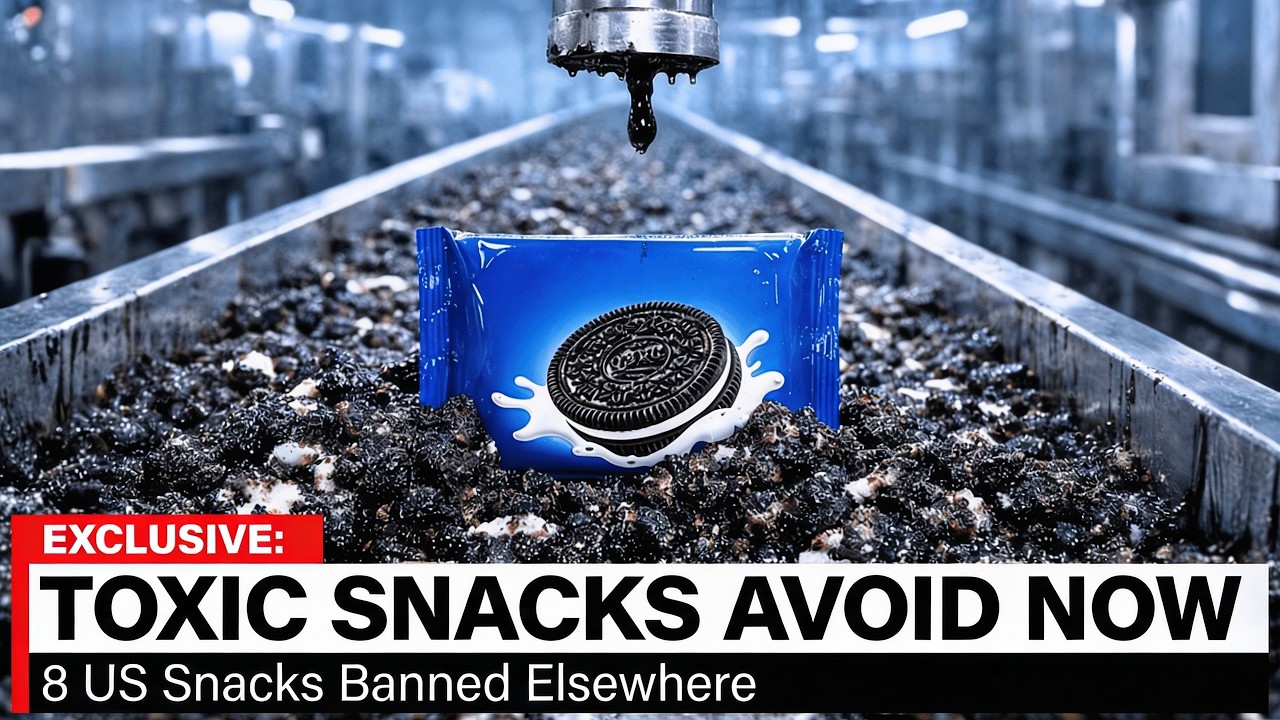
What's In Your Snacks? 8 Additives Banned in Europe But Legal in the US
Автор: Shelf Warning
Загружено: 2026-02-28
Просмотров: 115
Описание:
From Red Dye No. 3 to brominated vegetable oil, many ingredients commonly found in American processed foods are banned or restricted in other countries. In this video, we examine 8 categories of food additives, what the research says about them, and why regulatory approaches differ so dramatically between the United States and the rest of the world.
This is an educational breakdown of the science, the regulations, and the ongoing debate about food safety.
⏱️ TIMESTAMPS:
0:00 - Introduction: The US vs Global Food Regulation Gap
2:15 - How the GRAS System Works
4:30 - Red Dye No. 3 (Erythrosine)
5:00 - Brominated Vegetable Oil (BVO)
06:45 - Potassium Bromate & Azodicarbonamide
07:00 - Titanium Dioxide
08:45 - Artificial Food Dyes (Yellow 5, Red 40, Blue 1, etc.)
09:00 - BHA and BHT Preservatives
09:15 - Propylparaben
09:30 - Olestra (Olean)
10:05 - State-Level Bans: California, West Virginia & Others
11:48 - Conclusion: What This Means for Consumers
📊 KEY STATISTICS:
→ 756 of 766 new chemicals (99%) added to US food supply since 2000 bypassed FDA review
→ Red Dye No. 3 was banned in cosmetics in 1990 but remained in food until 2025
→ The EU requires proof of safety BEFORE additives enter the food supply
→ California's Food Safety Act bans 4 additives effective 2027
→ Over two dozen US states are considering synthetic dye legislation
ADDITIVES COVERED:
AdditiveStatus in USBanned/Restricted InRed Dye No. 3Banned Jan 2025 (phase-out by 2027-28)EU, AustraliaBrominated Vegetable OilBanned July 2024EU, Japan, IndiaPotassium BromateLegalCanada, UK, EU, China, PeruAzodicarbonamideLegalEU, Australia, UKTitanium DioxideLegalEU (banned 2022)Yellow 5, Yellow 6, Red 40Legal (voluntary phase-out announced)Requires warnings in EUBHA/BHTLegal (under review)EU, UK, JapanPropylparabenLegal (banned in CA 2027)EUOlestraLegalUK, Canada
TOPICS EXPLAINED:
The FDA's "Generally Recognized As Safe" (GRAS) system
How US food regulation differs from the EU's precautionary approach
The science behind each additive and associated health concerns
Recent FDA actions on Red Dye No. 3 and BVO
State-level food safety legislation (California Food Safety Act, West Virginia dye ban)
Industry responses to reformulation pressure
REGULATORY UPDATES MENTIONED:
January 2025: FDA bans Red Dye No. 3 (phase-out period through 2027-28)
July 2024: FDA bans Brominated Vegetable Oil
April 2025: FDA announces voluntary phase-out of petroleum-based dyes
September 2024: California School Food Safety Act signed
2027: California Food Safety Act takes effect
SOURCES & REFERENCES:
FDA announcements on Red Dye No. 3 and BVO
European Food Safety Authority (EFSA) titanium dioxide assessment
California Office of Environmental Health Hazard Assessment (OEHHA) 2021 review on synthetic dyes
International Agency for Research on Cancer (IARC) classifications
Center for Science in the Public Interest (CSPI) reports
Environmental Working Group (EWG) research
DISCLAIMER:
This video is for educational and informational purposes only. We present information from regulatory agencies, published research, and expert sources to help viewers understand food additive policies. This is not medical or dietary advice. Individual sensitivities vary—consult a healthcare professional for personalized guidance. Regulations and product formulations change over time; verify current information before making decisions.
Subscribe for more evidence-based breakdowns on food science, nutrition research, and consumer health topics. We focus on documented facts, not speculation.
Discussion: Were you aware of the regulatory differences between the US and other countries? Which of these additives surprised you most? Share your thoughts below.
#FoodAdditives #FoodSafety #RedDye3 #BannedIngredients #USvsEurope #ProcessedFood #FDARegulation #TitaniumDioxide #ArtificialDyes #Shelfwarning
Повторяем попытку...
Доступные форматы для скачивания:
Скачать видео
-
Информация по загрузке:


![Эффект Джанибекова [Veritasium]](https://imager.clipsaver.ru/N9HlQ-XVnFk/max.jpg)





![Почему взрываются батарейки и аккумуляторы? [Veritasium]](https://imager.clipsaver.ru/a3-3R9zwyGY/max.jpg)