Stop Making This Deep Mulch Mistake! (The RIGHT Way to Plant)
Автор: Harvest Homestead Hacks
Загружено: 2025-12-11
Просмотров: 18
Описание:
Ready to unlock the secret to a healthier, easier, and more productive vegetable garden? 🌱 Deep mulch gardening is a total game-changer, but so many people are afraid to plant directly into it. In this video, we're demystifying the entire process, busting common myths, and showing you just how simple it is to get incredible results with less work!
In this video, you'll discover:
(00:45) The 5 simple steps to perfectly plant seedlings in deep mulch.
(02:30) How to successfully sow tiny seeds (like carrots!) in a mulched bed.
(04:15) The truth about the nitrogen myth and why mulch WON'T starve your plants.
(05:50) The #1 Golden Rule you must follow for a thriving mulch garden.
Deep mulch is like a protective blanket for your garden's soil. It's one of the most powerful tools you can use to create a resilient and low-maintenance vegetable patch. A thick layer of organic material like wood chips, straw, or shredded leaves works tirelessly to suppress weeds, which means less back-breaking work for you! It also does a fantastic job of retaining precious soil moisture, so you'll find yourself watering far less often, even during hot spells. Over time, as this mulch breaks down, it constantly feeds the soil life, improving the soil's structure and fertility without you having to lift a finger. It's a true win-win for both the gardener and the garden. 🌿
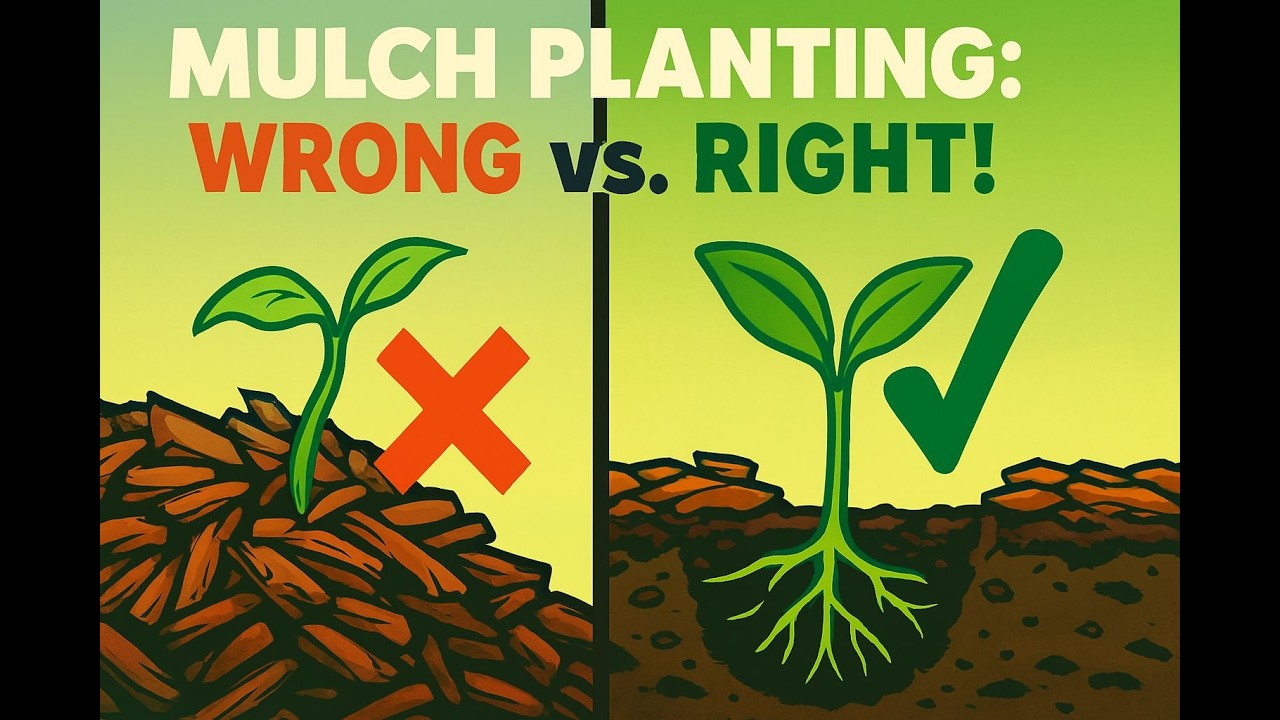
But how do you actually plant in it? It's easier than you think! For seedlings and transplants, we'll walk you through a simple five-step method. The key is to pull the mulch away from your planting spot to expose the bare soil. After digging your hole and placing the plant, you'll backfill with only soil. The most critical step is tapering the mulch back towards the plant but leaving a small, donut-like ring around the stem. This tiny gap is essential to prevent moisture from getting trapped against the stem, which can lead to rot. It's a simple trick that ensures your plants stay healthy and strong.
Sowing small seeds directly into a thick layer of mulch presents a different challenge, but we have a simple solution! Tiny seeds don't have the energy to push through several inches of wood chips or straw. The secret is to create a small, mulch-free "nest" or a thin line of bare soil right where you want to plant. You'll sow your seeds directly into this exposed soil. Once your seedlings have sprouted and are a few inches tall, you can then gently push the mulch back around them, always remembering to keep that small gap around their delicate stems. This technique gives them the perfect start they need to thrive. 🍅
Now, let's tackle the biggest fear holding gardeners back: the nitrogen myth. You've probably heard that wood chip mulch will "steal" or "tie up" all the nitrogen in your soil, starving your precious vegetable plants. We're here to tell you that this is simply not true for surface mulch. While a small amount of nitrogen is used in the decomposition process, this only happens in the very thin layer where the mulch and soil meet. This is far too shallow to impact the root zone of your plants. In fact, this process is actually beneficial, as it helps prevent weed seeds on the surface from germinating! The golden rule is to never, ever mix fresh wood chips or other carbon-rich mulches into your soil. As long as you keep it on top as a blanket, your plants and your soil will be perfectly happy.
We'd love to hear from you in the comments!
➡️ What's your favorite type of organic mulch to use in your vegetable garden?
➡️ Have you ever been worried about the nitrogen myth when using deep mulch? Share your experience!
➡️ What are you most excited to plant using this easy deep mulch method?
🔔 Subscribe for more gardening wisdom: / @harvesthomesteadhacks
#DeepMulchGardening #OrganicGardening #NoDigGardening
Повторяем попытку...
Доступные форматы для скачивания:
Скачать видео
-
Информация по загрузке:





![Is Your Mulch Secretly Killing Your Garden? [Watch Before You Spread]](https://image.4k-video.ru/id-video/yVCyn6yq3Sg)
