AESC2021 Hannah Moore 'Shallow conduit & vent processes,1886 basaltic Plinian eruption, Tarawera NZ'
Автор: Geological Society of Australia Inc
Загружено: 2021-07-21
Просмотров: 568
Описание:
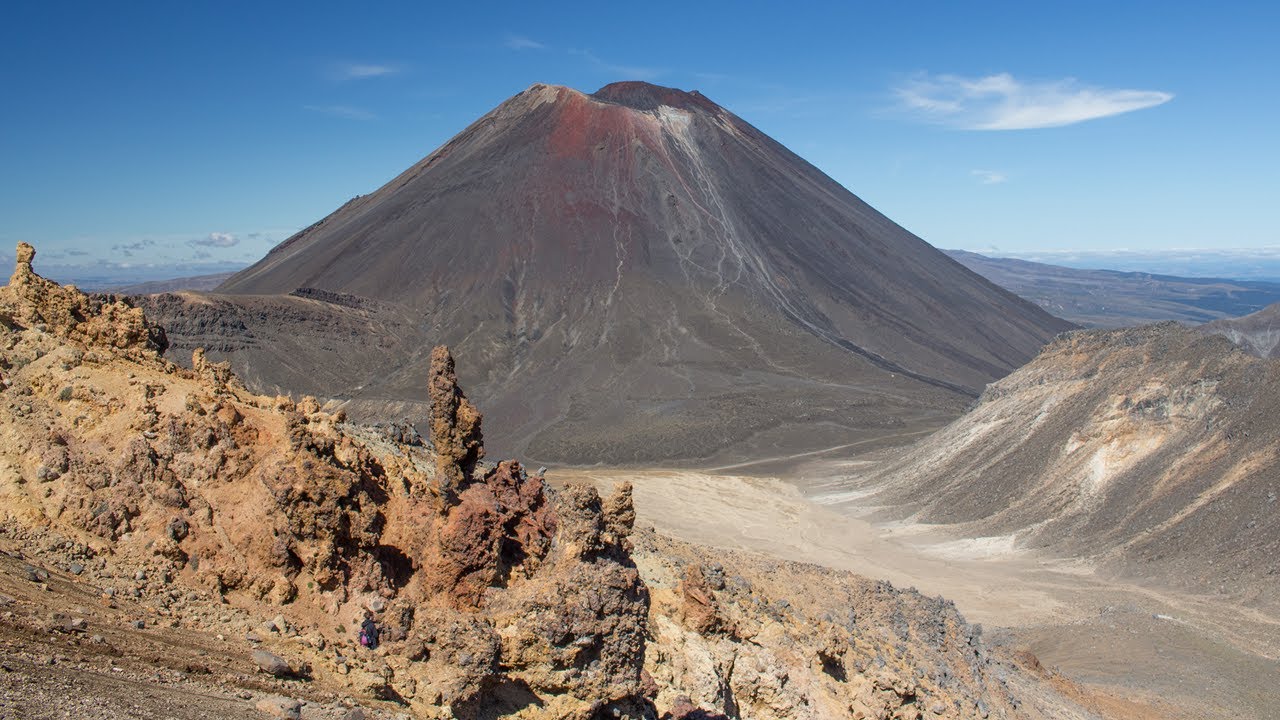
Hannah Moore presents 'Shallow conduit and vent processes during the 1886 basaltic Plinian eruption at Tarawera, New Zealand' from the AESC2021.
Co-authors: Moore, Hannah1, Carey, Rebecca1, Houghton Bruce2, Jutzeler, Martin1, & White, James3
Affliations: 1School of Natural Sciences and CODES, University of Tasmania, TAS, Australia; 2Department of Earth Sciences, University of Hawaii at Mānoa; 3Department of Geology, University of Otago
Abstract: The 1886 eruption of Tarawera, New Zealand, is one of four known examples of basaltic Plinian eruptions. During the climactic phase, a high Plinian eruption column was produced, fed by vents in four segments along an 8-km-long fissure across Mt Tarawera. This eruptive activity was simultaneous with other adjacent vents across the mountain that were in a low-intensity style of eruption. Here we present a detailed re-examination of microtextures from pyroclasts to constrain the ascent and degassing histories of the magma which influenced the Plinian versus low intensity styles of eruption along the Mt Tarawera portion of the fissure. With this study, we aim to understand how this basaltic magma erupted at such high mass eruption rates. Scoria clasts and ash particles selected from stratigraphy proximal to the vent represent (1) a widespread endmember, sedimented from the Plinian column margin and (2) a localised end-member, sedimented from low intensity explosions, representing the lowest mass eruption rates. We also study clasts from a medial section, from which clasts were absolutely entrained into the Plinian plume and represent the highest mass eruption rates. The main differences in scoria clasts from different sites along the fissure segment are in microlite crystallinities: these are low within the proximal localised material (35–55%), high within the proximal widespread material (95–99%), and intermediate within the medial material (69–84%). We suggest that, for vents erupting at Plinian intensity, there was a strong parabolic velocity profile across the conduit, which ensured that magma near conduit margins ascended slower, cooled faster and became more viscous than magma along the axis, leading to longer residence times and therefore more advanced degrees of outgassing and crystallisation. The highly viscous magma at the margins may have reduced permeability and therefore outgassing from magma along the axis, causing a build-up of pressure within the conduit, driving higher eruption rates, and leading to a Plinian eruption. Eruption products sedimented into the widespread proximal environment represent the collar of cooler, more crystallised magma, whereas products entrained into the high plume and sedimented into the medial location represents magma from the central axis. For vents erupting at low intensities, there were transient discrete explosions, where the most intense explosive eruptions cleared out the shallow conduit. These episodic explosions allowed efficient outgassing from magma in the shallow conduit, but viscosity remained relatively low compared to Plinian magma.
Повторяем попытку...

Доступные форматы для скачивания:
Скачать видео
-
Информация по загрузке: