AI Terms for Architects 2026: Moving Beyond Prompts to Autonomous Agents
Автор: The Automation Architect
Загружено: 2026-02-20
Просмотров: 6
Описание:
DISCLOSURE: This video contains SGI (Synthetically Generated Information).
The old playbook of "Brute Force" AI is dead. In this Weekly Research Pulse, we analyze the structural shift from Model Scale to Model Orchestration. We prove that a smart workflow can turn an 8B parameter "lightweight" into a giant-slayer.
Overview:
The age of simple prompt writing is over. The real challenge for modern software and systems architects is building autonomous AI systems that can think, reason, and act on their own. This guide breaks down the essential AI terms, operational realities, and governance strategies that architects need to master for 2026 and beyond.
1. Core Agentic Blocks (The Fundamentals)
These are the non-negotiable patterns that dictate how modern AI agents operate in the real world:
Agentic Loop: The heartbeat of autonomous systems. A continuous cycle of Perceive, Plan, Act, and most importantly, Reflect (e.g., a test suite that fixes its own broken code).
ReAct Pattern (Reason + Act): Allows a model to pause mid-thought, use an external tool (like querying a database), and bring that result back into its reasoning process.
Self-Refinement: A critique loop where the AI acts as its own harshest critic, proofreading and evaluating its output before finalizing it.
Structured Generation: Forcing the AI's output to strictly comply with a schema (like JSON) so it can be safely consumed by downstream APIs.
Agentic RAG: Moving beyond basic "find and answer" retrieval. The agent actively decides when, where, and how to search across multiple databases (multi-hop searches).
Recursive Latent State: Highly efficient models that feed a summary of their own thought processes back into themselves as input to solve complex logic puzzles with fewer parameters.
2. Production AI (Operational Excellence)
Theory is easy; running AI at scale is messy. Here is how to handle the realities of production:
Context Rot vs. Context Folding: As context windows fill up with junk data over long tasks, performance plummets ("Context Rot"). The fix is "Context Folding"—proactively collapsing intermediate steps of a sub-task into a concise summary before returning to the main task.
Inference Famine vs. Speculative Decoding: High-end GPUs are scarce and expensive. "Speculative Decoding" solves this by using a cheap, fast draft model to guess the next block of text, which is then verified in one go by a larger, expensive model—boosting throughput by over 35%.
Inference Quantization: Reducing a model's numerical precision (e.g., down to 4-bit integers) so powerful agents can be deployed on cheaper edge devices without high-end GPUs.
Vector Embedding Drift: The silent killer of search relevance. When data or models change, vector indexes become obsolete, requiring a strict re-indexing strategy.
3. Future Governance (Strategic Oversight)
How do you manage and secure an enterprise running hundreds of specialized AI agents?
Model Context Protocol (MCP): The "TCP/IP for agents." An open standard that allows any agent, regardless of its base model, to seamlessly discover and use tools built for other systems. Interoperability is key.
Agentlake Architecture: A centralized "Mission Control" platform to monitor, manage, and orchestrate an entire fleet of specialized bots.
Constitutional Alignment: A powerful safety pattern where an agent is given a strict set of business or security rules (a constitution) that it must use to self-critique and align its actions.
SGI (Synthetically Generated Info): High-value, AI-curated data that is fact-checked by another AI system to ensure 100% technical accuracy for training purposes.
4. Focus for 2026: The Architect's Choice
If you only focus on three things for your career moving forward, make it these:
1. Agentic RAG: Master the shift from static data retrieval to autonomous knowledge discovery.
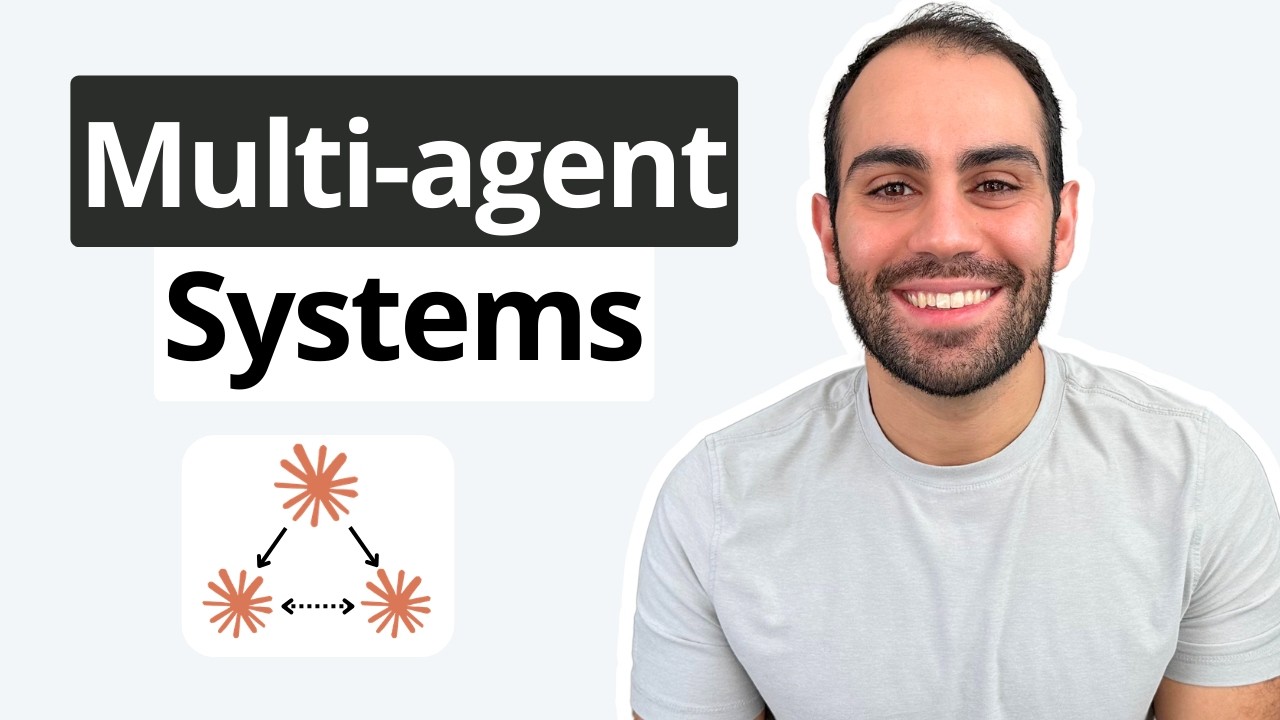
2. MCP (Model Context Protocol): Learn the language of interoperability to build multi-agent systems.
3. Recursive State: Understand the next generation of hyper-efficient, deep-reasoning models.
Final Thought: As AI agents become increasingly capable of architecting their own solutions to complex tasks, what exactly will the role of the human architect be in 2030?
About the Channel:
@TheAutomationArchitect-y1p documents the shift from writing code to orchestrating autonomous logic. We focus on high-authority technical blueprints for the next era of engineering.
Повторяем попытку...

Доступные форматы для скачивания:
Скачать видео
-
Информация по загрузке: