Rebuttal Witness Psychiatrist Testifies Lindsay Clancy Was Depressed, Not Psychotic
Автор: Meghann Cuniff
Загружено: 2026-08-21
Просмотров: 19996
Описание:
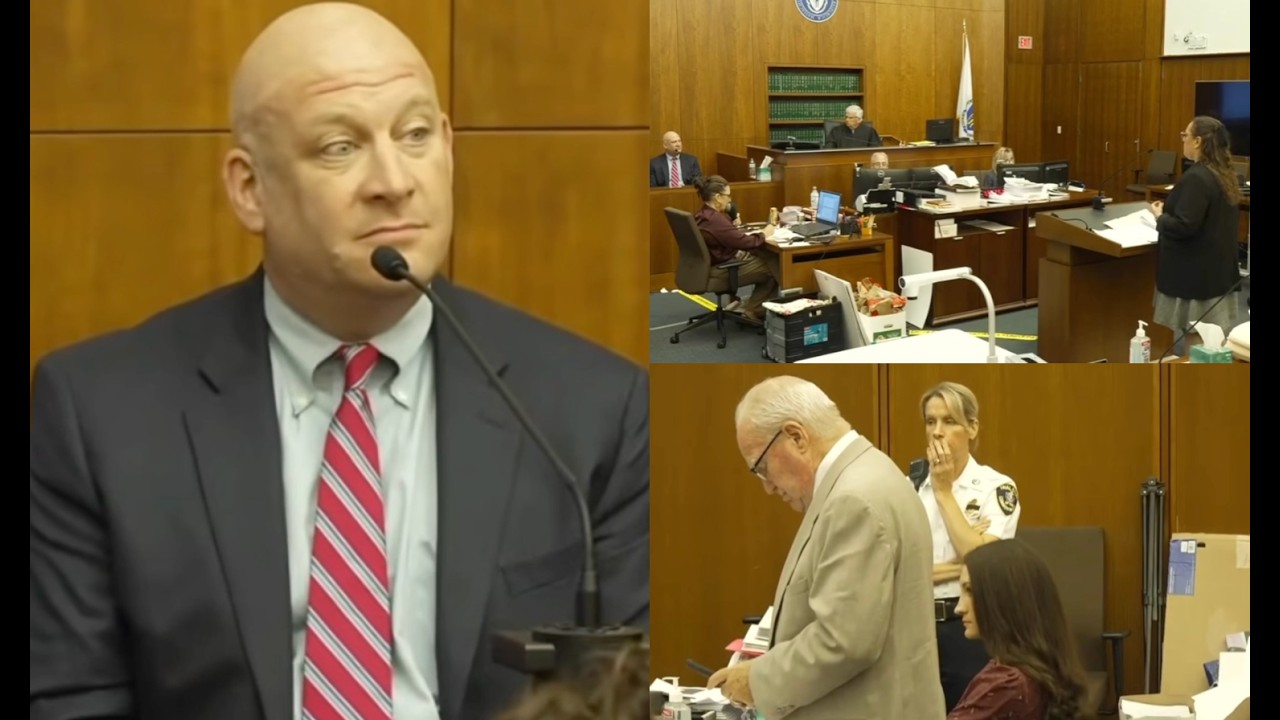
Lindsay Clancy's lawyer called his final witness Friday morning. Prosecutors have the option of calling witnesses to try to rebut testimony from the defense case in chief.
In Clancy's trial, the first rebuttal witness was Avram Mack, a psychiatrist who reviewed her medical records and criminal case at the request of prosecutors.
01:06 "I'm a psychiatrist. For all these 22 years, I've been serving in a lot of different roles. Currently, I'm a professor of psychiatry at Thomas Jefferson University in Philadelphia, and I see patients at a child hospital."
05:52 "Generally, one starts with the statute, and then tries to gather or review what information exists to understand the mental state of the person, if that's pertaining to the to the particular statutory question, and to understand the mental history and the mental state of the individual, and to see if that can be applied to the questions at hand."
15:27 " in this particular case, you were provided a series of records and information regarding the defendant Lindsay Clancy"
17:12 "I interviewed her on April 10th and April 12 of this year."
17:32 "Generally, she was friendly and cooperative."
18:38 "There were not many abnormalities in her presentation, and I can go through them. They include the way in which she speaks-that is to say, the rapidity of speech. If the speech is made in sort of regular intervals between words, in terms of thought, does the person, and in this case, did Ms Clancy make goal-directed ideas? Was there a particular content of the ideas?"
"So, generally speaking, for all the components of the mental mental status examination, excuse me, there were not really abnormalities. I would say at some points she seemed distressed by some topics. I believe tearful at one point, but otherwise nothing remarkable on mental status examination."
20:03 "She's utilizing a wheelchair. Generally speaking, there were not necessarily abnormal movements that I observed. She seemed comfortable physically."
21:26 "Did she indicate to you whether she engaged with other patients, or did she spend her day mostly in bed, or what did she say about that?"
"Mostly, she described she stays in bed or on her own. ... I don't think she described interacting with patients very much. There were a couple of ways in which she did interact with staff. At least there was a therapist that she described working with. She did describe having had a physical therapist at a certain point."
23:00 "Were you able to corroborate, or we're able to identify in the records that she did interact with staff and patients at the hospital, according to the records?"
"To some degree, yes."
25:53 "Well, in terms of psychiatric medications, the main medication of note is olanzapine. I believe that there were several medications being used for her physical needs. One that helps with her bladder. One that helps with movement of the GI system."
26:18 "You mentioned olanzapine. What's the common or the brand name for that?"
"It's called Zyprexa."
"And what is it used to treat?"
"Originally, it was created to be an antipsychotic medication, so to treat psychosis."
"Okay. And are you aware that it's prescribed to Ms. Clancy for bipolar?"
"Yes, it it is also used for mania."
30:54 "Do you recall whether she reported that she had any head injuries after January 24?"
"She denied that she had had a head injury."
34:50 Seroquel discussion
39:12 "fair to say, in reviewing all the records and with your conversation, that sleep also was a main issue or a complaint?"
"Yes, that's right."
42:34 "My opinion about her diagnosis in the span from 2022 to 2023 is that she suffered from a what's called a major depressive episode, that probably is a part of what's called a major depressive disorder, but the important point about it is a major depressive episode."
47:48 "I could not find any example of behavior or thinking that corresponded with those elements of mania or hypomania."
48:30 "Did you observe in the records some activity at Brigham and Women's Hospital that would show that she had linear thinking and goal direction?"
"Well, the after she was removed from the medication called dexmedetomidine, which was sedating her and having her sleep intentionally, after that point she awakened. The records indicate and was able to think coherently with goal-directed thoughts."
50:09 "What about psychosis? Did you observe any of that?"
"I did not throughout the period in question."
57:46 "in this case, you are aware of certain behaviors and thoughts that the defendant had that have been suggested as psychotic, correct?"
"Yes."
"And did you consider those as potential psychotic features for this defendant?"
"Yes."
"And so, can you explain to us some of those potential features and what your opinion is about them?"
Some of them are were beliefs or concerns that Ms. Clancy had, which weren't necessarily psychotic."
01:02:40 "Is being suicidal a form of psychosis?"
"No."
Повторяем попытку...
Доступные форматы для скачивания:
Скачать видео
-
Информация по загрузке: