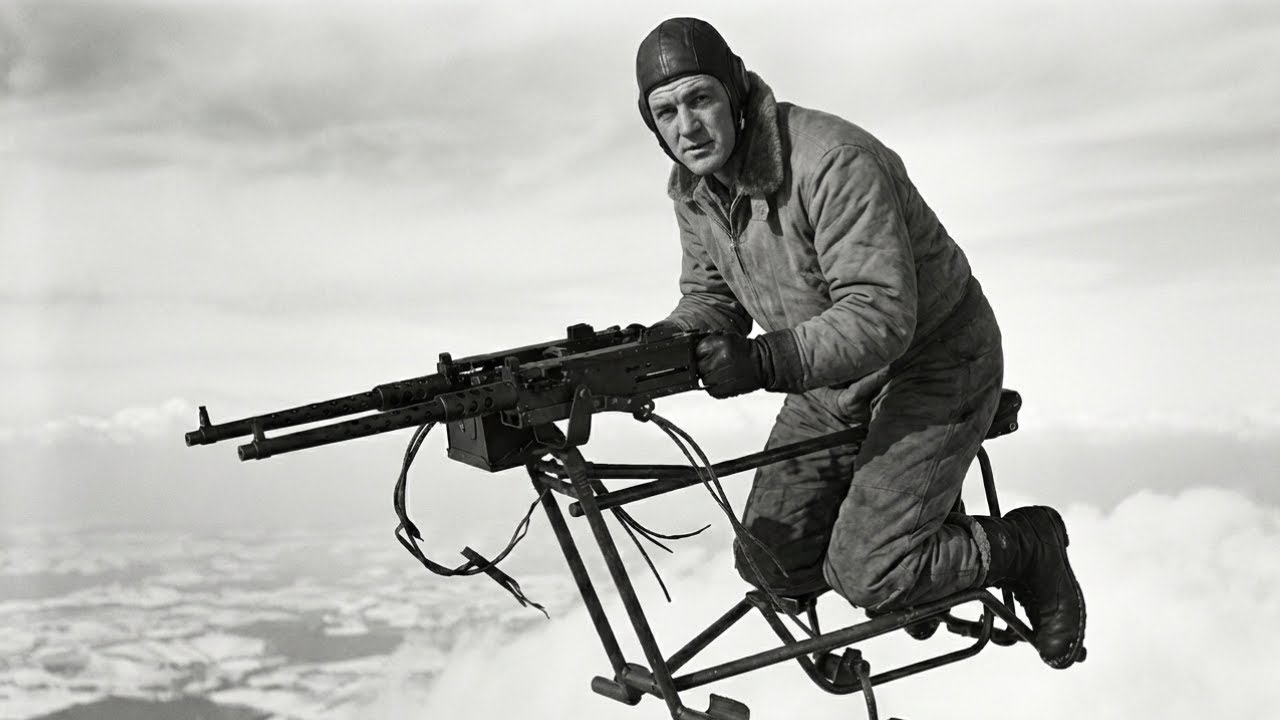
When His Seat Was Blown Out at 12,000 Feet — He Fell Gripping Two .50
Автор: WW2 Americans
Загружено: 2026-01-31
Просмотров: 59
Описание:
This should have been the end.
A tail gunner was torn out of a B-17 at 12,000 feet and still made it to the ground alive. The same blast erased the bomber’s flight controls, and the crew still brought the aircraft back. Two survivals came out of one direct hit.
January 24, 1944. Over Ostend, Belgium.
Roy Urich, Staff Sergeant, 351st Bombardment Squadron, 100th Bomb Group, was isolated in the tail position when an 88mm flak shell obliterated the rear section and blew him out of the fuselage with no support and no control over where he would land.
Aircrew manuals and standard procedures treated survival in a tail-section direct hit and a low-altitude bailout over enemy territory as impossible.
Urich had lined the tail position with extra flak jackets and wore his parachute, then deployed it after being ejected. In the cockpit, Lt. Frank Valesch found the elevators dead and the rudder destroyed, then used the AFCE autopilot for pitch control while steering with ailerons only, holding a damaged B-17 level long enough to reach the English coast and land at RAF Eastchurch.
The action worked because protection and body position reduced the initial fragmentation that would have killed the tail gunner, and the parachute turned violent ejection into a controlled descent. In the air, the bomber’s steady speed and a straight route let the autopilot stabilize attitude while manual roll control managed heading, violating accepted procedure that demanded bailout and contradicting the probability of controlled flight without elevator and rudder authority.
Nine men walked away in England, and one survived captivity after coming down in German hands.
🔔 Subscribe for true WW2 American combat stories: @ww2americans
👍 Like if you learned something new
💬 Comment: Which American WW2 soldier should we cover next?
#ww2 #wwii #worldwar2 #ww2history #militaryhistory #ww2americans
⚠️ Disclaimer: This video is narrative storytelling based on documented WW2 events and secondary historical sources. While accuracy is prioritized, this is not an academic publication. For scholarly research, consult primary archives and professional historians.
Повторяем попытку...
Доступные форматы для скачивания:
Скачать видео
-
Информация по загрузке: