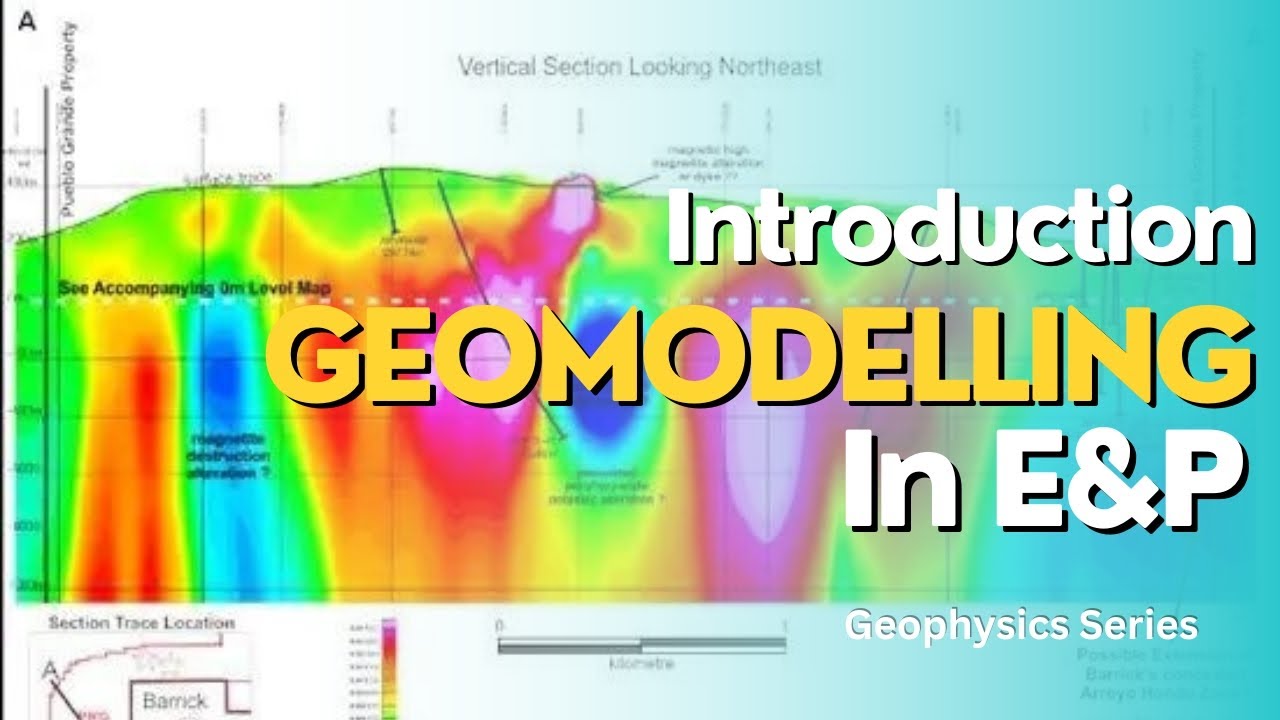
Geophysics Series - Introduction Geomodelling in E&P
Автор: Gea Pedia
Загружено: 2025-06-08
Просмотров: 68
Описание:
Geophysics Series - Introduction Geomodelling in E&P
Geomodelling in Exploration and Production (E&P) refers to the process of creating three-dimensional representations of subsurface geological formations. This involves integrating geological, geophysical, and petrophysical data to build accurate models of reservoirs. Geomodelling helps in visualizing the spatial distribution of reservoir properties, such as porosity, permeability, and fluid saturation, enabling better decision-making for exploration, drilling, and production strategies. It enhances the understanding of reservoir behavior, aids in resource estimation, and reduces uncertainties in E&P operations. Advanced technologies, such as machine learning and 3D visualization tools, are increasingly being employed to improve the accuracy and efficiency of geomodelling processes.
*Introduction to Geomodeling in Exploration and Production (E&P)*
Geomodeling is a pivotal aspect of the exploration and production (E&P) sector in the oil and gas industry. It involves the creation and use of geologic models to simulate subsurface conditions, allowing for better decision-making in the exploration and extraction of hydrocarbon resources. As E&P activities hinge on a thorough understanding of subsurface geology, geomodeling plays a crucial role in optimizing resource recovery, reducing risks, and enhancing operational efficiency.
Key Components of Geomodeling
1. **Data Integration**: Geomodeling integrates a wide range of data types, including seismic data, well logs, core samples, and production data. The integration of these datasets enables geoscientists to create a comprehensive view of the subsurface environment.
2. **Geological Framework**: The creation of a geological framework is fundamental to geomodeling. This framework incorporates stratigraphy, structure, and mineralogy, delineating the relationships between different geological layers and formations.
3. **Static and Dynamic Models**:
**Static Models**: These represent the geological framework and properties of the reservoir at a specific point in time, including rock properties, porosity, permeability, and fluid saturation.
**Dynamic Models**: These models simulate fluid flow through the reservoir over time, incorporating parameters such as pressure, temperature, and fluid interactions. Dynamic models help in forecasting production performance and optimizing recovery strategies.
4. **Reservoir Characterization**: Geomodeling assists in characterizing reservoirs by defining their architecture, fluid contents, and properties. This includes identifying reservoir boundaries, understanding flow dynamics, and determining the distribution of reservoir rocks.
5. **Visualization and Interpretation**: Advanced visualization techniques, such as 3D modeling and geospatial analysis, facilitate better interpretation of geological models. These visual tools enable geoscientists and engineers to communicate findings effectively, aiding in collaborative decision-making.
Applications of Geomodeling in E&P
1. **Resource Assessment**: Geomodeling provides the necessary insights to evaluate the size and recoverability of hydrocarbon resources, influencing exploration strategies and investment decisions.
2. **Field Development Planning**: Using geomodels, operators can devise efficient drilling programs, optimize well placements, and design enhanced oil recovery (EOR) techniques tailored to the specific reservoir characteristics.
3. **Risk Management**: By simulating various geological scenarios, geomodeling helps identify and mitigate risks associated with drilling and production, offering a clearer picture of potential challenges and uncertainties.
4. **Production Optimization**: Dynamic reservoir models can be used to forecast future production rates and assess the impacts of different extraction methods, ultimately leading to more effective management of resources.
Challenges in Geomodeling
Despite its benefits, geomodeling faces several challenges, including:
**Data Quality and Availability**: Insufficient or poor-quality data can hinder the accuracy of geomodels. Continuous data acquisition and integration remain critical for model refinement.
**Complexity of Natural Systems**: The inherent complexity and variability of geological systems make it challenging to develop models that accurately represent subsurface conditions.
**Computational Resources**: The creation and refinement of detailed dynamic models often require significant computational power and time.
#geophysics #geology #minerals #modeling #seminar #software #petroleum
Повторяем попытку...
Доступные форматы для скачивания:
Скачать видео
-
Информация по загрузке: