Grade 9 Social Studies Chapter 1: Canada's Federal Political System: How Does It Work?
Автор: Alberta Social Studies
Загружено: 2025-01-09
Просмотров: 1324
Описание:
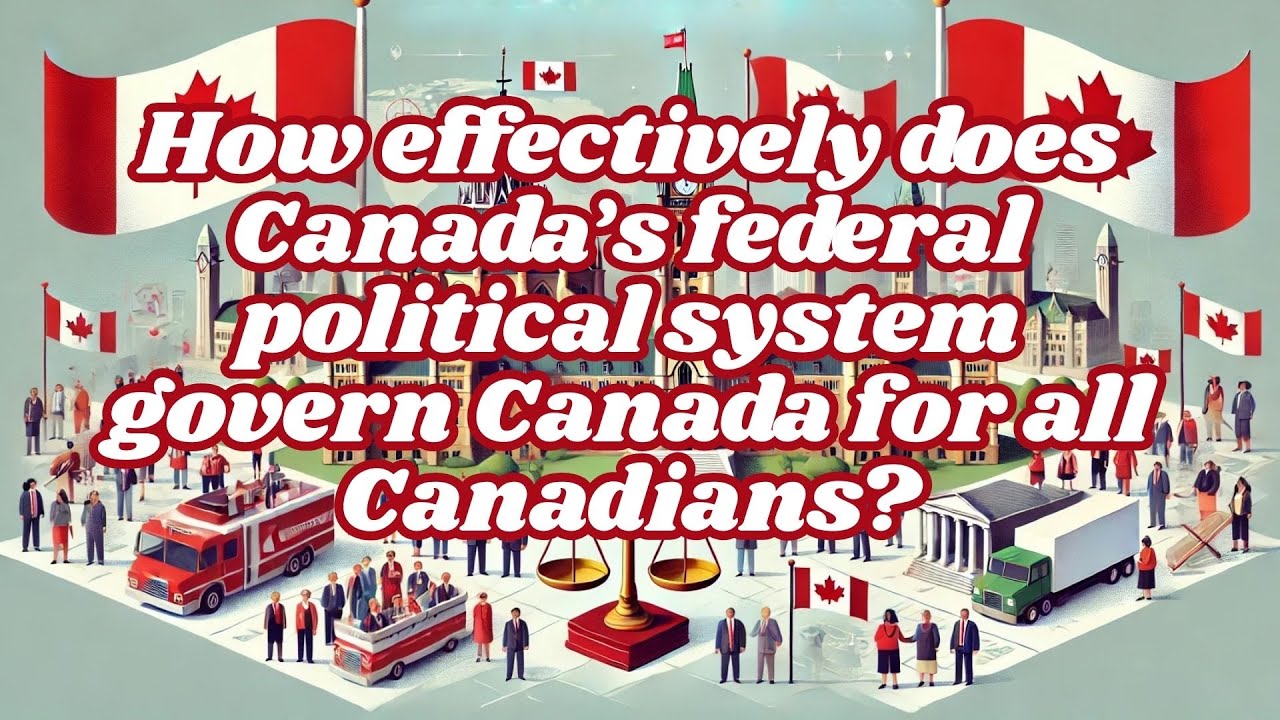
Ever wondered how Canada is governed? This video explores Canada's federal political system, breaking down its structure, key players, and how laws are made. We'll examine the roles of the executive, legislative, and judicial branches, delve into the fascinating world of lobbyists and media influence, and discuss the importance of citizen participation.
● Discover how Canada's federal system aims to represent the diverse voices of all Canadians.
● Unpack the steps involved in transforming an idea into a law.
● Learn how you can engage with the political process and make your voice heard.
Join us for an insightful exploration of Canada's democracy in action!
Canada's federal political system is a representative democracy, designed to govern for all Canadians by ensuring their voices are heard and their needs are met. The system consists of three branches: the executive, responsible for proposing and implementing laws; the legislative, responsible for making laws; and the judicial, responsible for interpreting and applying laws. The executive branch includes the Prime Minister and the Cabinet, who run the day-to-day business of government. The legislative branch comprises the House of Commons and the Senate. Members of Parliament (MPs) are elected by voters in their respective ridings, representing their constituents' views and needs in the House of Commons.
While the House of Commons is based on representation by population, ensuring regions with larger populations have a greater voice, the Senate aims to provide a voice for regions and minorities. This structure strives for a balance of representation in the legislative process. Laws go through a multi-stage process before becoming official, including proposal, readings, committee review, and Royal Assent from the Governor General. Beyond this structure, Canadians can engage with their government through voting, contacting their representatives, joining political parties, participating in media discourse, or supporting lobby groups. These various mechanisms aim to facilitate citizen participation and influence in the political process. However, there are ongoing challenges to the system's effectiveness, including low voter turnout, the influence of lobby groups, and the need for improved minority representation. Addressing these challenges is crucial to ensure the government effectively serves all its citizens and fosters a truly inclusive and equitable society.
Повторяем попытку...
Доступные форматы для скачивания:
Скачать видео
-
Информация по загрузке:







![[audio] NY Fed says 90% of tariffs hit US…2025 deficit holds despite Trump tariffs](https://imager.clipsaver.ru/74NnaiXnvVA/max.jpg)


![[audio] Trump tariffs blocked by Supreme Court…Plan B limits, long bond risk in low volatility](https://imager.clipsaver.ru/4xQXiFthLzg/max.jpg)