Can Kabyle, Nafusi & Mozabite Amazighs (Berbers) Understand Each Other?
Автор: Bahador Alast
Загружено: 2021-07-18
Просмотров: 39087
Описание:
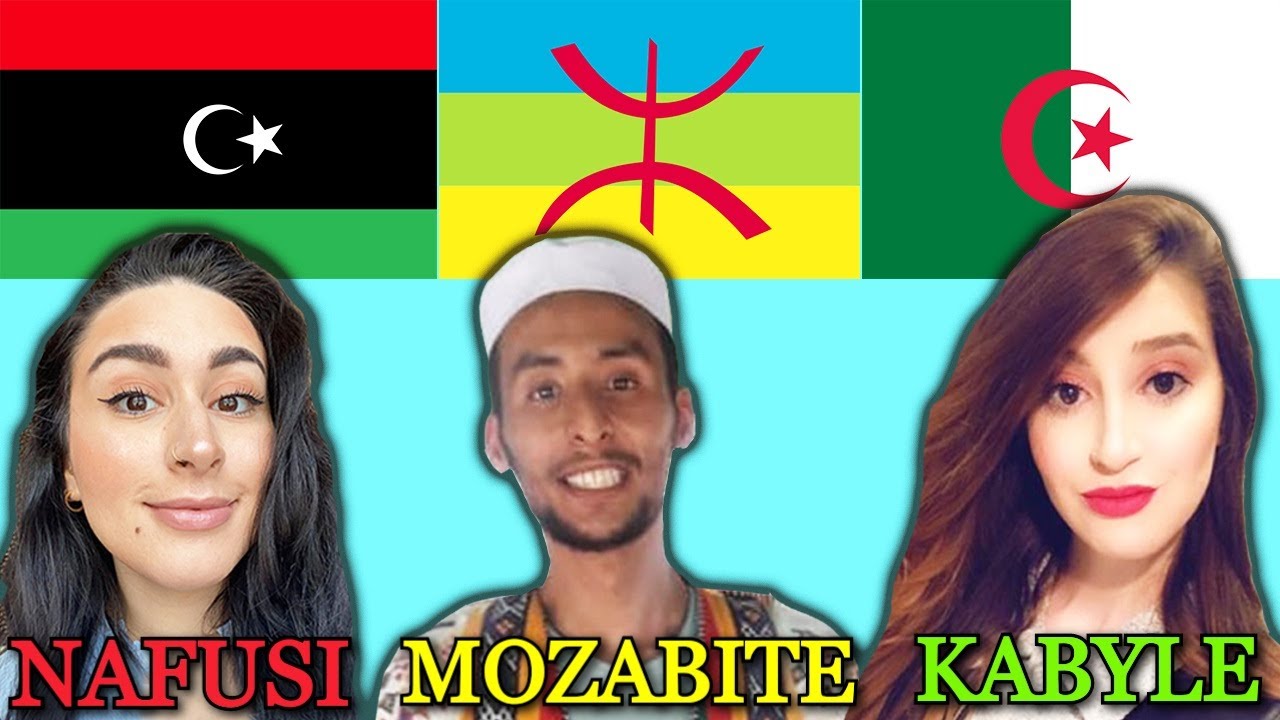
In this episode we showcase some of the similarities and test the degree of mutual intelligibility between three different Amazigh languages. Lameese (Nafusi speaker), Yacine (Mozabite speaker), and Massylia (Kabyle speaker) will each read short sentences in their respective languages to see how well they can understand one another.
The Amazigh (Berber) languages (ⵜⴰⵎⴰⵣⵉⵖⵜ) are a branch of the Afroasiatic language family and spoken by the Amazigh (Berber) people, who are indigenous to North Africa. The largest Amazigh speaking populations are in Morocco, Algeria and Libya. There are also communities in Tunisia, Mali, Niger, Burkina Faso and Mauritania and in the Siwa Oasis of Egypt. It has official status in both Algeria and Morocco. Historically, the ancient Libyco-Berber script was used in order to write the language. Today it is still widely used in the form of the Tifinagh script. In addition to the dialects present today, there were a number of others which have gone extinct. For instance, Amazigh languages were historically spoken in present-day southern Egypt and northern Sudan.
Please follow and contact us on Instagram if you have any suggestions or if you speak a language that has not been featured before and would like to participate in a future video: / bahadoralast
The overwhelming majority of the Amazigh speakers today speak one of the seven varieties, which are Shilha (Tashelhiyt), Kabyle (Taqbaylit), Central Atlas Tamazight (Tamaziɣt), Riffian (Tarifit), Shawiya (Tacawit) and Tuareg (Tamaceq/Tamajeq/Tamaheq). Each one also has separate dialects. In this video we will be featuring four of them to see how well they can understand each other!
It's important to note that the term Berber, borrowed from Latin "barbari", has been used for centuries and is still used today. Many people are unaware of the term Amazigh. Many Amazigh linguists prefer the term Tamazight as a native word while still using the European word "Berber" as an exonym, but there other writers, especially in Morocco, who prefer "Amazigh" when writing about it in French, English, or other European languages.
Kabyle (Taqbaylit / ⵜⴰⵇⴱⴰⵢⵍⵉⵜ) is primarily spoken by the Kabyle people in the Kabylia region of northern Algeria, as well as in the capital of the country, Algiers. The Kabyle people (Iqbayliyen / ⵉⵣⵡⴰⵡⵏ) represent the largest Amazigh population of Algeria and the second largest in North Africa, and have a very rich and ancient culture which plays a major role in many aspects of the Algerian lifestyle, from literature, to music, to traditional garment, to cuisine. A big component of it is poetry, with famous poets such as Si Mohand, whose works were collected and published by the famous Kabyle Algerian anthropologist and linguist Mouloud Mammeri (Mulud At Mɛammar). Mammeri published a book using a Latin-based alphabet to define the orthographic rules of the language, which became the standard for writing in Tamazight today. Prior to that, Kabyle was written with the Tifinagh alphabet until the 7th century and after that the Arabic script. In the 18th century, a Latin-based alphabet was adopted based on French spelling. After Algeria gained independence from France, there were attempts to bring the Tifinagh script back into use for Kabyle, and even though the Tifinagh script is present today, it is mainly just used for decorative purposes. The new Latin orthography that was devised by Mouloud Mammerior, is the most common script and unlike the previous Latin script, it is not based on the French spelling system.
Mozabite (تونژابت or Tumẓabt) is a Zenati Berber language spoken by the Mozabites from the M'zab natural region in the northern Saharan Algeria.
Nafusi (Nefusi), known by its endonyms Ažbali, Maziɣ / Mazoɣ, is primarily spoken in the Nafusa Mountains of northwestern Libya.
Повторяем попытку...
Доступные форматы для скачивания:
Скачать видео
-
Информация по загрузке:


