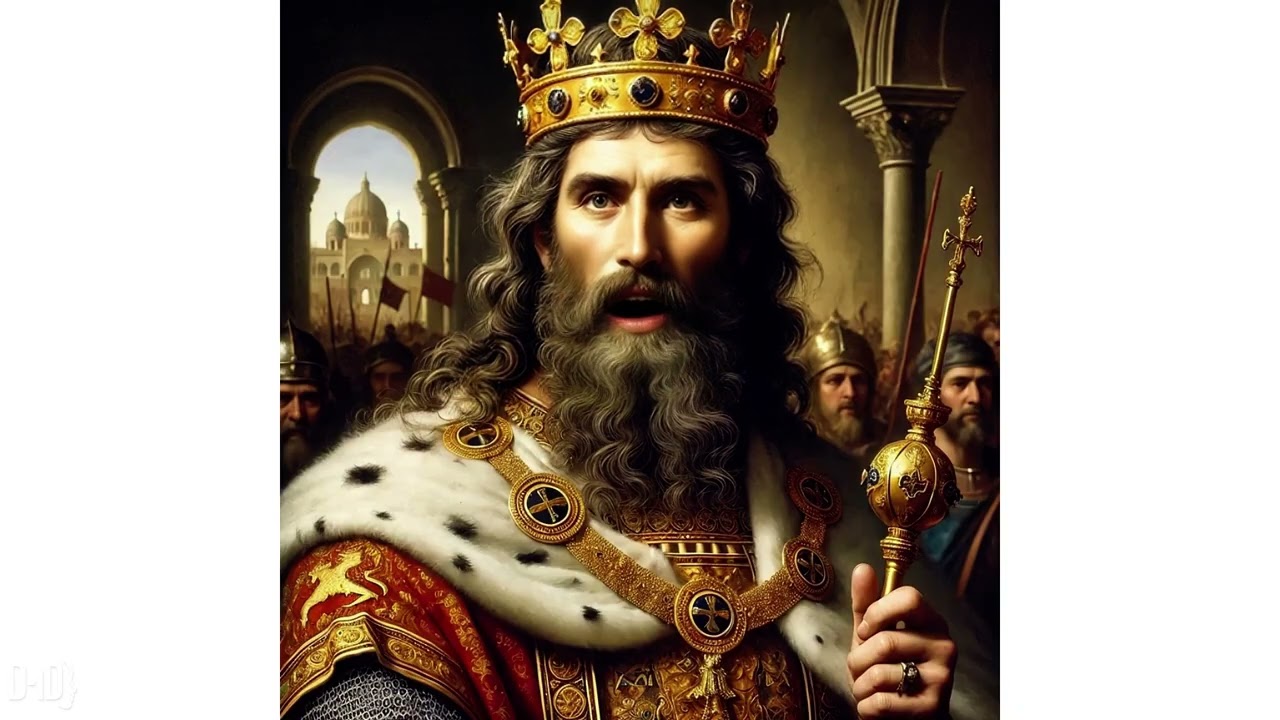
15) King of England, Louis the Pious, 814 to 840
Автор: Histoire du Monde
Загружено: 2024-12-26
Просмотров: 55
Описание:
The Life and Reign of Louis the Pious (778–840)
Louis the Pious, also known as Louis I, was born in 778 in Chasseneuil, Aquitaine, as the third son of Charlemagne, the famed ruler of the Carolingian Empire. Unlike his warrior father, Louis was known for his devout Christian faith and focus on moral and ecclesiastical reform. His life was shaped by the immense responsibility of inheriting an empire that spanned much of Western Europe, a task that would test his resolve and leave an indelible mark on history.
In 781, Louis was crowned King of Aquitaine, a position his father used to train him in governance and leadership. During his early reign, Louis demonstrated his ability to rule by stabilizing Aquitaine and protecting its borders from external threats, such as the Saracens in Spain. Charlemagne entrusted him with significant responsibilities, preparing him for the eventual task of uniting and preserving the empire.
In 814, following Charlemagne’s death, Louis ascended the throne as Emperor of the Romans. His coronation at Aachen marked the beginning of a reign defined by both his strengths and vulnerabilities. Louis immediately sought to reform the court, dismissing concubines and surrounding himself with clergy to align his rule with Christian principles. These actions earned him the epithet "the Pious," but they also alienated segments of the nobility who perceived his reforms as overly rigid and moralistic.
In 817, Louis issued the Ordinatio Imperii, a decree intended to prevent disputes over succession by dividing the empire among his three sons: Lothair, Pepin, and Louis. However, the plan backfired, as familial rivalries erupted. Matters worsened when Louis remarried after the death of his first wife, and his second wife, Judith of Bavaria, bore him a fourth son, Charles the Bald. This new division of inheritance further strained relationships with his older sons.
Louis faced several rebellions, the most notable being in 830 when his sons united against him, accusing him of favoring Charles. They temporarily deposed him, humiliating the emperor and forcing him into penance. Although he was eventually restored to power, the rebellions left the empire fragmented and weakened.
Beyond internal strife, Louis had to contend with external threats. Viking raids grew more frequent along the northern coasts, and the empire's vast borders required constant vigilance. Despite these challenges, Louis maintained his commitment to preserving the Christian faith, calling multiple synods to reform the Church and promote ecclesiastical unity.
Louis the Pious died in 840 near Ingelheim am Rhein, leaving behind a divided empire that his sons would plunge into further conflict. Despite the political turmoil of his reign, Louis is remembered for his piety, his dedication to reform, and his efforts to continue his father’s legacy in preserving a unified Christian empire. His reign marks a transitional period in European history, bridging the height of Carolingian power and the fragmentation that would follow in the years to come.
Повторяем попытку...
Доступные форматы для скачивания:
Скачать видео
-
Информация по загрузке: