Buying European and Sustainable is Good Value for Public Money
Автор: Fondazione Ecosistemi
Загружено: 2026-01-19
Просмотров: 4
Описание:
Buying European and Sustainable Is Good Value for Public Money
Insights from Italy to Europe after a decade of mandatory Green Public Procurement
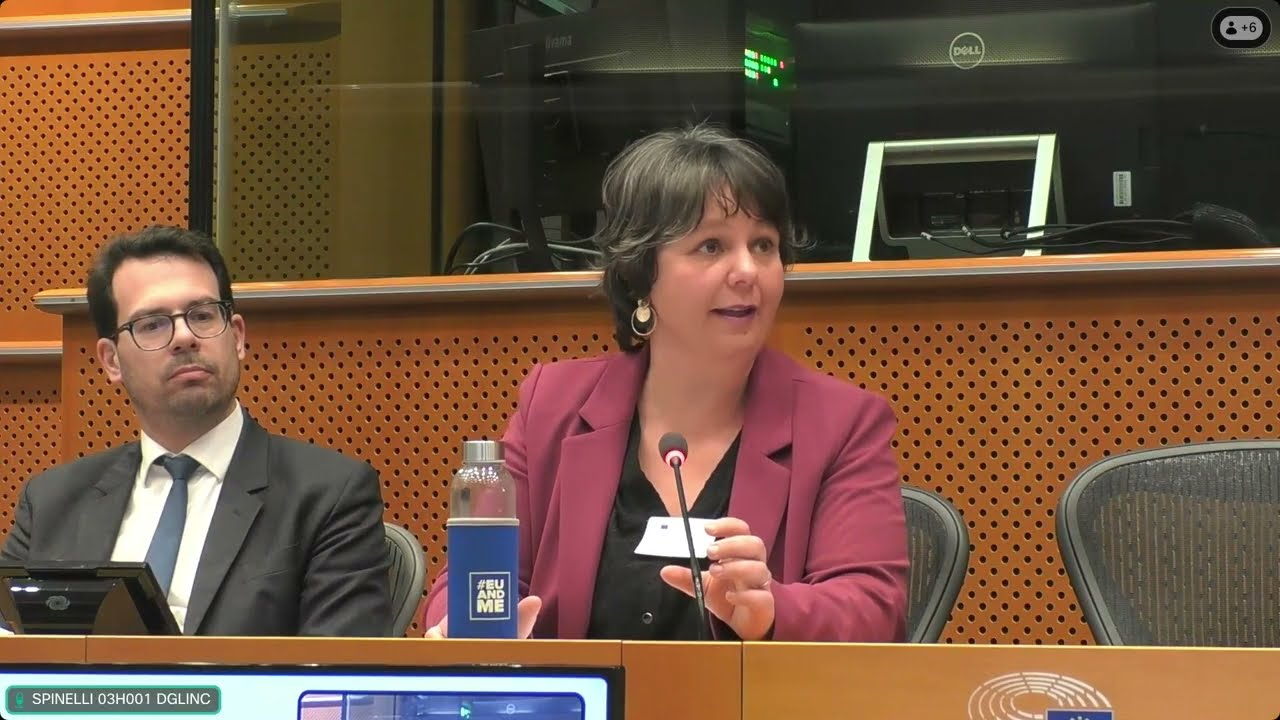
On 13 January, the European Parliament hosted the event “Buying European and Sustainable Is Good Value for Public Money”, promoted by Fondazione Ecosistemi within the BESA – Buy European and Sustainable Act campaign, in collaboration with Nicola Zingaretti, Member of the European Parliament and Head of the S&D Delegation.
The event brought to Brussels the Italian experience of more than ten years of mandatory Green Public Procurement (GPP) and the application of Minimum Environmental Criteria (CAM), as a concrete policy tool to steer public spending towards climate action, industrial innovation, resilient European supply chains and quality jobs.
Italy as a European laboratory for sustainable procurement
Opening the discussion, Sabina Nicolella, Head of International Relations and Projects at Fondazione Ecosistemi and National Coordinator of the BESA campaign, highlighted the ongoing revision of the EU Public Procurement Directives as a key opportunity to strengthen Green Public Procurement across Europe. Italy’s experience shows how binding environmental criteria can improve tender quality, foster innovation and support companies responding to sustainable public demand.
According to estimates developed within the BESA campaign, introducing environmental and European content criteria in public procurement could generate up to 50,000 green jobs in Italy, reduce emissions by more than 2.2 million tonnes of CO₂ per year, and relocate around €8 billion into sustainable productive activities.
From regions to businesses: evidence from the field
Regional and sectoral experiences confirmed the concrete impact of GPP.
Giulia Tambato (Veneto Region) illustrated the results of ten years of CAM implementation, highlighting increased innovation capacity and the effectiveness of the “most economically advantageous offer” criterion over lowest-price approaches.
From Emilia-Romagna, Vincenza Poliandri (Intercent-ER) presented data showing over 294,000 tonnes of CO₂ avoided in 2024 alone through green tenders, while stressing the need for harmonised EU methodologies to measure impacts.
Business associations also underlined how sustainable public demand can drive industrial transformation.
Matteo Nevi (Assosistema) showed how reusable solutions in the healthcare sector led to CO₂ reductions of over 30%, while Lorenzo Orsenigo (AIS) highlighted the link between public procurement, sustainable finance and infrastructure investment, including the role of ESG ratings.
The European policy debate
The political debate showed broad convergence on the role of public procurement as a key lever to translate the Green Deal into concrete industrial policies.
Nicola Zingaretti (S&D) stated that the revision of the Public Procurement Directive is “a major opportunity to transform public spending from a purely administrative tool into a strategic driver for development,” stressing that clear environmental criteria guide markets towards innovation, quality and employment.
Annalisa Corrado (S&D, ENVI Committee) described sustainable procurement as “a genuine industrial strategy,” capable of rewarding quality, combating unfair competition and delivering a “win-win-win” outcome for climate, businesses and society.
From the Internal Market perspective, Pierfrancesco Maran (S&D, IMCO Committee) called for clear and predictable rules to support companies in the transition while strengthening European competitiveness.
Gabriele Bischoff, Vice-President of the S&D Group, reaffirmed the need to defend the Green Deal as the backbone of the European project, ensuring coherence between industrial, climate and social policies through concrete tools such as public procurement.
Representing the ECR Group, Stefano Cavedagna highlighted the importance of avoiding excessive rigidity while keeping procurement effective in supporting innovation and European value chains.
Closing the institutional framework, Henning Ehrenstein, Head of Unit at the European Commission (DG GROW), explained that the revision of the Public Procurement Directive aims to make public spending more strategic, integrating environmental and industrial criteria in line with the internal market and EU climate objectives.
Chiara Di Mambro, Italy & Europe Strategy Director at ECCO – the Italian climate change think tank, underlined the need for full alignment between climate goals and economic tools, stressing that public procurement is one of the main interfaces between EU climate policy and the real economy.
From Italian experience to European reform
The event confirmed Italy’s potential role as a frontrunner in the European debate on public procurement reform. By bringing data, evidence and concrete case studies to Brussels, the BESA campaign aims to support a more ambitious revision of the EU Public Procurement Directive.
Повторяем попытку...
Доступные форматы для скачивания:
Скачать видео
-
Информация по загрузке: