Demystifying (and de-mythifying) grad school – things to know about what it is and isn’t
Автор: the bumbling biochemist
Загружено: 2026-02-08
Просмотров: 492
Описание:
Part of my goal with some of the work I do is to de-mystify the hidden curriculum aspects of academic science that I’ve had to learn as I go and which can easily, even if unintentionally, restrict access to underrepresented populations. So . . .
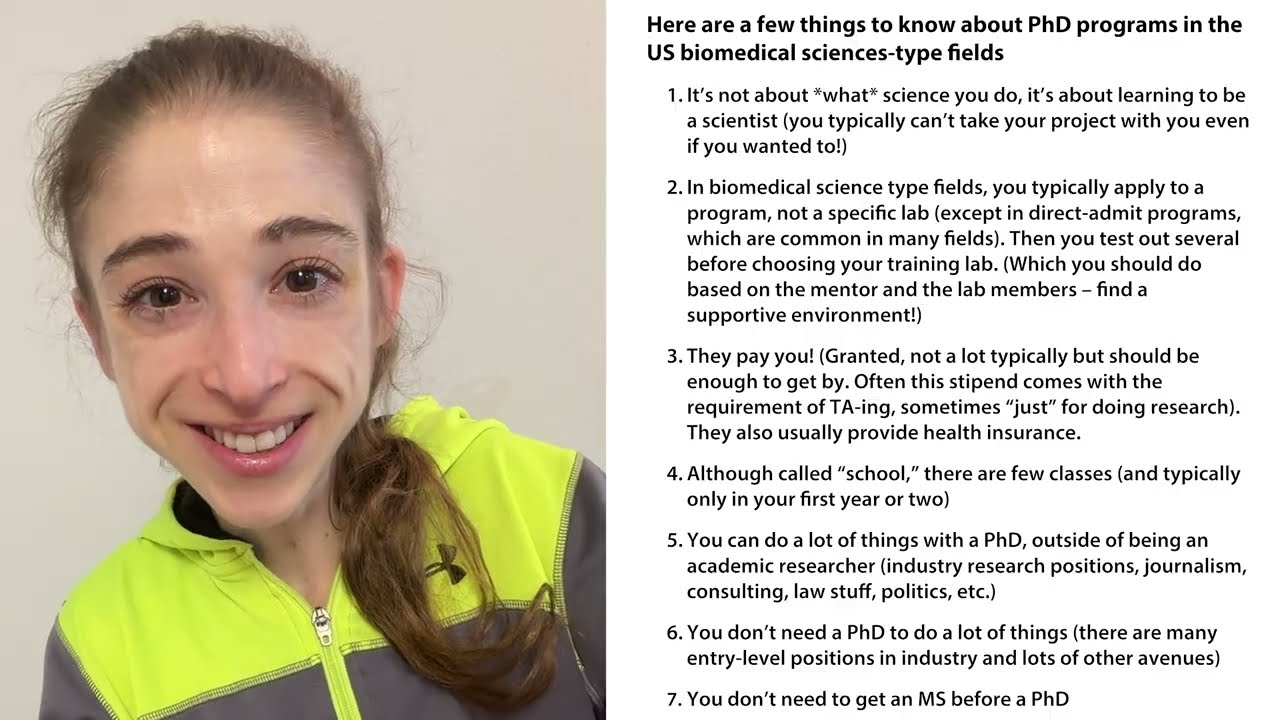
Here are a few things to know about PhD programs in the US biomedical sciences-type fields
1. It’s not about what science you do, it’s about learning to be a scientist (you typically can’t take your project with you even if you wanted to!)
2. In biomedical science type fields, you typically apply to a program, not a specific lab (except in direct-admit programs, which are common in many fields). Then you test out several before choosing your training lab. (Which you should do based on the mentor and the lab members – find a supportive environment!)
3. They pay you! (Granted, not a lot typically but should be enough to get by. Often this stipend comes with the requirement of TA-ing, sometimes “just” for doing research). They also usually provide health insurance.
4. Although called “school,” there are few classes (and typically only in your first year or two)
5. You can do a lot of things with a PhD, outside of being an academic researcher (industry research positions, journalism, consulting, law stuff, politics, etc.)
6. You don’t need a PhD to do a lot of things (there are many entry-level positions in industry and lots of other avenues)
7. You don’t need to get an MS before a PhD
When considering applying to grad school, know that:
1. One of the most important things grad schools look for is research experience. And, in large part, that’s because they want to know that you know that you want to do research. (They don’t expect you to come in with tons of skills! They’ll teach you the ones you need for your specific project)
2. Strength in the classroom setting doesn’t necessarily = strength in the research setting and vice versa
3. You can get research experience through laboratory technician and post-bac programs
4. Great programs and great people can be found everywhere - including in lesser-known institutions. So keep an open mind.
5. Each program is different (in terms of admissions, coursework, professional development opportunities, etc.) and you’ll want to look at their websites to get specific information about programs you may be interested in.
6. If you contact professors before applying, be sure to do your research beforehand, and really personalize things for them (but be cognizant of their time, don’t ask for a Zoom, and don’t expect a response). You can ask if they anticipate being able to accept new students in the coming year, but know that they can’t make commitments and their availability might change.
7. Grad school can be an exhausting roller coaster (physically, mentally, and emotionally)
8. There’s no “right path” to, through, or from grad school
In lots of places you apply to programs, but typically the labs then have to pay your stipend, so programs want to be sure that admitted students will be able to find a lab with interest in funding them. So, even if you’re a really strong applicant, you might not be accepted because there aren’t any labs with funding in your area of interest.
Also, keep in mind that grad school programs throughout the US are struggling for funding and admissions are therefore down. Try not to take rejection as a reflection on you and your potential. Or as a shut door.
Hopefully, things will settle down, programs will widen up again (perhaps with some oft-needed reforms) and you can apply again and get admitted if you’re still interested. In the meantime, you can get experience in the workforce or post-bac programs. You can also see if places you’re interested in have summer programs.
blog form: https://thebumblingbiochemist.com/365...
more on grad school, postdocs, and all sorts of stuff: https://bit.ly/gradpostdocetc
More on the hidden curriculum of academic science: • Hidden curriculum of academic science
Повторяем попытку...
Доступные форматы для скачивания:
Скачать видео
-
Информация по загрузке: