Meet the Scordisci: The Celtic Tribe of Serbia and the Balkans
Автор: Celtic History Decoded
Загружено: 2021-05-01
Просмотров: 6805
Описание:
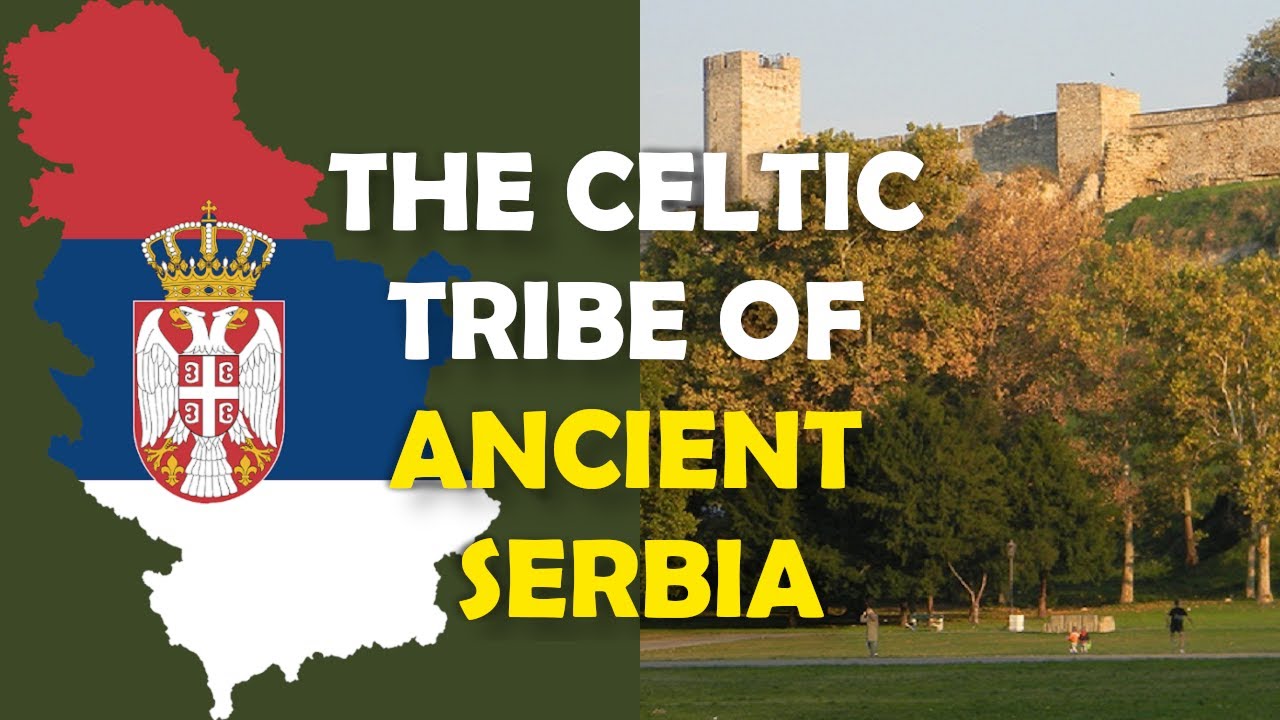
Meet the Scordisci: The Celtic Tribe of Ancient Serbia and the Balkans - #CelticHistory - When one thinks of Serbia, the word Celtic doesn’t usually come to mind. Yet, as it turns out, there was a fascinating Celtic tribe that held significance influence in ancient Serbia and the Balkans thousands of years ago. This tribe was known as the Scordisci, and they were instrumental in building an ancient settlement, called Singidunum, which evolved into the city of Belgrade, the capital of Serbia today.
It was in the 3rd century BC that the Scordisci first appeared in the historical record. The Celtic tribe invaded Greece under their leader Bathanatos (Hogain, 2003: 60), and finally settled to the north, at the junction of the Sava and Danube rivers in modern Belgrade. The Scordisci potentially took their name from the Balkan mountain range, the Šar (or Sharr) Mountains, which run through modern-day Kosovo, Northern Macedonia, and Albania.
The Scordisci soon began to mix with the local Illyrii and Thracian populations. Due to this, the Scordisci were known by various names, often called Thracians. Another name for them was the Galatae, a reference to Gaul, the home of ancient Celtic civilization. Furthermore, by the end of the second century BC the Scordisci were given the Illyrian suffix, and became known as the Scordistae. The fluctuation in names relates to that fact that the Scordisci can be thought of as a creation of the Celts, but after mixing with the native people, they soon became a fusion of many cultures, traditions, and ethnicities (Mócsy: 12).
For a century or two, the Scordisci held tremendous power in the region, known to have control over the only route to Italy. At their zenith, the Scordisci controlled a vast territory corresponding to part of modern-day Serbia, Bulgaria, Croatia, and Romania, with neighbouring groups paying them yearly tributes in gold at the height of their power (Hogain, 2003: 61). One notable conquest was when the Scordisci acquired a large part of Thrace, establishing a short-lived kingdom there, with Tylis being the capital (Hogain, 2003: 61). The Scordisci often raided surrounding areas, and gained a reputation of preferring to steal gold than mine it (Hogain, 2003: 61).
One of the issues with documenting the Scordisci is that they often disappear and then reappear from history. During the time of Philip V, who was the King of Macedonia between 221 and 179 BC, the Scordisci suddenly emerge as allies of the Macedonian king and as the enemies of Rome and the Dardanians (Mócsy: 9).
According to the Romans, the Scordisci would drink blood and sacrifice prisoners to their gods, which the Romans compared to the Roman god and goddess of war, Mars and Bellona. Whether this was Roman propaganda or not is hard to say. After all, Rome and the Scordisci were enemies for over a century. This was exacerbated when the Roman province of Macedonia was established in 146 BC. For almost 150 years after that point, there was increasing conflict between Roman legions and the Scordisci, as the tribe consistently raided Roman controlled Macedonia in the 2nd and 1st century BC.
Sources:
Scordisci, The Editors of Encyclopaedia Britannica - https://www.britannica.com/topic/Scor...
John Wilkes, Scordisci (Oxford Classical Dictionary) https://oxfordre.com/classics/view/10...
The Geography of Strabo published in Vol. III of the Loeb Classical Library edition, 1924 - Book VII, Chapter 5 https://penelope.uchicago.edu/Thayer/...
Scordisci https://en.wikipedia.org/wiki/Scordisci
Daithi O Hogain. (2003) The Celts: A History, Boydell Press - https://books.google.co.uk/books?id=-... p.60 onwards.
András Mócsy. Pannonia and Upper Moesia (Routledge Revivals): A History of the Middle -https://books.google.co.uk/books?id=L...
Creative Commons Imagery:
Stanković Vladimir - Kalemegdan "Lower Town" - https://commons.wikimedia.org/wiki/Fi... Creative Commons Attribution-Share Alike 2.0 Generic license. https://creativecommons.org/licenses/...
Hxseek at English Wikipedia - Roman period tribes in Illyria and Lower Pannonia, https://commons.wikimedia.org/wiki/Fi... Creative Commons Attribution 3.0 Unported license. https://creativecommons.org/licenses/...
#AncientHistory
Повторяем попытку...
Доступные форматы для скачивания:
Скачать видео
-
Информация по загрузке: