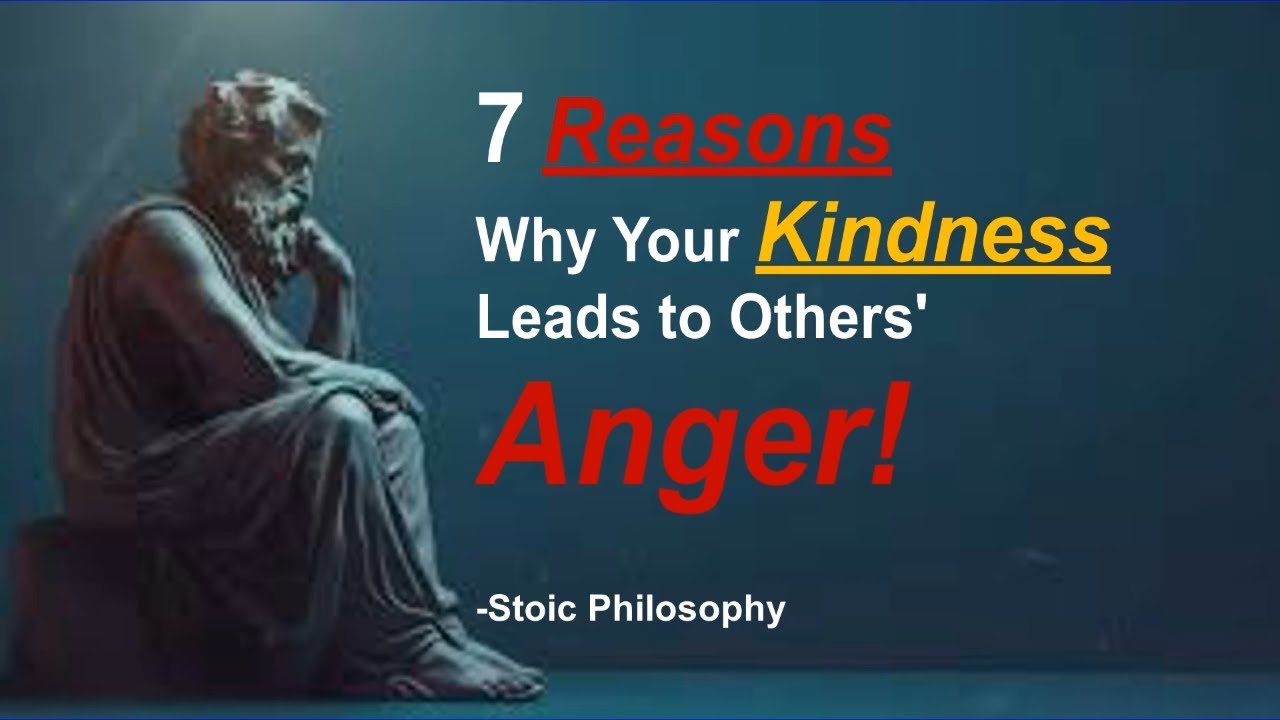
7 Reasons Why Your Kindness Leads to Others' Anger | Stoic Philosophy
Автор: The Life's Manual
Загружено: 2025-11-13
Просмотров: 19
Описание:
"7 Reasons Why Your Kindness Leads to Others' Anger". Stoic principles help explain why a person's misguided or excessive kindness, often stemming from a lack of self-awareness and boundaries, might be met with negative reactions, including disrespect or anger.
Here are several Stoic-aligned reasons why excessive or poorly applied kindness can lead to anger in others:
Perceived as Weakness Kindness without boundaries is often perceived as a weakness rather than a virtue. In a world that sometimes values strength and decisiveness, unlimited tolerance can make one a target for disrespect and being taken advantage of.
Lack of Boundaries A failure to set clear boundaries can lead to others feeling entitled to your resources (time, energy, emotional support). When you eventually say "no" or have a limit, their expectations are thwarted, which can lead to frustration and anger.
Thwarted Expectations/Entitlement When kindness is given without limit, it can teach others that it is an unlimited, assumed resource. When the giver's own needs arise or they cannot provide, the recipient may become angry because their expectation of constant generosity is not met.
Expectation of Reciprocity (and Disappointment) If a person performs acts of kindness with an underlying, often unstated, expectation of receiving the same care and respect in return, they set themselves up for disappointment. When others inevitably fall short of these expectations, it can lead to internal resentment for the giver and confusion/anger from the receiver when the giver's true feelings emerge.
Misaligned Motivation Stoicism emphasizes that true kindness should come from a genuine place of care and alignment with virtue (justice), not from a need for approval, validation, or to avoid confrontation. Others may subconsciously sense inauthentic motives, which can be off-putting and a source of tension.
Kindness as a Form of Condescension (Perceived) In some cases, relentless kindness in the face of provocation can, to the angry person, feel patronizing or like a moral superiority play. Marcus Aurelius noted that responding to "enemies" with kindness is an ideal, but it must be sincere, not "ironic or an act".
Ignoring the Recipient's Agency Sometimes excessive help, even if well-intentioned, can inadvertently undermine another person's self-sufficiency or sense of control. This can lead to the recipient feeling patronized or helpless, which they may express as anger.
In short, Stoicism advocates for a balanced and wise approach to kindness that aligns with the virtues of justice and self-respect, rather than limitless, self-depleting generosity. True Stoic kindness is rooted in strength and wisdom, not a desire to please or an avoidance of conflict.
What did Marcus Aurelius say about anger?,
What does Stoicism say about kindness?,
What does Seneca say about anger?,
What did Epictetus say about anger?,
What are the 7 Stoic principles of Marcus Aurelius?,
What did Aristotle say about anger?,
What did Aristotle say about kindness?,
What did Confucius say about kindness?,
What did Plato say about kindness?,
The Life's Manual, is used as a, metaphor in philosophy, self-help, and religious contexts to describe a set of guiding principles, a book, or a philosophy, that provides instructions on how to live a purposeful, happy, and fulfilling life.
"If you enjoy the content, please take a second to hit the like button, subscribe, and share this video with others—it truly helps the channel grow and reach more people!"
You Can Find All my Videos Here: @LifesManual-g4w
Повторяем попытку...
Доступные форматы для скачивания:
Скачать видео
-
Информация по загрузке: