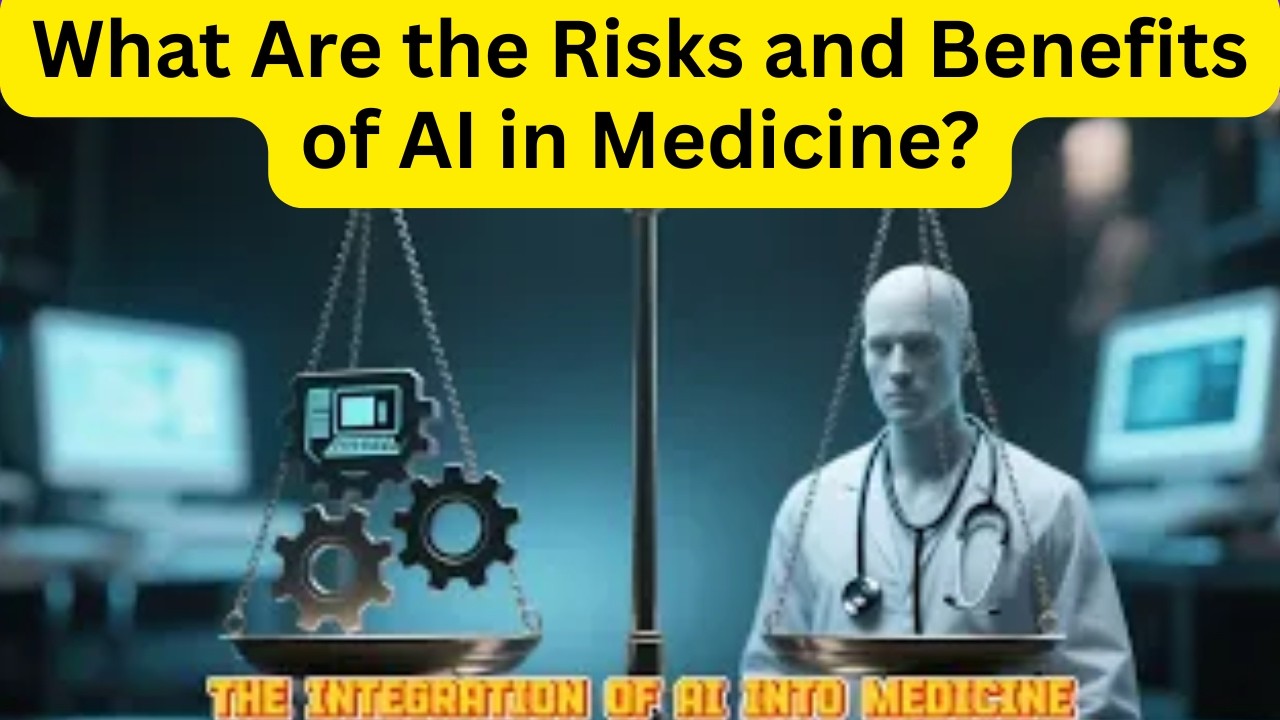
What Are the Risks and Benefits of AI in Medicine?
Автор: Content Analysis
Загружено: 2026-03-04
Просмотров: 2
Описание:
Welcome to Our Content Analysis on AI in Medicine and Human Cognition
Artificial Intelligence (AI) has long been a fixture of science fiction, but today, it is a tangible and rapidly advancing reality, particularly in medicine. According to Dr. Justin C. Key, a practicing psychiatrist and author, AI is evolving into a complex mix of our deepest hopes and most pressing concerns. Companies like OpenAI and Anthropic are pioneering this field, generating tools that have the potential to transform healthcare, research, and even the daily lives of individuals. However, these advances come with both promise and risk, especially as AI becomes more integrated into professional and personal spheres.
One of the most pressing concerns is the reliability of AI systems. Large language models (LLMs), while incredibly powerful, can present information in ways that are satisfying yet misleading. Dr. Key shares a personal example: when asked about himself, an AI incorrectly claimed he authored the movie Get Out. While minor inaccuracies like this might seem trivial for casual questions, the stakes are much higher when AI is used in medical decision-making or mental health counseling. Early research and case studies are already showing serious side effects, including AI-induced psychosis among individuals with no prior psychiatric history. Dr. Joseph Pierre has documented instances where patients required multiple hospitalizations after prolonged exposure to AI-driven delusions.
The integration of AI into medicine highlights a delicate balance between leveraging technology and maintaining human oversight. Dr. Key emphasizes that AI should remain a tool, with humans directing its use. Technology has undeniably improved efficiency: smartphones now support HIPAA-compliant communication, prescription management, and real-time access to patient data. Yet, over-reliance on AI and digital tools may also impair critical thinking and cognitive independence. Studies have already linked high digital media use in adolescents to symptoms resembling ADHD, underscoring the potential cognitive risks of excessive dependence on technology.
While AI’s capabilities continue to expand, Dr. Key stresses the importance of human-led medicine. AI can be a powerful assistant in identifying patterns from patient histories, suggesting interventions, or highlighting previous successful treatments. However, it should not replace the therapeutic judgment or empathetic decision-making of a trained professional. The ultimate goal is to enhance human expertise, not replace it. For instance, AI could inform a psychiatrist of trends in a patient’s mental health over time, allowing them to make more nuanced treatment decisions while maintaining the human connection that is essential for care.
The long-term societal impacts of AI remain uncertain. Some effects may emerge rapidly, while others could take generations to fully understand. The rapid integration of AI mirrors the global disruption caused by the COVID-19 pandemic, highlighting the need for cautious adaptation. As AI becomes increasingly capable, healthcare providers, educators, and policymakers must prepare for potential risks and ethical challenges, ensuring that these tools serve human interests rather than supplant them.
In summary, AI in medicine offers both hope and caution. While it has the potential to enhance productivity, efficiency, and patient care, it also carries risks, including misinformation, cognitive dependency, and mental health consequences. Maintaining human oversight and prioritizing empathy, judgment, and ethical responsibility remain critical as we navigate the AI-driven future. The challenge will be to harness AI as a tool that complements human expertise without compromising the core values of healthcare.
References
Ra, Chaelin K., et al. “Association of Digital Media Use with Subsequent Symptoms of Attention-Deficit/Hyperactivity Disorder among Adolescents.” JAMA, vol. 320, no. 3, 17 July 2018, p. 255.
Gerlich, Michael. “AI Tools in Society: Impacts on Cognitive Offloading and the Future of Critical Thinking.” SSRN Electronic Journal, vol. 15, no. 1, 2025.
ÖZER, Mahmut. “Is Artificial Intelligence Hallucinating?” Turkish Journal of Psychiatry, 2024.
Cheng, Myra, et al. “Sycophantic AI Decreases Prosocial Intentions and Promotes Dependence.” ArXiv.org, 2025.
Pierre, Joseph, et al. “You’re Not Crazy: A Case of New-Onset AI-Associated Psychosis - Innovations in Clinical Neuroscience.” Innovations in Clinical Neuroscience, 18 Nov. 2025.
Fred, Herbert L., and Mark S. Scheid. “Physician Burnout: Causes, Consequences, and (?) Cures.” Texas Heart Institute Journal, vol. 45, no. 4, Aug. 2018, pp. 198–202.
Повторяем попытку...
Доступные форматы для скачивания:
Скачать видео
-
Информация по загрузке: