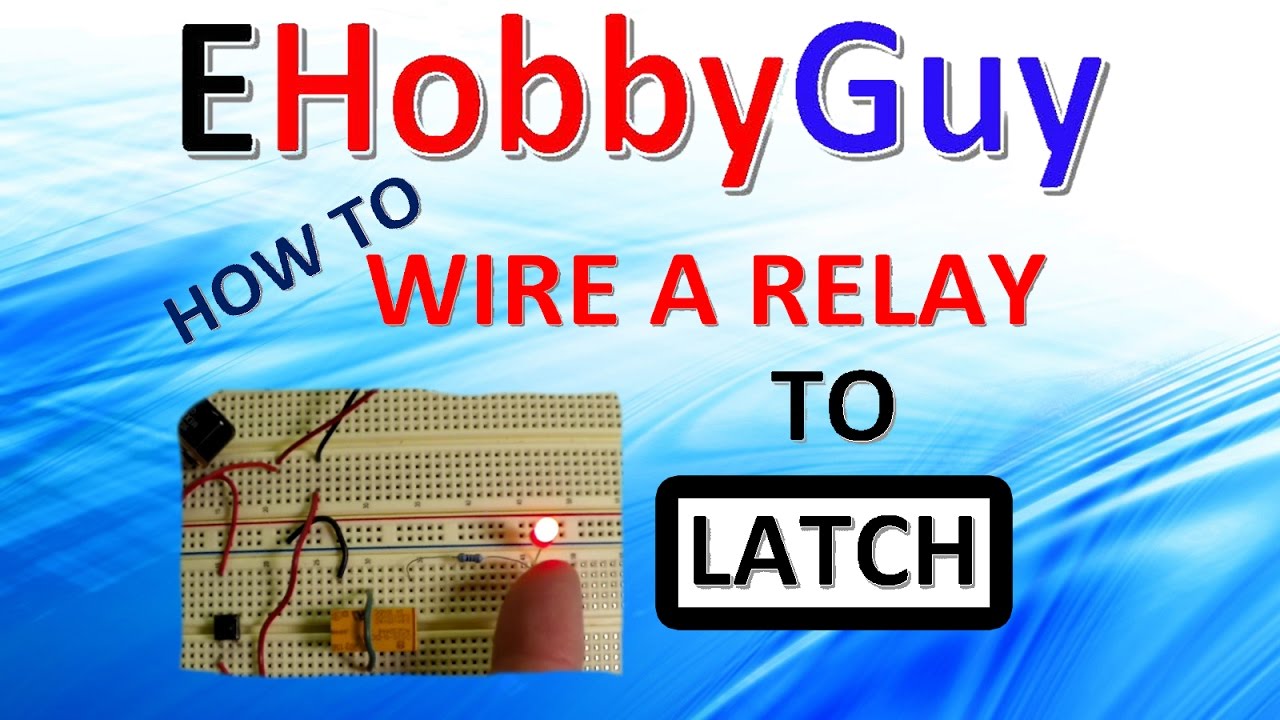
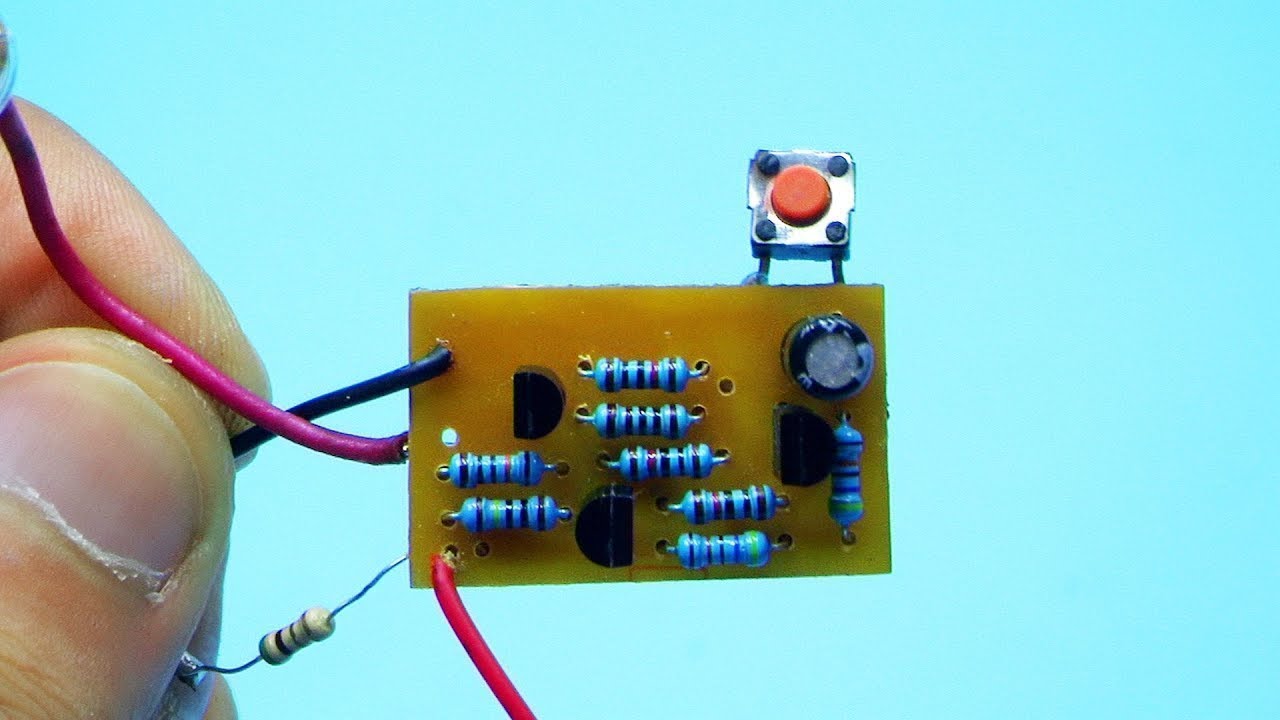
How to Build a Selectable Latching Relays Circuit || Part 2C || Low Side Switching
Автор: philo mech
Загружено: 2015-04-05
Просмотров: 16940
Описание:
This is the third video in Part 2 of a series focused on constructing a "selectable latching relays circuit". This video (Part 2C), explains how we will be using npn transistors to manage the low side switching events and functionality associated with the circuit.
*After uploading this video I realized that I forgot to mention the necessity of adding a protection diode around the relay's coil as well as one to the collector of the transistor closest to the coil. I apologize for the oversight. The diodes are present in the schematic utilized in the the next video (Part 2D), and they will definitely be included in the circuit we assemble during Part 3 of this series.*
The goal of Part 2 as a whole is to provide viewers with a sense of the thoughts behind each aspect of the circuit in the hope that such will add to their existing knowledge and perhaps further enable them to build somewhat larger scale circuits for their own unique applications. As well as to provide everyone with an understanding of the functional roles each part, wire, etc., is fulfilling in the overall circuit. The discussion has been separated into multiple videos so as to keep the duration of each within more manageable limits.
This series is provided in light of multiple viewer requests.
If you haven't already done so, then I would encourage one to check out Part 1, Part 2A, & Part 2B of this series before watching this video.
And if you're not familiar with latching relay circuits in general, then it might be helpful to check out my video on "How to Build a Latching Relay Circuit" prior to watching this series.
• Circuit Assembly Tutorials || How to Build...
The circuit presented in this series is not the only way to achieve the target functionality, nor is it perhaps the "best" way. Using, e.g., mosfets instead of transistors would likely be an immediate improvement, using a microcontroller would enable one to expand the number of latch-able relay circuits in a much less parts and labor intensive manner, open up opportunities for achieving selectable 'true bypass' circuits, etc., etc. This just happens to be how I decided to achieve the requested functionality. I often enjoy the challenge of building circuits that don't require microcontroller oversight and tend to think that such is one of the most interesting and enjoyable ways to learn more about electrical circuitry, components, etc. And also, as the number of components and circuit complexity increases, the number of opportunities to learn about and practice various troubleshooting techniques increases (which can be especially valuable to be familiar with when circuits fail to work as hoped or expected).
I am always interested in hearing about how others might go about achieving the same (or something similar). Please feel free to leave any ideas, suggestions, etc., in the comments. I greatly appreciate feedback and the opportunity to learn from others.
Parts List:
(4) Normally Open momentary buttons
(3) Double Pole Double Throw Relays (DS2Y-S-DC5V used in the video, but most any 5 to 6V DPDT relay would work-- the circuit will also work for relays with coils that have higher voltage requirements, e.g., 9V, 12V, etc.)
(6) NPN transistors (e.g., 2N2222, 2N3904, 2N4401, etc.)
(6) PNP transistors (e.g., 2N2907, 2N3906, 2N4403, etc.)
(15) Schottky diodes (1N5817, 1N5818, 1N5819, etc.)
(9) 330 ohm resistors
(6) 1K resistors
(12) 10K resistors
(3) leds
5 to 6V DC power supply (the required power supply is relative to the voltage requirements of the coils of the DPDT relays one uses.)
hookup wire (20 to 22, etc., gauge)
a breadboard
I hope this series is helpful. If so, then please consider clicking like and subscribing to my channel.
If there are any questions, please leave them in the comments and I will do my best to help.
Thanks for watching!
Повторяем попытку...

Доступные форматы для скачивания:
Скачать видео
-
Информация по загрузке: