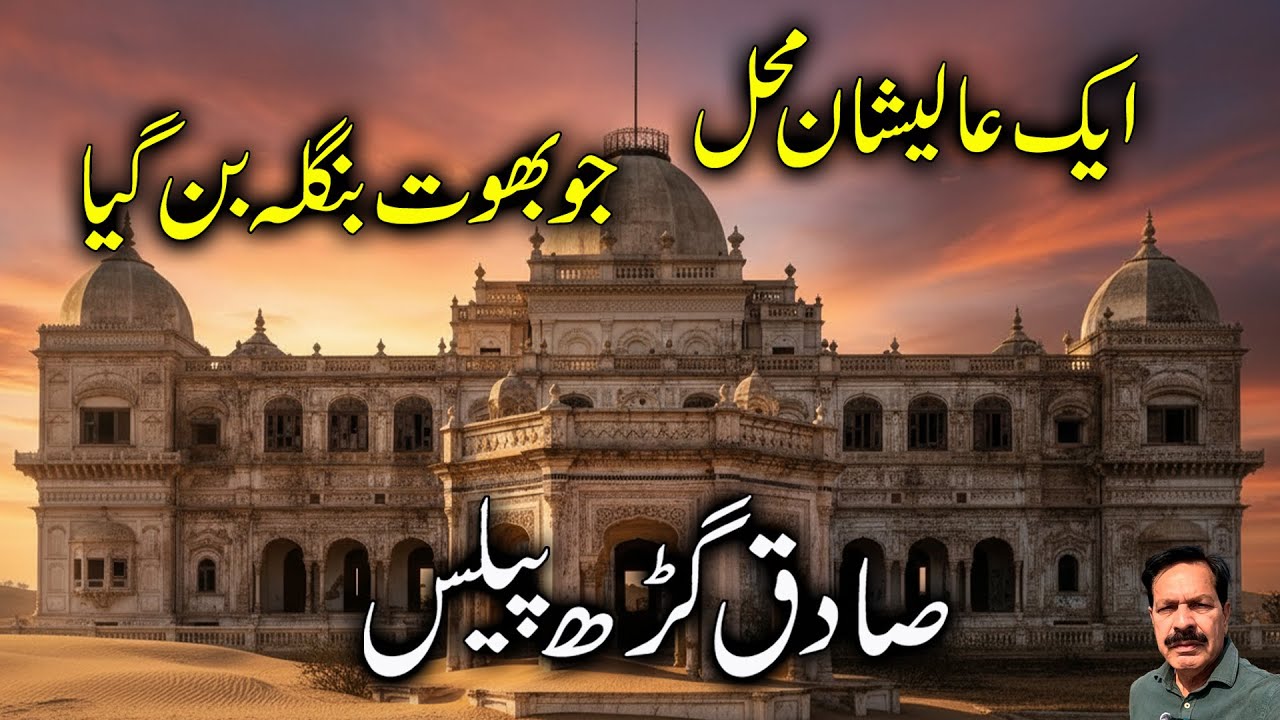
Sadiq Garh Palace I Dera Nawab Sahib I Once a Jewel, Now a Ruin I Lost Glory of Bahawalpur Nawabs
Автор: Gilani Logs
Загружено: 2026-02-07
Просмотров: 5390
Описание:
#bahawalpur #nawabofbahawalpur #bahawalpurhistory
Sadiq Garh Palace I Dera Nawab Sahib I Once a Jewel, Now a Ruin I Lost Glory of Bahawalpur Nawabs
Special Thanks:
Muhammad Akbar Khan, Uch Sharif
Music: Binu Kumar, Kerala, India
@SoundSFX (Under License)
For Financial Support:
Syed Zulfiqar Arshad Gilani
Easy Paisa:
0321 875 5750
IBAN: PK22TMFB0000000091196140
Standard Chartered Bank
A/C 01714038001
Swift Code: SCBLPKKXXXX
IBAN: PK36SCBL0000001714038001
Bank Alflah
A/C 5501 5000422906
Swift Code: ALFHPKKAXXX
IBAN: PK06ALFH5501005000422906
#bahawalpur
#bahawalpurhistory
#pakistanheritage
#historicalplaces
#royalpalace
#lostheritage
#pakistanhistory
#architecturelovers
#heritagedocumentary
#forgottenplaces
Sadiq Garh Palace is a 19th‑century princely complex in Dera Nawab Sahib, southern Punjab, Pakistan. It served as the winter seat of the Abbasi rulers of the former Bahawalpur State. Covering roughly 125 acres behind ramparts 50 feet high, it was once among the largest private estates in South Asia.
Sadiq Garh Palace was commissioned by Sadiq Muhammad Khan IV in 1882 and was finished in 1895 after a decade of construction supervised by Italian engineers. According to some reports, some 15 000 laborer worked for ten years and Rs 1.5 million were spent to complete the palace and its outbuildings.
During the princely era, the estate expanded to include three subsidiary mahals, Mubarak, Rahat and Sadiq, linked by tunnels as well as a private powerhouse, cinema, and armory. The darbar hall displayed retired Ghilaf‑e‑Kaaba covers produced in Bahawalpur and hosted audiences for British viceroys and other dignitaries.
In the mid‑1970s, the government of Zulfikar Ali Bhutto sealed the property amid a dispute with one branch of the Abbasi family, and decades of litigation concluded only in 2005 when the Supreme Court of Pakistan divided the estate among twenty‑three heirs.
The main block presents a symmetrical white façade surmounted by a central ribbed dome flanked by four smaller cupolas. Inside are about 120 large rooms, each pair decorated to evoke the decorative arts of a different country for the Nawab's foreign guests. Teak staircases, two early hydraulic elevators and vaulted basements link the three floors to underground passages reputed to reach other royal compounds.
Long periods of governmental sequestration allowed extensive theft of antiques, furniture and a fleet of Rolls‑Royce automobiles that once made the palace famous.
Follow us on:
Facebook:
/ gilanilogs1
Twitter:
/ gilanilogs
Instagram:
/ zulfiqargil. .
WhatsApp:
https://whatsapp.com/channel/0029VaBl...
Повторяем попытку...
Доступные форматы для скачивания:
Скачать видео
-
Информация по загрузке: