The Atacama Trench Mystery First Active Hunter in the Deepest Sea
Автор: Latest Science Synthesis
Загружено: 2025-10-24
Просмотров: 32
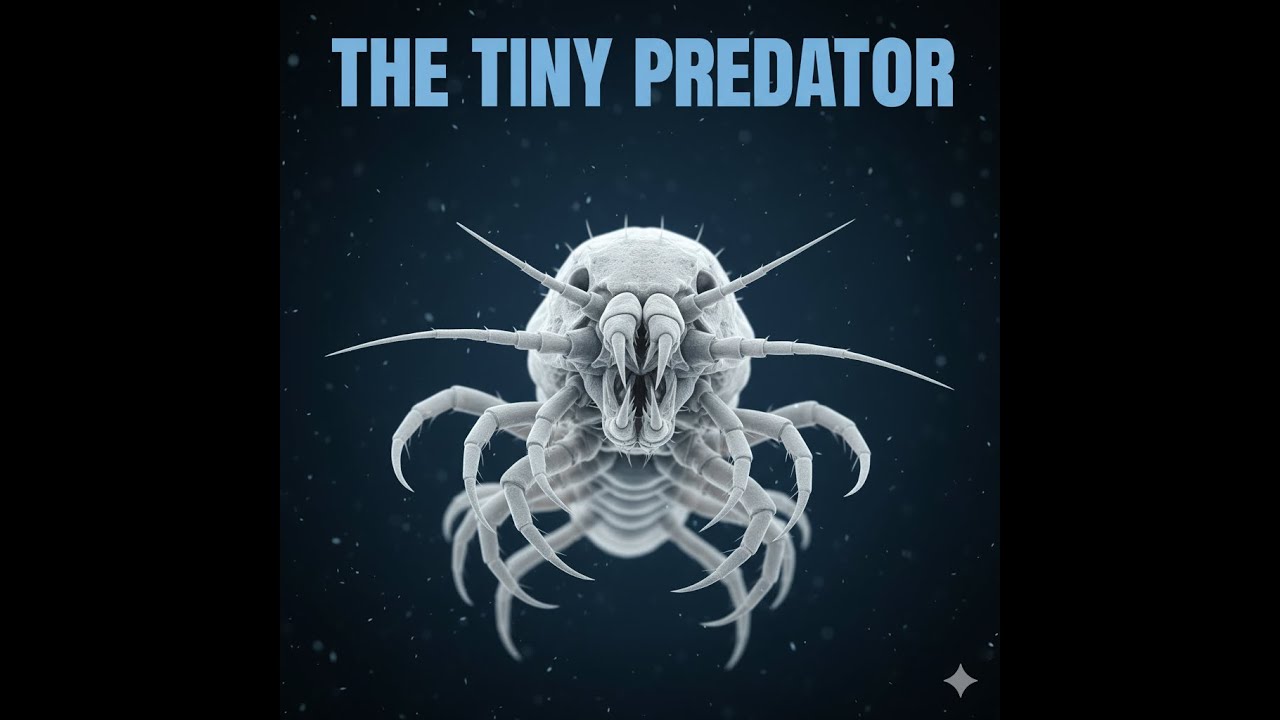
Описание: The hadal zone represents the deepest and most hostile environments on our planet, where trenches plunge below 6,000 meters. The Atacama Trench, off the coast of South America, is one such abyss, a realm of perpetual darkness, freezing temperatures, and unimaginable pressure—over 1,000 times greater than at sea level. In this extreme environment, where life is typically thought to rely solely on scavenging decaying matter from above, scientists have made a surprising and significant discovery: a tiny, but fiercely effective active predator. This new species, a shrimp-like crustacean named Dulcibella camanchaca, measures less than four centimeters long, yet it has rewritten the rules of survival in the hadal zone. Unlike its scavenging relatives, D. camanchaca is a specialized, active hunter, utilizing its complex, clawed appendages to capture and feed on other small crustaceans in the total darkness. This discovery marks the first known predatory amphipod in this extreme depth, fundamentally altering our understanding of the deep-sea food web dynamics. The creature's existence in such an environment is a profound testament to life's resilience and adaptability. Scientists are studying its unique biology to understand how its cell membranes and protein structures withstand the intense, crushing pressure. The implications of this discovery reach far beyond marine biology. The physical conditions of the hadal zone—extreme pressure, frigid water, and geological activity—mirror the theorized subsurface oceans of distant moons like Europa and Enceladus. If a tiny, sophisticated predator can thrive here, it significantly increases the probability that complex life could exist in the dark, cold oceans of other worlds. The name Dulcibella camanchaca itself reflects the environment: camanchaca is a local term for 'darkness' in South American languages, signifying its permanent home. The discovery serves as a powerful reminder of how little we have explored the 95% of our oceans that remain unknown. As deep-sea mining and climate change continue to threaten even these remote ecosystems, understanding the unique survival strategies of creatures like this tiny predator is more critical than ever. We must protect these environments, as they hold the key not only to life on Earth but perhaps to life beyond it.
Повторяем попытку...
Доступные форматы для скачивания:
Скачать видео
-
Информация по загрузке: