Structural Geology Course: Lecture 3 (Isotropic & Anisotropic Rocks)
Автор: MJ SCHOOL OF MINING AND GEOLOGY
Загружено: 2024-06-06
Просмотров: 821
Описание:
In structural geology, rocks can be broadly categorized as either isotropic or anisotropic based on their mechanical and physical properties. Isotropic rocks exhibit uniform properties in all directions, meaning their properties, such as density, elasticity, and strength, are the same regardless of the direction in which they are measured. Anisotropic rocks, on the other hand, have properties that vary with direction, meaning they exhibit different characteristics depending on the orientation in which they are measured.
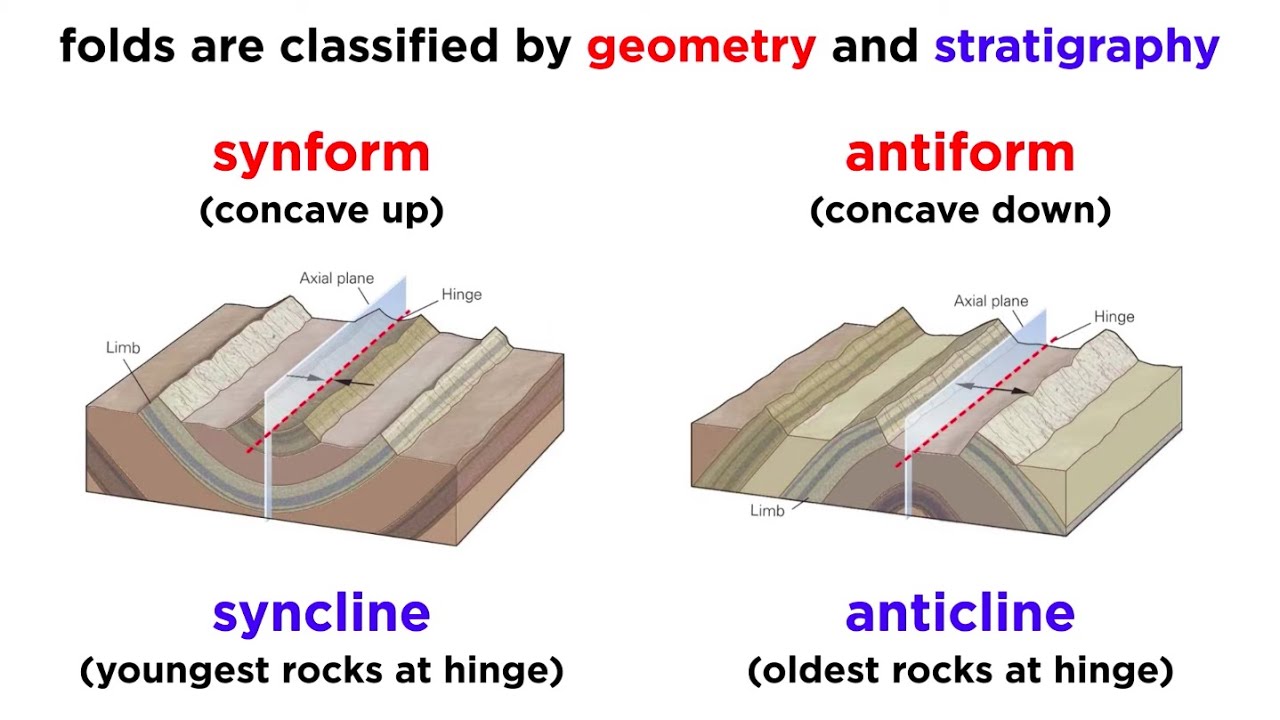
Understanding the distinction between isotropic and anisotropic rocks is essential for structural geologists because it influences how rocks deform under stress and how geological structures form and behave. Isotropic rocks typically deform in a more uniform and predictable manner, whereas anisotropic rocks may exhibit complex deformation patterns due to variations in their properties across different directions. This can lead to the development of preferential planes of weakness, such as cleavage or foliation, which influence the orientation and geometry of geological structures like faults and folds.
The distinction between isotropic and anisotropic behavior is also significant at different scales of observation. At the microscopic scale, rocks may exhibit isotropic behavior due to the random orientation of mineral grains and homogenous distribution of properties. However, as the scale of observation increases, anisotropic behavior becomes more pronounced due to factors such as preferred orientation of mineral grains, layering, and the influence of tectonic stresses. This means that the mechanical behavior of rocks can vary significantly depending on the scale at which they are observed, highlighting the importance of considering scale in structural geology studies.
An understanding of isotropic and anisotropic behavior is particularly valuable to structural geologists for several reasons. Firstly, it influences the interpretation of geological structures and deformation mechanisms, as anisotropic rocks may respond differently to tectonic stresses compared to isotropic rocks. Secondly, knowledge of rock anisotropy is essential for predicting and mitigating geological hazards such as earthquakes, landslides, and rockfalls, as it affects the stability and strength of rock masses. Finally, understanding the mechanical properties of isotropic and anisotropic rocks is critical for engineering applications such as tunneling, mining, and reservoir geomechanics, where the behavior of rocks under stress is a key consideration.
References:
Fossen, H. (2016). Structural Geology. Cambridge University Press.
Twiss, R. J., & Moores, E. M. (2006). Structural Geology. W.H. Freeman and Company.
Marshak, S. (2010). Essentials of Geology (3rd ed.). W. W. Norton & Company.
Повторяем попытку...

Доступные форматы для скачивания:
Скачать видео
-
Информация по загрузке: