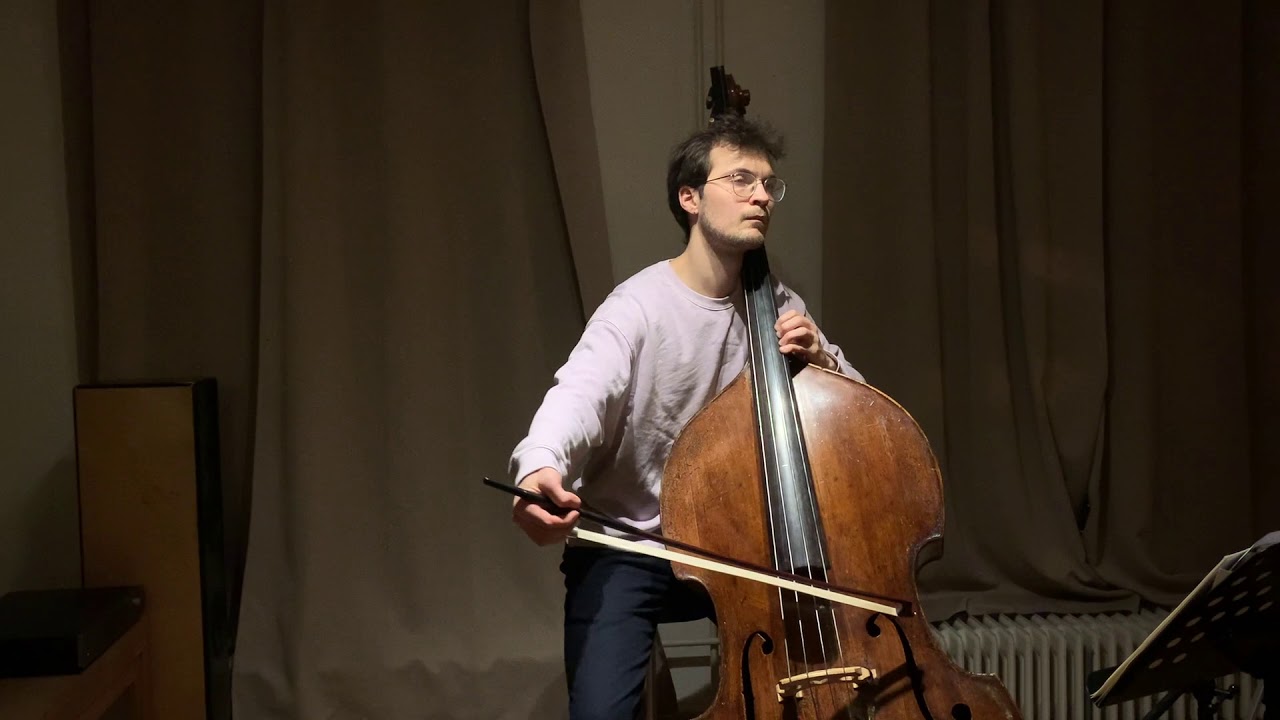
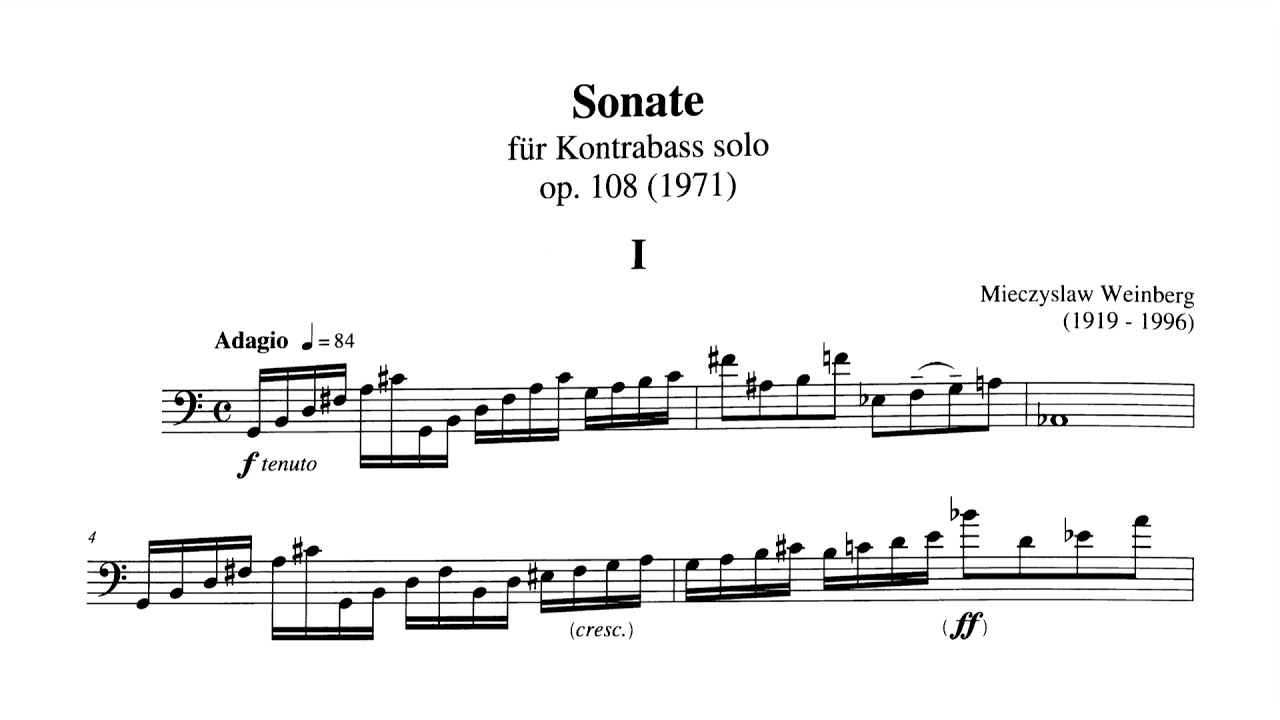
Mieczysław Weinberg – Sonata for Solo Double Bass (performed by Petru Luga)
Автор: ContrebasseClassique
Загружено: 2023-11-04
Просмотров: 1081
Описание:
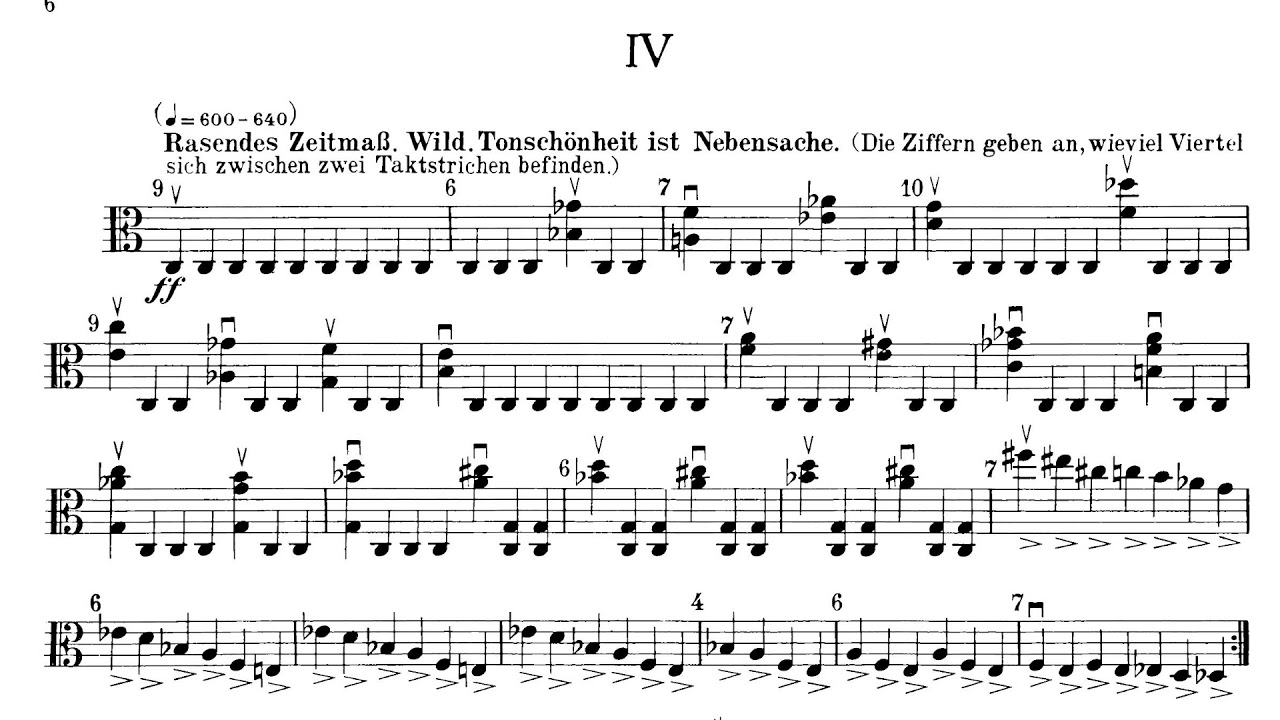
Mieczysław Weinberg (1919-1996) – Sonata No. 1 for double-bass solo, Op. 108 (1971)
Double Bass: Petru Iuga
Original audio: • Mieczysław Weinberg - Solo Sonata for Doub...
Score available here: https://www.stretta-music.com/weinber...
Looking for new chamber music repertoire? Go take a look at the ContrebasseClassique website: https://www.contrebasseclassique.com/
Details from Vito Luzzi's website
(https://liuzzivito.blogspot.com/2015/...)
Mieczyslaw Weinberg was born in Warsaw on 8 December 1919 and apparently was an exceptional pianist from a young age. The Nazi occupation of Poland saw him flee to Minsk (Belarus) and the name on his travel documents at this time was changed to Moisey Vainberg, by which he was known until 1982, and a number of recordings also use this spelling. From Minsk he travelled to Tashkent where he composed his first Symphony, which so impressed Shostakovich that he arranged an invitation for Weinberg to move to Moscow, which he did in 1943 and remained there until his death. Weinberg suffered from the anti-Semitism of the Soviet authorities for many years and only the death of Stalin on 5 March 1953, and the intervention of Shostakovich, saved him from being deported to Siberia, having already been imprisoned for alleged Jewish subversion in advocating the establishment of a Jewish republic in the Crimea.
Weinberg was a hugely prolific composer writing in every genre, and composed a range of music for strings, although apparently only one work for solo double bass. From 1960-67 he produced four solo sonatas, two for violin and two for cello but the year of 1971 saw the composition of three solo sonatas in quick succession - Sonata No.3 for cello Op.106, Sonata No.1 for Viola Op.107 and Sonata for Double Bass Op.108. Although composed in 1971 and published in the Soviet Union a few years later, the work was almost completely unknown until its publication by Peermusic classical in 2005 followed by two excellent recordings by Joel Quarrington (2008) and Nabil Shehata (2012).
Bassists eager to add to their repertoire need to gird their loins before tackling Weinberg’s six-movement work. Elements of suite and sonata are combined, the quick-march third movement and the sarabande-like fifth (marked f al fine) being the most suite-like in their idiom. Elsewhere the character of the music depends somewhat on how literally the performer chooses to interpret the metronome markings, which are surprisingly brisk in the case of the preludial Adagio first movement (actually quite vehement and energetic in its first half) and the Allegretto second and fourth (each scherzo-like in character). The concluding Allegro molto, also challenging for the player because of its crotchet = 208(!) marking, has much of the structural and expressive weight of a sonata finale.
As with most of Weinberg’s music from this time the sense of tonality is for the most part quite ‘roving’, though the majority of the movements are loosely anchored to the instruments lowest note, E. The fact that all but one of them are directed to be played without a break reinforces the impression of the work as a single coherent entity.
Weinberg had already given the double bass a prominent role in his Tenth Symphony and Requiem, and he would re-use the third movement of the Sonata with similar dramatic impact in the Largo section of his Symphony No. 21. Special effects are reserved until the finale, where harmonics lend a slightly uncanny tinge to the final page. Pagination in the manuscript indicates that the short fourth check fourth or fifth movement was added after the rest. A number of technically demanding passages were cut prior to publication of the work in 1978. An undated manuscript currently held in Moscow’s Glinka Museum contains a shortened version of the Sonata, consisting of movements 2, 3 and 5 and numbered Op. 108b.
Weinberg's Sonata for Double Bass is a great addition to the solo repertoire and deserves to find a permanent place in recitals by every serious bassist. The composer's name on the front cover of the printed edition is also written as Vainberg, Moisei Samuilovich and the commentary about the sources and manuscripts, alongside a very readable and knowledgeable biography and programme note, make this a must for every bassist who is interested in the history and repertoire of our instrument. There are no real tunes or melodies here, which makes little difference to the great quality of the music, but great opportunities to demonstrate the solo, virtuosic and cantabile qualities of the double bass, and also to test the musical prowess of the performer. There are some technical challenges but much of the music is written in the orchestral register of the instrument and anyone who can tackle Bottesini, Misek, Hindemith and Gliere will have few problems here.
#weinberg #solodoublebass #doublebassmusic
Повторяем попытку...

Доступные форматы для скачивания:
Скачать видео
-
Информация по загрузке:





![Eugène Ysaÿe - Sonata No. 1 for Violin, Op. 27 (1923) [Score-Video]](https://imager.clipsaver.ru/EJLpWCeywck/max.jpg)