Improved Application Methods for DAP | Phosphatic Fertilizers | Majid Saleem | Agriculture Ideas
Автор: FARM INNOVATIONS
Загружено: 2021-07-26
Просмотров: 2529
Описание:
Improved application methods for DAP
How to improve phosphatic fertilizers efficiency
Diammonium phosphate explanation
Explained by M Majid Saleem
Fertigation of fertilizers
Band placement of fertilizer
Sulfur bentonite benefits
How to create low pH in soil
Broadcasting of Fertilizers
Myths in Agriculture
Agriculture in Pakistan
Alternative of DAP
Alternatives to DAP
How to lower soil pH
How to increase efficiency of DAP
Application of fertilizers
Languages Used Urdu English Hindi
Related Video; Misconceptions about DAP
• Misconceptions about DAP Fertilizer | Diam...
DAP is usually applied by broadcasting method in Pakistan. But this method of DAP application has many drawbacks.
DAP when applied by broadcasting method, its granules are spread in a large volume of soil. After absorbing moisture it swells up and dissolved to limited extent. As it does not move in soil so a high concentrated solution of DAP is produced around its granule. Concentrated solution reacts easily with metallic ions to produce insoluble phosphate ions and in this way a major portion of DAP is fixed in soil.
Fertigation method is an alternative and improved application method to avoid such fixation. In fertigation a very dilute solution of DAP is applied to soil. Such dilute solution does not react with metallic ions to produce insoluble phosphate ions. It is because every substance has some solubility (calcium phosphate solubility is 0.025g/L), so dilute solution will produce low quantity of phosphate that it remains soluble in soil solution.
Fertigation method is not recommended by many research institute and soil scientists. Following reasons are given by different soil scientists.
1. They claim that in this method phosphate ions are spread to large volume of soil, so it will expose to soil and metallic ions and will get fixed instantly.
2. As phosphorus is immobile in soil, so it will not reach to root zone with water penetration into soil.
3. Our soils are calcareous, so calcium ions are present in abundance and will easily fix phosphate present in irrigation water.
Answers to above concerned points are as follow.
1. When 10 Kg DAP is dissolved in 100000 L irrigation water then it produces and infinite dilute solution. Phosphate ions are present in very low concentration in specific volume of water. So it will not react with metallic ions to get fixed. As explained above every compound has some solubility, even calcium phosphate solubility is 0.025g/L. Although it is very low solubility but still production of calcium phosphate is such in low concentration that it remains soluble and it is not fixed in soil.
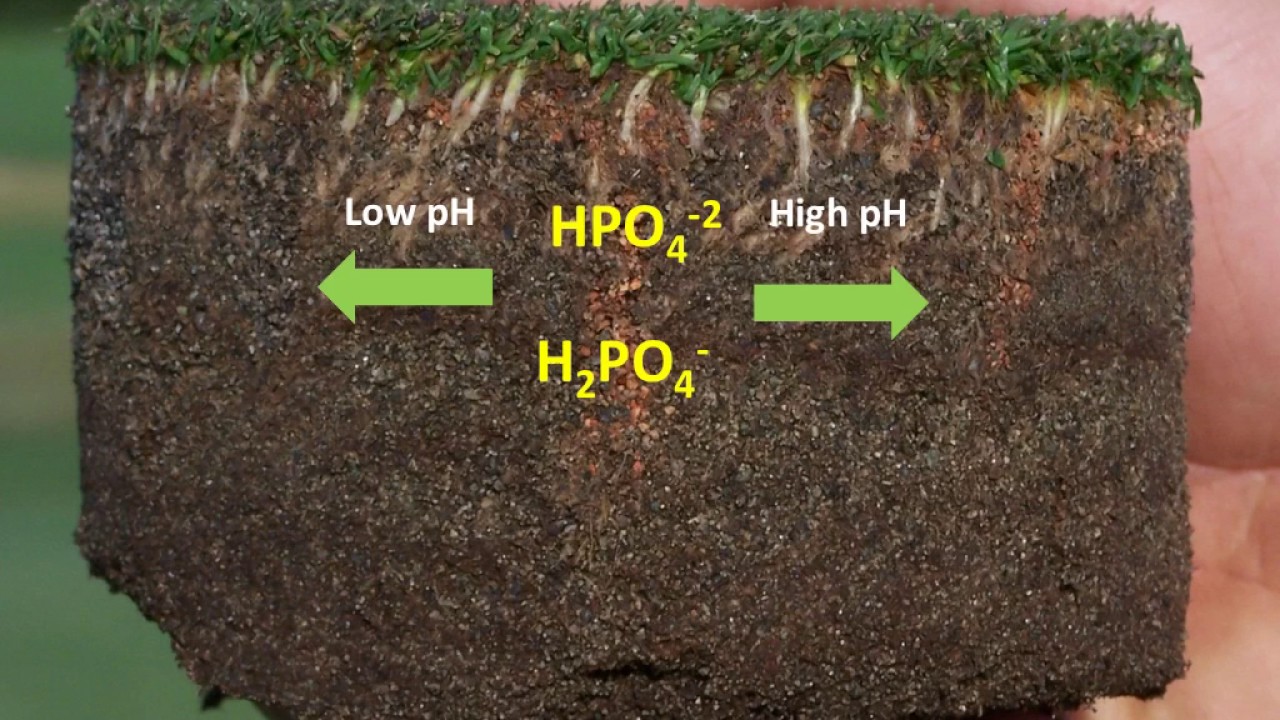
2. Phosphorus is immobile in low pH soils, where ferric ions attract phosphate ions and firmly attach it to clay particles and it cannot move. In high pH soils (calcareous soils) ferric ions are not predominant ions, so a weak attraction is present between clay particles and phosphate ions. Phosphate ions are mobile to limited extent in high pH soils and immobile in low pH soils.
In fertigation DAP molecules break into ammonium ions and phosphate ions and move with physical moment of water. If there is dry wattar condition then water easily move downwards in soil and carries phosphate ions along with it and directly transported to root zone. Where it is readily absorbed by plants and get very little time to reside in soil solution and to get fixed.
3. Our soils are calcareous soils and calcium is present in the form of calcium carbonate which is insoluble compound. So calcium ions are not in abundant quantity as most of calcium is bound in the form of calcium carbonate.
Contact Detail; [email protected]
Повторяем попытку...
Доступные форматы для скачивания:
Скачать видео
-
Информация по загрузке: