An Hairy Plant - Jatropha gossypiifolia L. 🌿🌿
Автор: Jani Nature Curiosity
Загружено: 2024-04-13
Просмотров: 1450
Описание:
#Ornamental_Shrubs
Jatropha gossypiifolia L.
Family: Euphorbiaceae
Common name: Cotton-leaf physicnut,Bellyache bush, black physicnut
Mogali erand in marathi
Varenda/ভ্যারেন্ডা.
In odisha it is known as NALI BAIGBA (ନାଲି ବାଇଗବା). Jatropha in odisha known as BAIGBA( ବାଇଗବା )
रतन जोत,चंद्रजोत , diesel plantयह पौधा दन्त्ती का है ।.
bellyache bush. रतनजोती
Sanskrit : Dravanti Used in:Ayurveda, Siddha
Vernacular Names
Hindi :La Bherenda, mayla, Ratanjyot (रतनजोती) Ratanjyothi, Mogli Erand.
Bengali Lal Bherenda
Malayalam Chuvanna Kadalavanakku
( കമ്മട്ടി, ചുവന്ന കടലാവണക്ക്)
Kannada : chikka kaada haralu
Tamil : Aadalai, sheemaiyamanakku
Telugu: Nepalamu
આને લેપાળો કહેવાય
Aane Gujrati ma Lepalo , नेपाळो गुजराती नाम छे
This one is Jatropha gossypifolia locally known as Ratanjot but not real Ratanjot
Yes this is Jatropha gossypifolia real ratanjot is Alkanna tinctoria, Boraginaceae which is used as dye in medicines and food.
ALL JATROPHA PLANTS ARE POISONOUS. ALTHOUGH MANY POISONOUS PLANTS ARE USED IN AYURVEDA AS MEDICINES WITH PRECAUTION !इसके बीज , पते जहरीले होते है , बच्चो को दूर रखें ।
The genus Jatropha belongs to family Euphorbiaceae and subfamily Acalyphoideae, and includes about 175 species that are distributed all over the world (Heller
1996). Jatropha gossypiifolia L. Synonyms Jatropha isabelli Muell. Arg., Adenoropium gossypifolium (L.) Pohl and Jatropha elegans (Pohl) Klotzsch is native to
Mexico and Subtropical America, but now it has naturalized in most tropical areas of the world (Burkill 1994). It is commonly known as red physic nut in English and ratanjot and jungli arand in Hindi.
The species is native to Mexico, South America, and the Caribbean islands, but is currently spread throughout the tropics.
#It grows to 8.2 –13.1 ft high. The three lobed leaves are purple and sticky when young and become bright green with age.
is a species of flowering plant in the spurge family, Euphorbiaceae."
Often used as an ornamental plant.
Very good....need least care...grow aggressively
Yes, common roadside and waste places
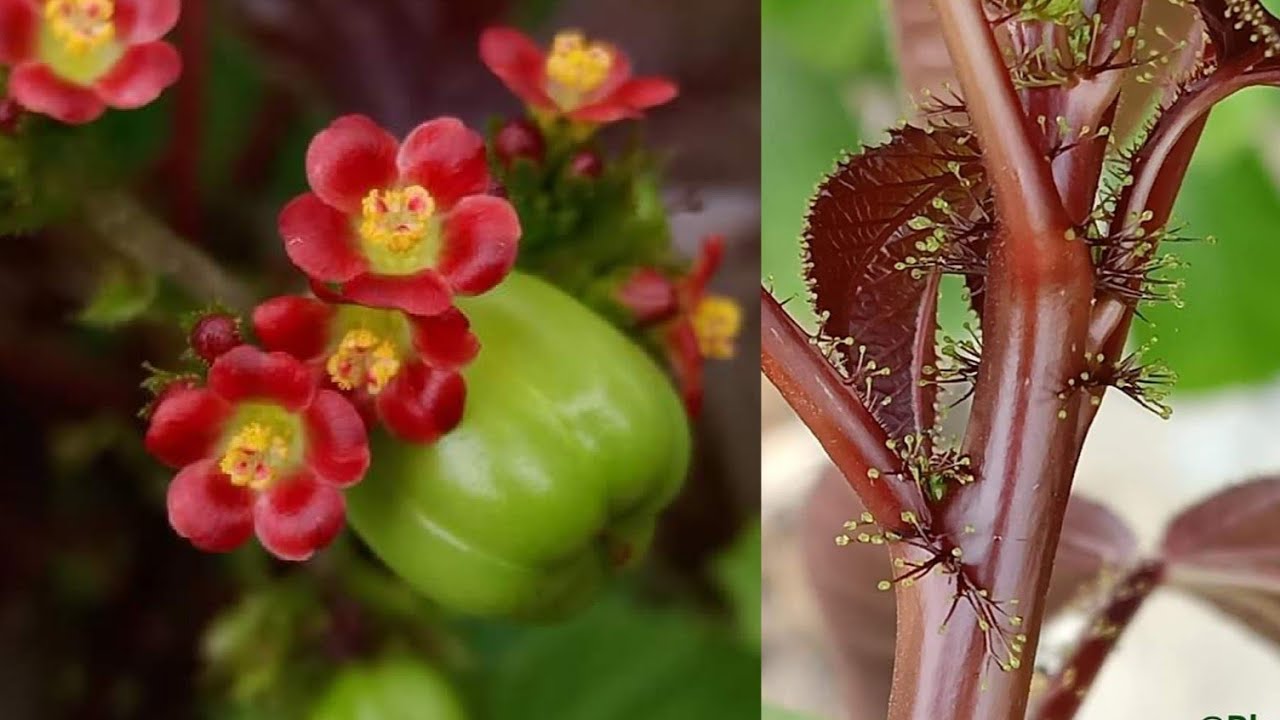
glandular hairs are present margin of the leaves and stem, which are absent in Jatropha curcas
The name is derived from the Greek words ἰατρός (iatros), meaning "physician", and τροφή (trophe), meaning "nutrition", hence the common name physic nut.
Younger stems and growing points purplish and hairy, non-woody, older stems-softly woody,
Leaves alternate, palmately 3-5-lobed, dark purple when young, turning olive-green with age
Flowers 5 petaled in terminal clusters, deep red with a yellow centre
The tiny red flowers with yellow centres appear in clusters and are followed by cherry-sized seed pods that are toxic.
Plants produce separate male and female flowers. uni-sexual flowers
With cyathium inflorescences
Another invasive species ,adopted very much to tropics.Very much South America origin & spread widely and grow at variety of habitats. Nevertheless, this plant has many medicinal values. It is a cousin to castor plant, Ricinus communis of same family.
Castor family.
It contains approximately 170 species of succulent plants, shrubs and trees (some are deciduous, like Jatropha curcas). Most of these are native to the Americas, with 66 species found in the Old World. As with many members of the family Euphorbiaceae, Jatropha contains compounds that are highly toxic. Jatropha species have traditionally been used in basketmaking, tanning and dye production. Leaves and stem of Jatropha gossypiifolia L. are a potential source of natural dye for dying cotton yarn.
It has many medicinal values.
kahechhe Tena be khavathi kabjiat matechhe
Medicinal uses:
🌿 Stem sap stops bleeding and itching of cuts and scratches.
🌿 It has an anti-cancer activity.
🌿 Roots are used against leprosy.
🌿 A decoction of the bark and leaves for
stomachache, venereal disease and as blood purifier.
Use:
A "study clearly indicate the presence of significant analgesic, neuropharmacological and anti-diarrheal properties of the plant, which demands further investigation including, compound isolation."
though the main use is as renewable source of energy as bio diesel.
In the 2000s, one species, Jatropha curcas, generated interest as an oil crop for biodiesel production."
Jatropha carcus
The seeds contain 27–40% oil (average: 34.4%) that can be processed to produce a high-quality biodiesel fuel, usable in a standard diesel engine.Edible (non-toxic) varieties can be used for animal feed and food.
one is small red colour plant used in ayurved and another is larger Verity green plant used for fencing now out of which oil is extracted used as bio disel.
Its not the biodiesel plant. Biodiesel plant is Jatropha curcas.
But Jatropha curcas is more commercially cultivated as Bio diesel plant.
#Jatropha #gossypiifolia #euphorbiaceae #information #botany #ornamentalplant #exoticplants #poisonous #completeinfo #plantsofindia #garden #lobbedleaf #ratanjyot
Повторяем попытку...
Доступные форматы для скачивания:
Скачать видео
-
Информация по загрузке: