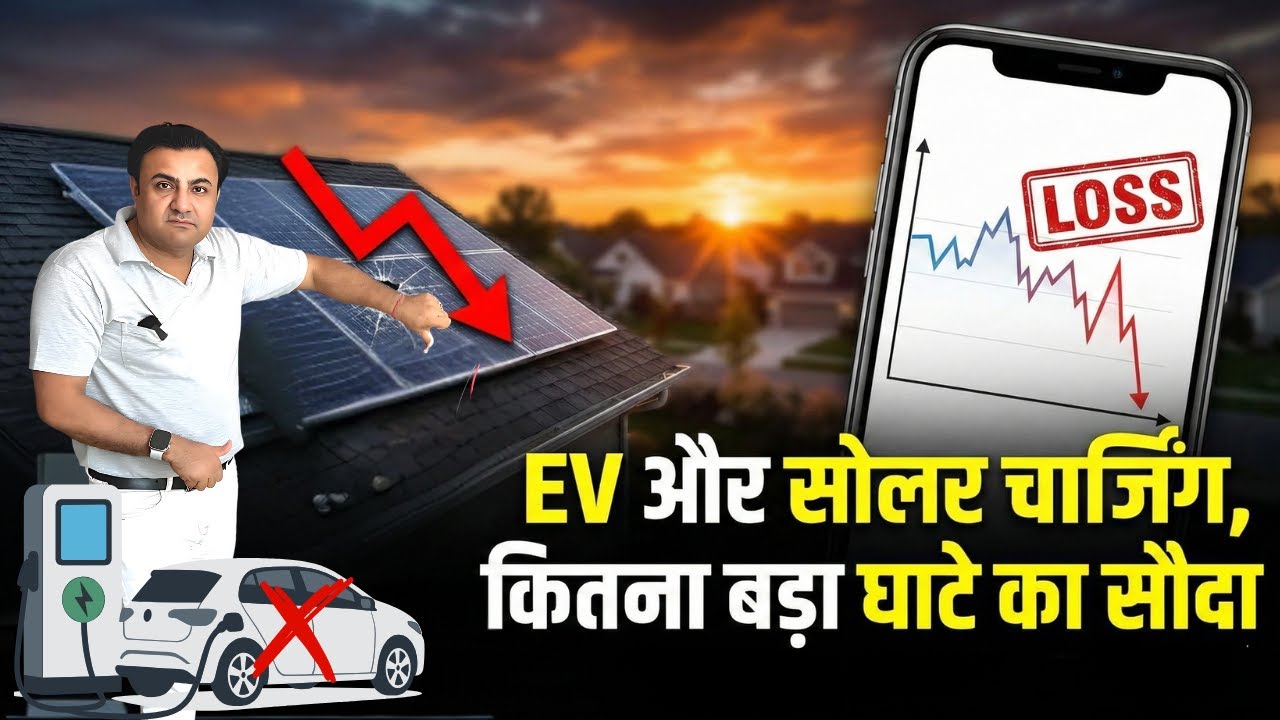
Petrol Pump जाना बंद? 🚫 Solar से अपनी EV Car/Scooty चार्ज करने का असली खर्च!
Автор: Deepak chaudhary Nexus solar energy
Загружено: 2025-12-22
Просмотров: 47112
Описание:
Is buying an Electric Vehicle (EV) and installing a Solar System really a ticket to "Free Travel"? Or is it a financial trap that costs you more than a Petrol car?
In today’s deep-dive analysis, we expose the mathematical reality behind the "Zero Cost Charging" marketing claims. If you are planning to buy a Tata Nexon EV, Tata Punch EV, MG ZS EV, Mahindra XUV400, or MG Comet, this video is the most important financial calculation you will watch today. We don't rely on hype; we rely on Data, Slab Rates, and Real-World ROI calculations.
Most EV buyers ignore the "Hidden Costs" of home charging. This video breaks down the exact per-unit cost, battery degradation, and the long-term comparison between Petrol and Electric cars in India.
🚗 In-Depth Video Breakdown & Analysis:
1. The "Free Charging" Myth vs. Reality
Salesmen and "fake" influencers often claim that once you install solar panels, your EV running cost becomes ₹0 or ₹1 per km. We debunk this by calculating the Opportunity Cost of the capital invested in the Solar System. Is the electricity truly free if you paid ₹3 Lakhs upfront for the setup?
2. The Electricity Slab Rate Trap (The Silent Killer)
This is the part 99% of people miss. In India, electricity bills work on a "Slab System."
• Scenario: Your normal home usage is 250 units (Lower Slab).
• Effect: The moment you plug in your EV, your consumption jumps by 200-300 units/month.
• Result: This pushes your ENTIRE home bill into the "Highest Commercial/Domestic Slab" (e.g., ₹8 to ₹12 per unit).
We calculate how this specific change destroys the savings you thought you were making.
3. Petrol vs. EV: The 5-Year Cost Comparison
We compare a standard Petrol SUV (like Tata Nexon Petrol/Creta) against its EV counterpart.
• Petrol Car: High running cost, low upfront cost.
• EV Car: Low running cost, massive upfront cost (+ Interest on loan).
• Verdict: At what point (how many KMs) do you actually break even? 30,000 km? 80,000 km? Or never?
4. Solar System ROI Calculation
If you install a 3kW or 5kW On-Grid Solar System specifically for your car, how many years will it take to recover that money? We do the math considering the degradation of solar panels and the inverter replacement costs.
⏱️ Video Chapters (Timestamps):
(Please ensure these match your video editor)
00:00 - Introduction: The Truth About "Free" EV Charging
01:25 - Why "Zero Cost" is a Marketing Scam
02:45 - Understanding Electricity Bill Slab Rates (Crucial Calculation)
04:30 - Real Cost of Charging: Tata Nexon EV & Punch EV
06:15 - Home Solar System: Investment vs. Return (ROI)
08:00 - Petrol Car vs. Electric Car: 5-Year Expense Comparison
09:45 - Hidden Costs: Battery Replacement & Maintenance
10:50 - The Final Verdict: Is it Savings or a Loss?
11:36 - Conclusion & Next Steps
🔍 Common Queries Solved in This Video (Search Topics):
• Real-world EV charging cost India: We analyze the actual bill increase after buying an EV.
• Tata Nexon EV charging cost at home: Detailed breakdown for 30kWh and 40.5kWh battery packs.
• Is solar charging free? Understanding the difference between "Gross Metering" and "Net Metering" for EV owners.
• Tata Punch EV vs Petrol Running Cost: Is the new Punch EV actually economical for city driving?
• Solar Panel Price for EV: How much solar capacity (kW) is needed to charge a car daily?
• Electric Vehicle Hidden Costs: Tyres, Insurance differences, and Resale Value risks.
• Grid vs Solar Charging: When is it cheaper to just pay the electricity bill instead of buying solar?
📊 Detailed Calculations Used in Video:
• Average Battery Size Considered: 30 kWh to 45 kWh.
• Average Range: 200km to 350km (Real World, not ARAI).
• Electricity Rate: Calculated at an average of ₹8/unit (Highest Slab across major Indian states).
• Petrol Price: Assumed average of ₹96-₹100/liter.
• Solar Generation: Assumed 4 units per kW per day average.
If you appreciate Logical, Science-backed, and Honest Reviews without the marketing fluff, please support the channel. We stand against misleading information in the Solar and Tech space.
💡 Thinking of Buying Solar? Watch These First:
Disclaimer:
The calculations presented in this video are based on current electricity tariffs (2025-2026) and average solar generation data in India. Costs may vary depending on your state (State Electricity Board), weather conditions, and driving style. This video is for educational purposes to help you make an informed financial decision.
#EVCars #SolarCharging #TataNexonEV #ElectricVehicles #SolarPower #PetrolVsEV #TataPunchEV #EVIndia #SolarScam #EnergySavings #NexonEV #TechAnalysis #EVReality #India #MGZSEV #MahindraXUV400 #GreenEnergy #SustainableLiving #CarReviewsIndia
Thank you for watching!
If you found this analysis helpful, please Like, Share with your friends who are planning to buy an EV, and Subscribe for more truth bombs!
Повторяем попытку...
Доступные форматы для скачивания:
Скачать видео
-
Информация по загрузке: