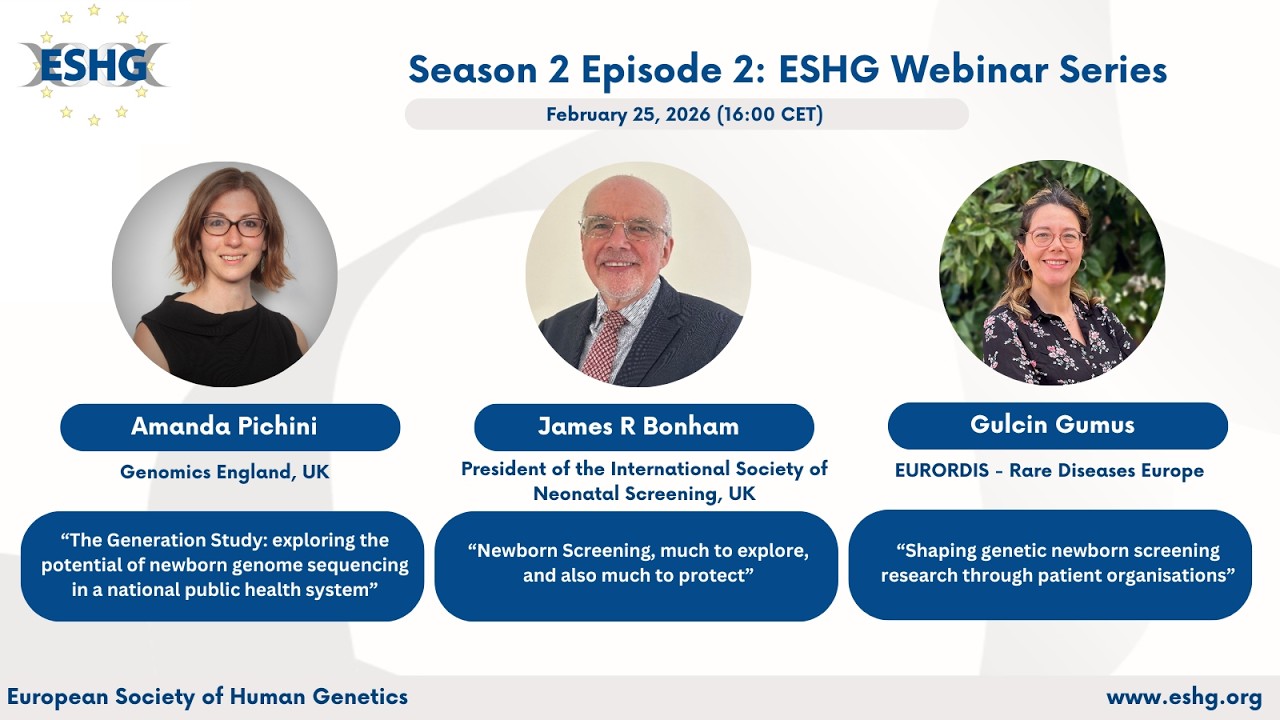
ESHG Webinar Series Season 2 Episode 2 with Amanda Pichini, James R. Bonham and Gulcin Gumus
Автор: European Society of Human Genetics
Загружено: 2026-02-25
Просмотров: 151
Описание:
Amanda Pichini (Genomics England) on The Generation Study
Reactions from James R. Bonham (International Society of Neonatal Screening) & Gulcin Gumus (EURORDIS)
______________________
Newborn screening aims to avoid irreparable health damage by early diagnosis of (often genetic) conditions. It all started with phenylketonuria more than 50 years ago, but programs now cover 10-50 conditions. Many pilots of genomic newborn screening are ongoing, hoping to identify many more treatable conditions. This webinar will not just consist of one presentation, but it will briefly discuss some of the pros and cons. The first presentation will speak about the development of genomic newborn screening in England, followed by comments from the perspectives of patients and traditional newborn screening.
______________________
Amanda Pichini: "The Generation Study: exploring the potential of newborn genome sequencing in a national public health system"
The Generation Study is exploring the feasibility, acceptability and utility of sequencing the genomes of 100,000 babies to screen for over 200 rare conditions; as well as use of babies’ genomes over their lifetimes for other clinical uses, and alongside longitudinal health data collection for wider health research. Early results from over 20,000 of newborns demonstrate detectability of treatable conditions while minimizing false positives. This talk will focus on the engagement, governance frameworks, ethical considerations and co-design approaches that have enabled sustainable and scalable implementation, as well as challenges in generating evidence and maintaining ongoing public trust.
______________________
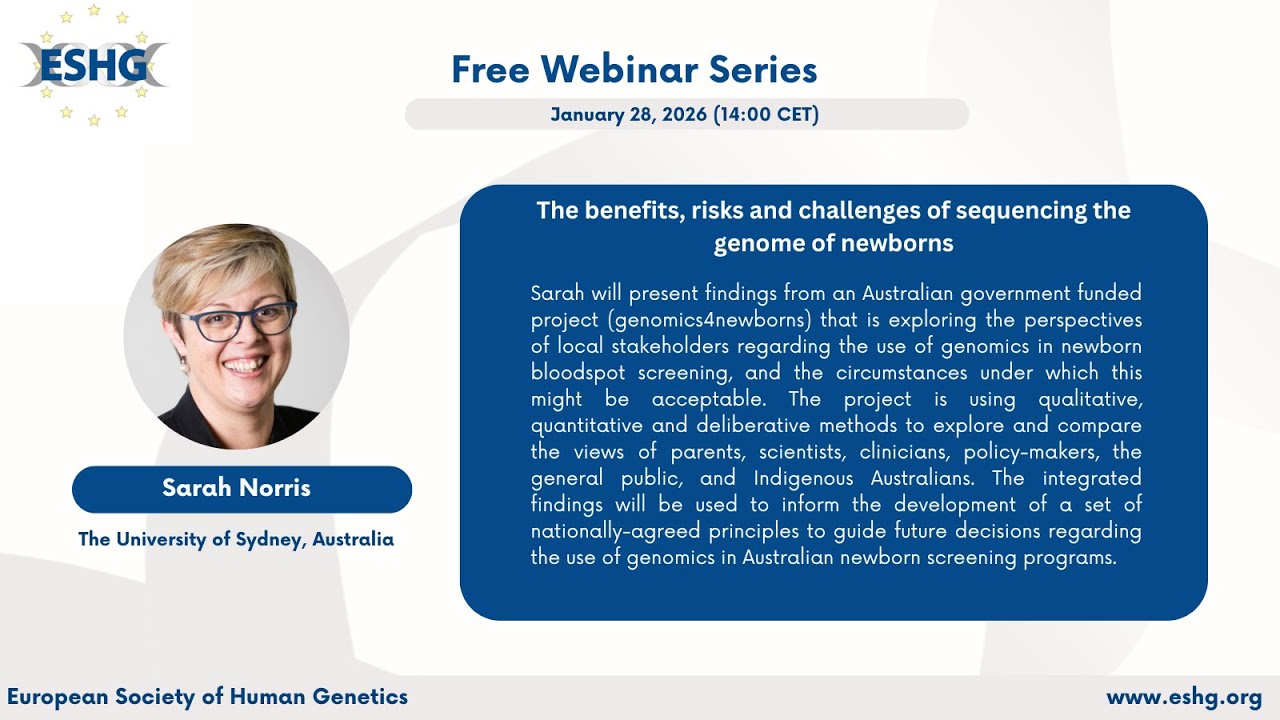
James R Bonham: "Newborn Screening, much to explore, and also much to protect"
Newborn screening is widely recognised as one of the greatest public health advances of the 20th century, with more than 750 million babies tested since its introduction and exceptionally high public confidence reflected in uptake rates exceeding 99%. Despite this success, current screening programmes identify fewer than 100 conditions, while thousands of congenital genetic disorders with potential treatments exist. Genomic newborn screening offers promising opportunities to expand detection, but also raises challenges related to variant interpretation, uncertainty in asymptomatic individuals, and reduced sensitivity in some populations; combining genomic and biochemical approaches may help extend screening responsibly while preserving accuracy and public trust.
______________________
Gulcin Gumus: "Shaping genetic newborn screening research through patient organisations"
This talk will focus on how patient organisations can drive genetic newborn screening research forward, and on the role of EURORDIS in ensuring that patient perspectives are meaningfully included in the discussions that shape gNBS research today and gNBS practices in the future.
Повторяем попытку...
Доступные форматы для скачивания:
Скачать видео
-
Информация по загрузке: