Mozart String Quartet in D Major K575
Автор: JP Cello!
Загружено: 2021-09-29
Просмотров: 379
Описание:
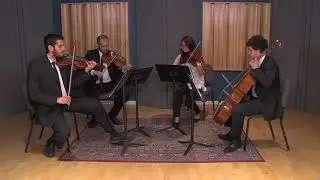
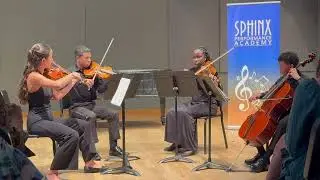
The Embassy String Quartet
Nikita Borisevich, Violin
Luke Wedge, Violin
Adyela Lindsay, Viola
Jacques-Pierre Malan, Cello
PROGRAM
String Quartet of Wolfgang Amadeus Mozart (1756- 1791)
String Quartet No. 21 in D Major, KV575
Allegretto, in D major
Andante, in A major
Menuetto: Allegretto, in D major with a Trio Section in G major
Allegretto in D major
PROGRAM NOTES
STRING QUARTET OF MOZART
AT THE EMBASSY OF THE CZECH REPUBLIC IN WASHINGTON DC
In 1789, Wolfgang Amadeus Mozart (1756-1791), then 33 years of age, found himself in a familiar situation--In need of money and hounded by his creditors. In April of that year, Mozart left Vienna for Potsdam, just outside Berlin, accompanied by his pupil, Prince Karl Lichnowsky (who later became a prominent patron of Beethoven). The prince hoped to introduce Mozart to King Friedrich Wilhelm II of Prussia, who was known to be a great music lover--his instrument was the cello. Mozart in turn hoped that the visit would result in a profitable royal commission. Instead, it produced only a small amount of money in exchange for a commission to compose “six easy clavier sonatas for Princess Friederike and six quartets for the king.” Mozart could scarcely hide his disappointment: “I have now been forced to give away my quartets (that exhausting labor) for a mere song [Spottgeld], simply in order to have cash on hand.” When he got back to Vienna, the situation was no better. His wife fell seriously ill, his friends turned a deaf ear to his requests for money, and he now suffered from rheumatism, toothaches, headaches, and insomnia. Somehow he managed to compose one string quartet immediately--the String Quartet in D Major, K. 575 that is on today’s Embassy Concert program. Two other quartets were added in 1790, a year later, but he never wrote the other three, nor did he complete the set of sonatas for the Prussian princess. Instead, he sold the three existing string quartets to his publisher, Artaria, who reaped the monetary gain from the compositions.
According to music critic Misha Amory, these last three string quartets which Mozart wrote “are especially notable for their clarity, elegance, and transparency.” Amory contends that these so-called “Prussian” quartets “may have had the king’s simpler amateur ear in mind, as well as his accomplished cello playing,” since the cello is given such a prominent role in all three of them. The first of these quartets, K. 575, is in four movements, three of which are marked Allegretto. We should note here a special attribute of Mozart’s genius, that at times of great anguish and personal stress, he composed some of his most light-hearted and heart-felt music. The first movement of the quartet opens tenderly with a rising singing melody, followed immediately by a falling figure played in unison by all four instruments. The interaction between the instruments can be said to resemble a quiet conversation in which each instrument has its say. When the cello enters in a higher register, Mozart marks this dolce [sweetly], another of his exceptional directives.
Повторяем попытку...

Доступные форматы для скачивания:
Скачать видео
-
Информация по загрузке: