Why Viking Earth Houses Never Froze in -40°C Arctic Winters
Автор: Hidden_in_History
Загружено: 2026-02-27
Просмотров: 82
Описание:
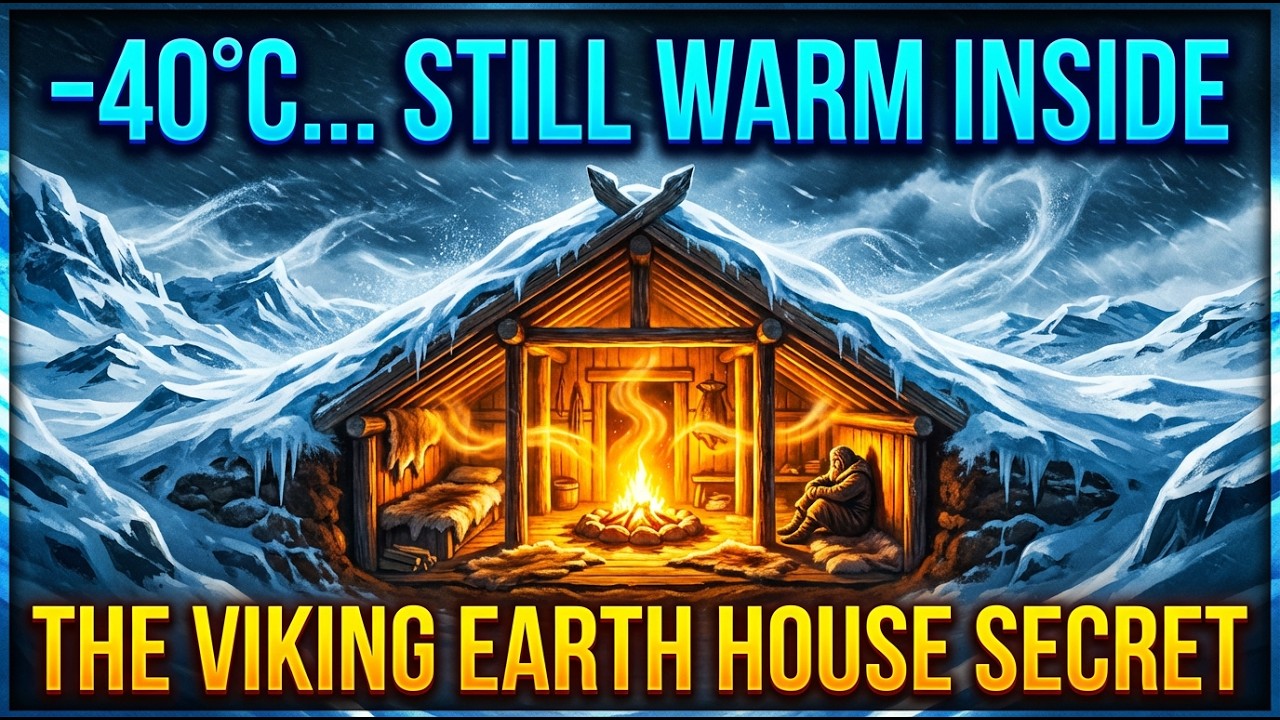
Arctic winters in the Viking world were not survivable by strength alone. In parts of Greenland and Iceland, temperatures could plunge toward –40°C. Timber was scarce. Fuel was limited. Isolation was permanent. Yet entire Norse communities endured these conditions for centuries inside homes built from soil, stone, and turf.
This episode of *Hidden in History* breaks down the overlooked engineering behind Viking earth houses—and why they almost never froze solid, even in the most brutal Arctic cold.
These were not crude huts dug in desperation. They were highly refined thermal systems. Walls more than a meter thick. Floors set below the frost line. Roofs layered with birch bark and living turf. Central hearths positioned to heat both people and structure. Livestock integrated into the architectural layout to reduce energy loss. Every design choice served one purpose: stabilize heat and minimize exposure.
While storms buried the landscape and sea ice sealed off trade routes, Norse settlers transformed the ground itself into insulation. The surrounding soil acted as a thermal buffer. Snow became an added protective layer rather than a threat. Ventilation was controlled carefully to preserve warmth without sacrificing health. The result was a structure that moderated temperature instead of fighting it.
This documentary goes beyond the familiar Viking imagery of ships and raids. It explores the physics, agricultural realities, and environmental pressures that shaped one of the most effective cold-weather building traditions in medieval Europe. You’ll see how these houses functioned as thermal batteries, how community layout reduced winter risk, and how architectural decisions influenced long-term survival in the North Atlantic frontier.
We also examine the broader implications. When the Greenland settlements eventually declined during the Little Ice Age, the houses were not the failure point. Climate, trade isolation, and geopolitical shifts mattered more than insulation. The structures themselves remained remarkably effective.
For viewers interested in survival strategy, military logistics, and the practical lessons buried in early history, this episode delivers detailed analysis grounded in archaeology and environmental context—not myth, not dramatization.
If you want to understand how pre-industrial societies engineered resilience in extreme climates, this is the story that rarely gets told.
Subscribe to *Hidden in History* for serious, in-depth explorations of overlooked historical realities—and share this video with anyone who thinks surviving –40°C was just about being tougher than the cold.
Повторяем попытку...
Доступные форматы для скачивания:
Скачать видео
-
Информация по загрузке:









![Почему взрываются батарейки и аккумуляторы? [Veritasium]](https://imager.clipsaver.ru/a3-3R9zwyGY/max.jpg)