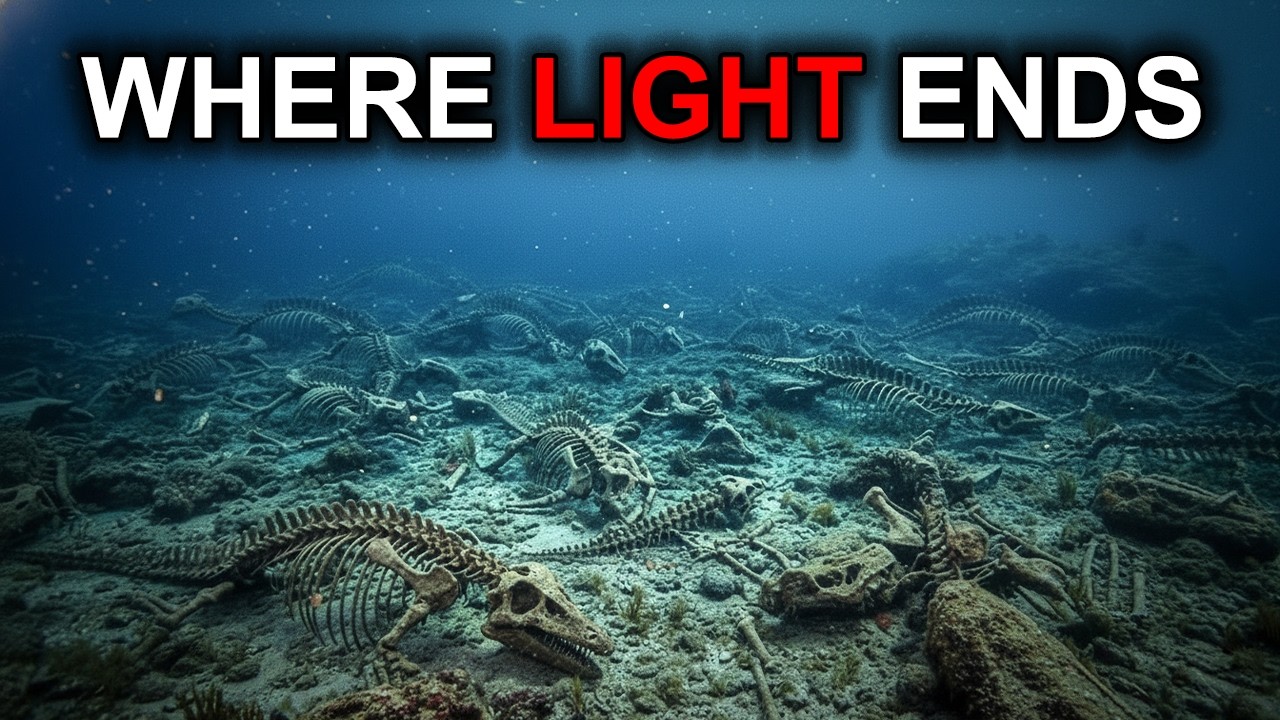
This Is What 4,000 Meters Looks Like
Автор: Zoology
Загружено: 2026-02-12
Просмотров: 135
Описание:
The ocean covers 71% of our planet.
But almost 90% of it exists out of sight.
It looks empty.
It isn’t.
In this episode, we descend from the familiar sunlight zone into the twilight (mesopelagic) and then deeper into the midnight zone, where light disappears, pressure multiplies, and survival runs on physics — camouflage, patience, calories, and carbon transfer.
You’ll see:
Why marine snow is the deep ocean’s food supply
How animals erase their silhouettes using counter-illumination
The largest migration on Earth happening every single night
Why lanternfish may be the most abundant vertebrates on the planet
How carbon is transported downward through the biological pump
Why ultra-black predators absorb nearly all incoming light
How pressure increases one atmosphere every 10 meters
And how life survives where oxygen is thin and food falls like dust
This isn’t a story about monsters.
It’s about mechanisms.
About a system that switches on in darkness — and only becomes visible when ROV lights cut through the black.
So before you scroll:
What should we investigate next?
Ultrablack predators?
Colony organisms like siphonophores?
The nightly migration?
Deep-sea symbiosis?
Comment one word below. I’ll pin the breakdown.
And if you want more deep-sea case files like this, subscribe.
Because between sunlight and abyss…
the ocean doesn’t need to look crowded to be alive.
It just needs the right moment to switch on.
Повторяем попытку...
Доступные форматы для скачивания:
Скачать видео
-
Информация по загрузке: