Beyond Explicit Instruction, The Importance of Elaboration
Автор: ThoughtStretchers Education
Загружено: 2026-01-14
Просмотров: 3
Описание:
Drew Perkins welcomes education writer and author Natalie Wexler to the podcast to discuss her latest work and the evolving conversation around explicit instruction and the "Science of Reading." While the movement has successfully brought phonics to the forefront, Wexler argues that too narrow of a focus ignores the lessons of the Science of Learning.
Links & Resources Mentioned In This Episode
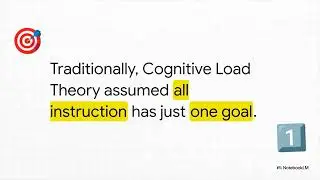
Wexler notes that the "Science of Reading" is often misunderstood as being synonymous with phonics. While foundational skills are non-negotiable, she explains that the "Mississippi Miracle" and other literacy success stories are incomplete without a focus on building background knowledge. The conversation dives into the biological and cognitive necessity of elaboration, the process of connecting new information to what a student already knows, as the primary engine for long-term retention and comprehension. A significant portion of the discussion centers on Cognitive Load Theory and why it is frequently missing from US teacher-prep programs compared to those in England and Australia. Wexler shares her observations from the UK’s Michaela Community School, highlighting how explicit instruction and a knowledge-rich curriculum can narrow the achievement gap. Finally, they explore the role of writing as a lever for learning. Wexler argues that writing is the most difficult thing we ask students to do, but when structured correctly (as seen in The Writing Revolution), it becomes a powerful tool for elaboration that turns surface-level facts into deep, transferable knowledge.
Timestamped Episode Timeline [00:00] Introduction of Natalie Wexler – Author of The Knowledge Gap and advocate for knowledge-rich curricula. [04:12] Defining the Science of Reading – Moving beyond the narrow focus on phonics to include comprehension and background knowledge. [07:47] The Power of Elaboration – Why connecting new info to prior knowledge is the "missing piece" in many literacy programs. [15:30] Cognitive Load Theory – How understanding the brain's "bandwidth" should change the way we teach reading and writing. [21:54] Research Gaps in Education – Why math and decoding are easier to study than the "messy" process of building knowledge in history or science. [33:10] The UK Perspective – Observations on explicit instruction and the "traditional vs. progressive" debate in England and Australia. [42:15] Writing as a Learning Tool – Using sentence-level strategies to help students process complex content. [50:18] The "Mississippi Miracle" – Analyzing what actually worked in Mississippi's literacy gains and what still needs to improve. [56:40] Closing Remarks – Where to find Natalie’s work and upcoming projects.
Повторяем попытку...
Доступные форматы для скачивания:
Скачать видео
-
Информация по загрузке: