BATTLE OF MIDWAY (1942) – THE DEADLIEST GAMBLE ON THE PACIFIC OCEAN
Автор: At Historical Distance
Загружено: 2026-01-27
Просмотров: 357
Описание:
🎲🔥 BATTLE OF MIDWAY (1942) – THE DEADLIEST GAMBLE ON THE PACIFIC OCEAN 🔥🌊
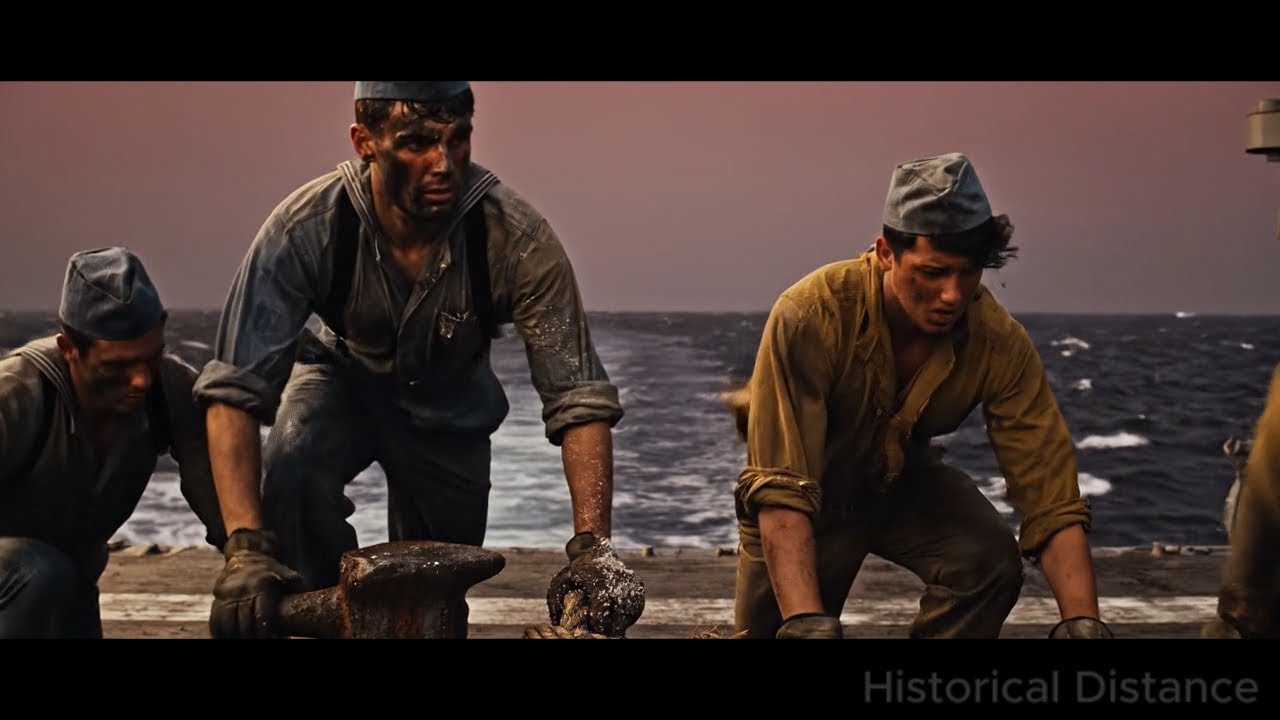
In June 1942, in the middle of an ocean so vast it erased all sense of scale, the Battle of Midway unfolded not as a heroic legend, but as a brutal calculation where human lives were weighed against steel, fuel, timing, and probability. Battle of Midway (1942) – The Deadliest Gamble on the Pacific Ocean is a 10-minute cinematic war film that strips away myth, names, and triumphalism, focusing instead on fear, confusion, and the irreversible moment when the direction of the Pacific War silently shifted. This film does not glorify victory, nor does it celebrate famous commanders. It places the viewer directly inside the machinery of war, where anonymous pilots, deck crews, codebreakers, and sailors move through a system that neither sees nor remembers them as individuals.
The story opens in harsh sunlight, with an almost cruel calm stretching across the Pacific. The sky is impossibly blue, the sea deceptively peaceful, while on the deck of an aircraft carrier tension compresses every breath. Bombers line up nose to tail, engines roaring so loudly they vibrate through bone and muscle. Sweat streaks across young faces as parachute straps are tightened by trembling hands. A pilot shouts, half-joking and half-terrified, that they are flying into history. Another answers dryly that he only hopes to fly back. This is the emotional baseline of Midway: not courage, but fragile humor used to survive the waiting.
Below deck, pressure builds in silence. Intelligence officers lean over maps dense with numbers, symbols, and pencil marks that decide the fate of thousands. No one speaks confidently. Patterns are suspected, doubted, argued over. One mistake means catastrophe. The film lingers here, emphasizing that Midway was not won by bravery alone, but by exhausted minds making decisions under unbearable uncertainty. The viewer feels how absurd it is that the lives of entire fleets hinge on fragile assumptions and incomplete information.
As aircraft launch in perfect formation, a false sense of control takes hold. Radio chatter repeats familiar phrases: “Hold formation,” “Stick to the plan.” For a brief moment, war feels procedural, manageable. The ocean below remains smooth and indifferent. Then disruption arrives without warning. Anti-aircraft fire tears through the sky. Radios explode with overlapping screams. A burning aircraft spirals downward, leaving a trail of fire before vanishing into the sea, as if erased. There is no time to process loss; the system moves on immediately.
Inside the carrier, reports arrive faster than they can be absorbed. Hands grip chairs. A fist slams into a table. The realization dawns that people are disappearing by the minute, reduced to coordinates and status updates. At the height of chaos, enemy carriers are finally sighted at the worst possible moment—while rearming, decks crowded with fuel, aircraft, and explosives. Bombs fall. Steel ruptures. Fire consumes everything. The destruction is overwhelming, not cinematic. It is industrial, fast, and merciless.
The cost becomes unavoidable. The ocean fills with wreckage, bodies, and fragments of machines that once carried hope. A surviving pilot lands, hands shaking uncontrollably, asking if anyone else is coming back. No answer comes. Only waves and smoke. A sailor stares into the water and whispers that people vanished too quickly, as if they were never there at all. This is the emotional core of the film: the understanding that survival itself feels accidental, even shameful.
Midway’s true weight emerges slowly. This was not just another battle, but a point of no return. In dimly lit corridors, someone asks if this counts as a win. The response is hoarse and exhausted: if this is victory, it is one built on absence. As the sun sets, staining the sea red, damaged ships move forward in silence. The war has not ended. It has only changed direction. A final voice, cold and distant, speaks of what comes next—longer campaigns, bloodier islands, and a name that looms on the horizon: Guadalcanal.
Battle of Midway (1942) – The Deadliest Gamble on the Pacific Ocean is designed to be experienced, not explained. It treats war as a system that consumes people without ceremony, where outcomes feel less like destiny and more like probability finally resolving itself. This is Midway not as legend, but as lived reality—quiet, terrifying, and irreversible.
#BattleOfMidway, #WorldWarII, #PacificWar, #WW2History, #NavalWarfare, #AircraftCarrier, #WarFilm, #MilitaryHistory, #RealisticWar, #HistoricalCinema, #Midway1942, #WarDocumentary, #PacificTheater,
Повторяем попытку...
Доступные форматы для скачивания:
Скачать видео
-
Информация по загрузке:


![The Hobbit (2013) - Battle of the five Armies - Part 1 - Only Action [4K] (Directors Cut)](https://image.4k-video.ru/id-video/_kvjKaTqX4c)