Wet Mix Macadam
Автор: Subhankar Civil Xchange
Загружено: 2026-01-01
Просмотров: 39
Описание:
Wet Mix Macadam #shortvideo#shorts#facts #youtubeshorts#civilengineering #highway #wetmixmacadam #highwaydevelopment #trendingvideo #trending #information #knowledgesharing
/ @subhankar.poddar
/ @subhankar.poddar
1. Overview and Material Specifications
Wet Mix Macadam (WMM) is an improvement over Water Bound Macadam (WBM). It consists of a clean, crushed, well-graded aggregate mix (typically 40 mm, 20 mm, 10 mm, and stone dust) mixed at a plant with a specific Optimum Moisture Content (OMC). Key material requirements include a maximum water absorption of 2% (otherwise, a soundness test is required) and specific mechanical limits: an Abrasion Value of max 40%, an Impact Value (AIV) of max 30%, and a Flakiness/Elongation Index not exceeding 30–35%. The binder material must have a Plasticity Index of less than 6% and a Liquid Limit below 25%.
2. Construction and Laying Process
The WMM mix is laid using a paver machine or grader to ensure uniformity. The thickness of a single compacted layer typically ranges from a minimum of 75 mm to a maximum of 200 mm when using a vibratory roller (or 150 mm for static rollers). During rolling, the roller speed should be maintained at 5 km/h with a minimum overlap of 1/3 the width of the previous track. WMM should not be laid during rain. After laying, the layer must be kept free for 24 hours for drying before any bituminous course is applied, and vehicular traffic is strictly restricted during this period.
3. Quality Control and Test Frequencies
To ensure structural integrity, the compaction achieved must be at least 98%. Testing is conducted at regular intervals based on the volume or area of the mix:
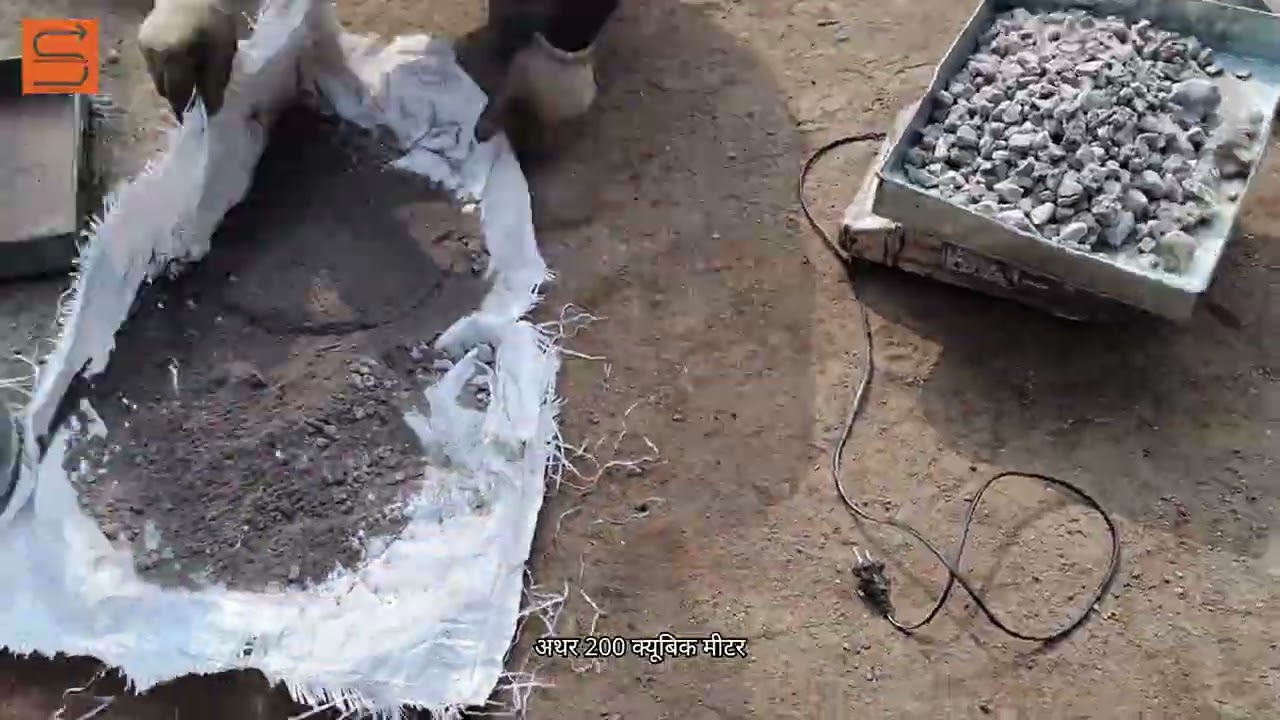
Gradation & Plasticity Index: Once every 200\text{ m}^3.
Moisture Content: Prior to compaction for every 250\text{ m}^3.
Density of Layer: 3 tests per 1000\text{ m}^2.
AIV, Abrasion, and Flakiness: Once every 500\text{ m}^3.
4. Compaction Factor Calculation
The Compaction Factor is used to determine the volume of loose material required to achieve a specific compacted thickness. It is calculated as the ratio of Maximum Dry Density (MDD) to the Loose Bulk Density:
Compaction Factor = (Dry Density)/(Bulk Density)
For example, if the MDD is 2.2g/cc and the loose bulk density is 1.90 g/cc, the factor is 1.15. This means that to achieve a finished compacted layer of 150 mm, the loose material must be spread at a thickness of 172.5 mm (150 × 1.15).
Повторяем попытку...
Доступные форматы для скачивания:
Скачать видео
-
Информация по загрузке: