Psychology of People Who Treat Their Birthday Like a Normal Day: What They’re Actually Protecting?
Автор: Psychology Clues
Загружено: 2026-03-02
Просмотров: 5
Описание:
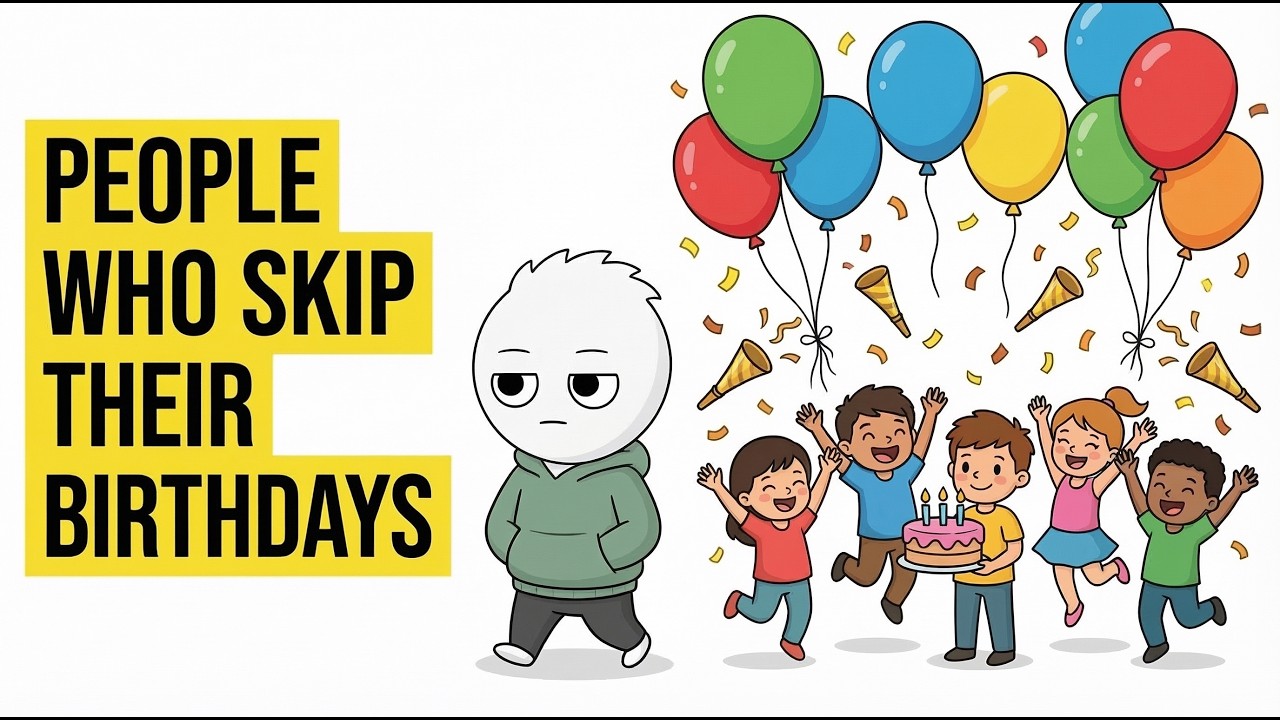
Choosing to ignore your own birth date isn't just about being humble; the Psychology of People Who Treat Their Birthday Like a Normal Day reveals a complex internal defense mechanism. When a birthday arrives, it acts as a "temporal landmark" that forces a comparison between your past and present self. This video uses psychology explained through the lens of the "social clock" to understand why that number on the calendar can feel like judgment rather than a celebration.
The Psychology of People Who Treat Their Birthday Like a Normal Day often involves the "anniversary effect," where the brain reawakens old grief or stress patterns. By looking into the psychology of human behavior, we see how "learned helplessness" or "time blindness" can make a standard routine feel much safer than a party. Within behavioral psychology, we find that minimizing expectations is a way to avoid the "prediction error" of disappointment.
In this video, you will explore:
How psychology facts explain the "social clock" and its impact on anxiety.
The way psychology simplified helps us understand the "hedonic treadmill" and our chase for external validation.
Why human behavior psychology suggests that "subjective age" often mismatches our real age.
How practical psychology can be used to protect your mental energy from the pressure of public performance.
The role of psychology theories like "self-determination theory" in choosing internal peace over external noise.
The connection between psychology insights and the "anniversary effect" that triggers old emotional patterns.
Why developmental psychology links childhood disappointment to adult indifference.
The impact of introvert psychology on how we process social attention.
How mental health psychology frames the need for boundaries on milestone dates.
Using personality psychology to understand why some crave the spotlight while others prefer the shade.
A deep dive into psychology of people who find safety in the ordinary.
Why behavior analysis suggests that skipping a birthday is a form of emotional regulation.
The Psychology of People Who Treat Their Birthday Like a Normal Day is a study in identity and boundaries. This pattern often shows up when people choose silence to avoid "cognitive dissonance" when their internal age doesn't match the milestone. Understanding the Psychology of People Who Treat Their Birthday Like a Normal Day allows us to see that choosing the ordinary isn't a sign of being broken; it's a sign of knowing what your nervous system actually needs. Finally, the Psychology of People Who Treat Their Birthday Like a Normal Day reminds us that peace is often found in the routine, not the spectacle.
🕒 Timestamps:
0:00 Psychology of People Who Treat Their Birthday Like a Normal Day
1:11 The Social Clock and behavioral psychology
2:48 human behavior psychology and pressure
4:55 psychology insights and the anniversary effect
6:36 developmental psychology and subjective age
8:42 psychology theories on internal peace
10:43 practical psychology for emotional stakes
#PsychologyOfPeopleWhoTreatTheirBirthdayLikeANormalDay
#BehavioralPsychology #psychologyexplained
📚 Scientific References:
2013 | Peetz & Wilson: Birthdays as Temporal Landmarks.
1976 | Bernice Neugarten: The Social Clock & Timing Anxiety.
1971 | Brickman & Campbell: The Hedonic Treadmill (Validation Trap).
1997 | Schultz et al: Prediction Error (The Dopamine Crash).
1967 | Martin Seligman: Learned Helplessness (Quiet Protection).
2001 | Ryan & Deci: Self-Determination Theory (Intrinsic Peace).
2001 | Crocker & Wolfe: Contingencies of Self-Worth (External Stakes).
Diary Study: Gen X Subjective Age Dissonance & Identity.
#WhyIDontCelebrateMyBirthday #peoplewhodontcelebratebirthdays #PsychologyOfBirthdays #PsychologyOfGenX #birthdaypsychology #birthdaylikeanormalday
ℹ️ Disclaimer: This video is for educational and informational psychology analysis, based on research and an original script created by the Psychology Clues team. The 2D animated visuals are AI-generated, the voiceover is produced with ElevenLabs to enhance the viewing experience, and all editing is done manually by the creator. It is not a replacement for professional psychological, medical, or therapeutic advice.
#Psychologyclues Psychology Clues
Повторяем попытку...
Доступные форматы для скачивания:
Скачать видео
-
Информация по загрузке:








![The Stage Where Middle-Class Families Start Drowning in Bills [The Invisible TRAP]](https://imager.clipsaver.ru/LyBo_7DuZW4/max.jpg)