There’s a Dozen Men Taking Their Piece
Автор: Through Their Eyes
Загружено: 2026-01-28
Просмотров: 8
Описание:
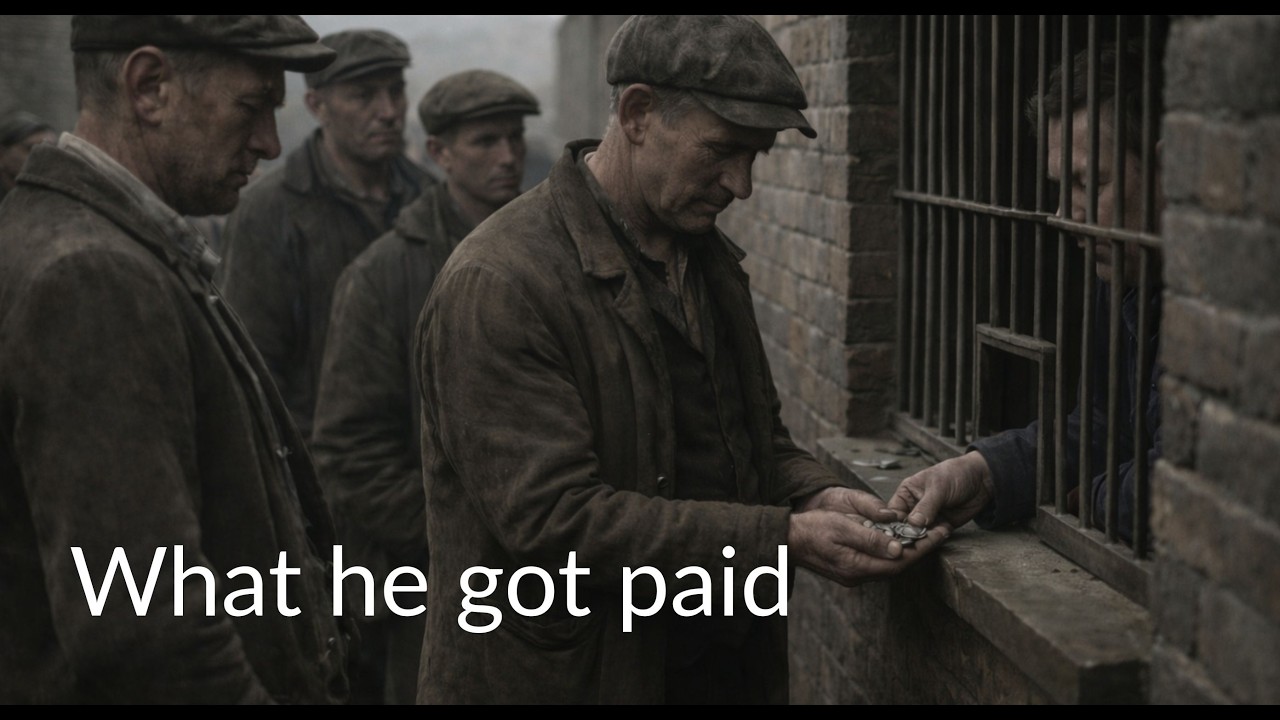
William, a Welsh coal miner in the 1880s, speaks about wages and the realities hidden behind what appears to be a simple measure: being “paid by the ton.”
What emerges is a more complicated picture — deductions, dependencies, and the distance between what a man earns on paper and what reaches his household.
---
These encounters are part of an experimental educational exploration of social history, using historically grounded personas to surface plausible lived experience where the historical record is fragmented, uneven, or silent.
Scene context:
This conversation is framed as a visit from a late-19th-century London correspondent. William Price speaks from within his own time and circumstances, answering questions about work, family, and survival as he understands them.
The response is informed by period conditions and the lived realities common to mining communities in the 1860s–1880s. It is not a transcript from a historical record.
William’s replies are not pre-written or scripted. Each response emerges in the moment, shaped by historical context, occupational realities, and careful inference where the record is silent.
Historical terms & context
– Collier — a coal miner; the standard term used in Britain during the 18th and 19th centuries.
– Paid by the ton — a piece-rate system where miners were paid according to the amount of coal extracted, rather than by hourly wage.
– Butty system — a subcontracting arrangement in which a butty (or charter master) contracted with pit owners to extract coal, hired and paid workers, and deducted costs before wages reached the collier.
– Corves — large baskets or tubs used to transport coal underground; loading and hauling corves was often done by boys and young workers.
– Putters — workers, often boys or women, responsible for pushing or hauling loaded corves along underground roadways.
– Women and children underground — common in British coal mining until the Mines and Collieries Act of 1842 (England & Wales), after which women and girls were banned underground, though boys continued working below ground.
– Props/timbers — wooden supports used to hold up the mine roof; miners were often charged for their use.
– Lamp (candle) — personal lighting equipment underground; candles or oil lamps were frequently deducted from wages.
– Deductions — costs removed from a miner’s nominal earnings, including timber, lighting, tools, and subcontractor charges.
– Checkweigher — an independent worker elected by miners to verify the weight of coal extracted; where absent, owners’ weighers often under-recorded output.
– Marked light — deliberately under-weighed coal, reducing pay without reducing labour.
– Idle time — periods when miners earned no pay due to accidents, ventilation failures, flooding, thin seams, or machinery breakdowns.
– Shillings — pre-decimal British currency; 20 shillings equalled one pound.
– 30 shillings / 10 shillings — historically plausible weekly earnings for a skilled collier in the 1880s, depending on output, deductions, and interruptions to work.
– “Bach” — Welsh term of familiarity meaning “small” or “dear,” often used conversationally.
Production note:
The underlying response is generated as text within the Through Their Eyes ancestral persona platform. Selected exchanges are then adapted into short, immersive encounters using AI-generated imagery and voice, and are framed and contextualised by the creator.
Tooling overview (high level):
– Conversational response: large language model (via TTE platform)
– Voice performance: AI voice synthesis (Google AI Studio)
– Visual imagery: AI image generation (OpenAI)
– Framing, editing, narration: human creator (David)
An upcoming Ancestral Creators series explores how these encounters are generated, adapted, and interpreted for those interested in the editorial process behind them.
Повторяем попытку...
Доступные форматы для скачивания:
Скачать видео
-
Информация по загрузке: