Why the Movie Lucy is Inaccurate? | Neil deGrasse Tyson
Автор: Cosmic Insights
Загружено: 2025-03-01
Просмотров: 44230
Описание:
Fair Use Disclaimer :
For COPYRIGHT ISSUES, please contact us at: ([email protected]) This content is shared for awareness purposes only and does not belong to Cosmic Insights. If you own the rights and want it removed, email us at ([email protected]), and we will immediately delete it. This content is used under Section 107 of the Copyright Act 1976, allowing for fair use in criticism, commenting, news reporting, teaching, scholarship, and research. Fair use is permitted for non-profit, educational, or personal purposes.
Source Footage: PowerfulJRE
🔗 Full Interview: • Joe Rogan Experience #1658 - Neil deGrasse...
Credit to the original broadcaster for the content used.
Music Credit
🎵 Track: "Cornfield Chase" by Hans Zimmer
🎬 Album: Interstellar (Original Motion Picture Soundtrack)
📀 Licensed by: WaterTower Music
📎 Official Source: • Interstellar Official Soundtrack | Cornfie...
Disclaimer: The video and audio content used in this video is for educational purposes only and does not belong to me. I have given credit to the respective owners and creators of the content. This video is intended to provide information and knowledge to its viewers, and no copyright infringement is intended. I have made every effort to ensure that the content used in this video is properly credited and used in accordance with fair use guidelines. If you are the owner of any content used in this video and have any concerns, please contact me.
Why the Movie Lucy is Inaccurate | Neil deGrasse Tyson
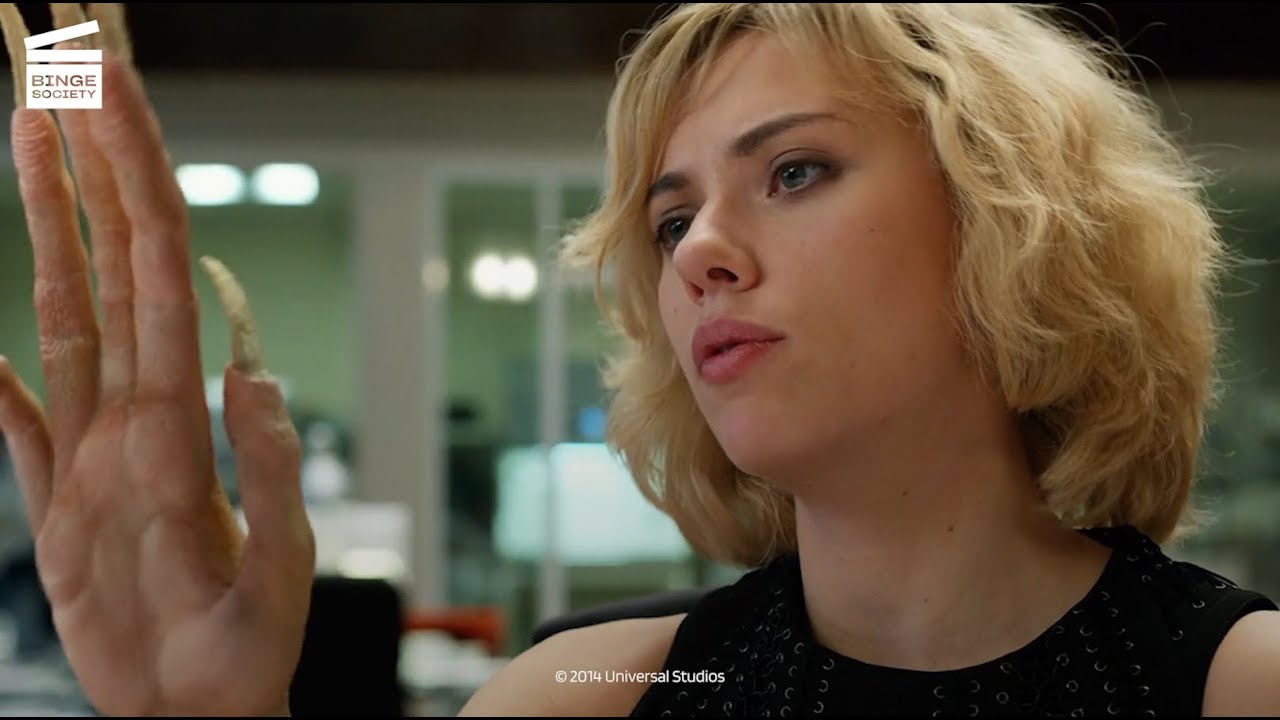
The 2014 sci-fi film Lucy, starring Scarlett Johansson, presents an intriguing premise: what if humans could unlock 100% of their brain’s potential? In the movie, Lucy gains superhuman intelligence and abilities after accessing her brain’s full capacity. However, as Neil deGrasse Tyson explains, this concept is pure fiction and has no basis in neuroscience. The widely repeated claim that humans only use 10% of their brains is a complete myth, long debunked by scientific research.
In reality, every part of the brain has a function. Modern neuroscience, using advanced imaging technologies like fMRI (functional Magnetic Resonance Imaging) and PET (Positron Emission Tomography) scans, has shown that the entire brain is active, even when we are resting or asleep. Different regions control thinking, emotions, memory, movement, and sensory processing, and no part of the brain sits idle, waiting to be "unlocked." If 90% of our brain were inactive, severe damage to those areas wouldn’t affect function—but in reality, even small brain injuries can cause significant cognitive and motor impairments.
Tyson also criticizes how Hollywood often misrepresents science to create dramatic narratives, leading to widespread public misconceptions. The idea of "hidden" brain potential is not supported by neuroscience, yet it persists due to movies, self-help books, and pseudo-scientific claims. Instead of focusing on fictional abilities like telekinesis and instant learning, real science explores the actual potential of the human brain through fields like neuroplasticity, artificial intelligence, and brain-computer interfaces. Neuroplasticity, for example, shows how the brain rewires itself based on experiences, learning, and adaptation—something far more fascinating than the myths perpetuated by Hollywood.
Beyond the inaccuracies in brain science, Tyson highlights how movies like Lucy can spread misinformation, shaping how people perceive intelligence, learning, and human potential. While storytelling allows for creative liberties, he argues that filmmakers should strive for a balance between entertainment and scientific accuracy. Misleading portrayals can influence education and public understanding, making it harder for people to distinguish scientific facts from fiction.
Ultimately, Lucy is a thrilling action film, but its premise does not reflect real science. The true potential of the human brain lies not in unlocking "unused" regions but in enhancing our learning, critical thinking, and problem-solving abilities. Science offers far more exciting discoveries than fiction, and Tyson emphasizes the importance of scientific literacy in appreciating the wonders of the real universe.
#space #spacexelonmusk #viral #nasa #spacex ##viralvideo #astronomy #spacetechnology
#shorts #shortsfeed #shortvideos #shortvideo #shortsvideo #shortsyoutube #shortsviral #viralshortsvideo #viralshorts #viral #viralvideo #viralvideos
#space #deepspace #spaceship #spacelovers #spacesuit #spaceexploration #spacecraft #telescope #spacex #spacestation #universe #cosmos #nasa #viral #viralvideo #viralvideos #science #technology #physics #astronomy #astrophysics #astrophotography #cosmology #cosmos #jwst #jameswebbspacetelescope #jameswebb #hubble #hubbletelescope #video #videos #interstellar #edits #neildegrassetyson #neil #tyson #michiokaku #kaku
Повторяем попытку...

Доступные форматы для скачивания:
Скачать видео
-
Информация по загрузке:










![Lucy (2014) - Brain usage 100% - Cool/Epic Scenes [1080p]](https://imager.clipsaver.ru/NdLTEC6X3pk/max.jpg)