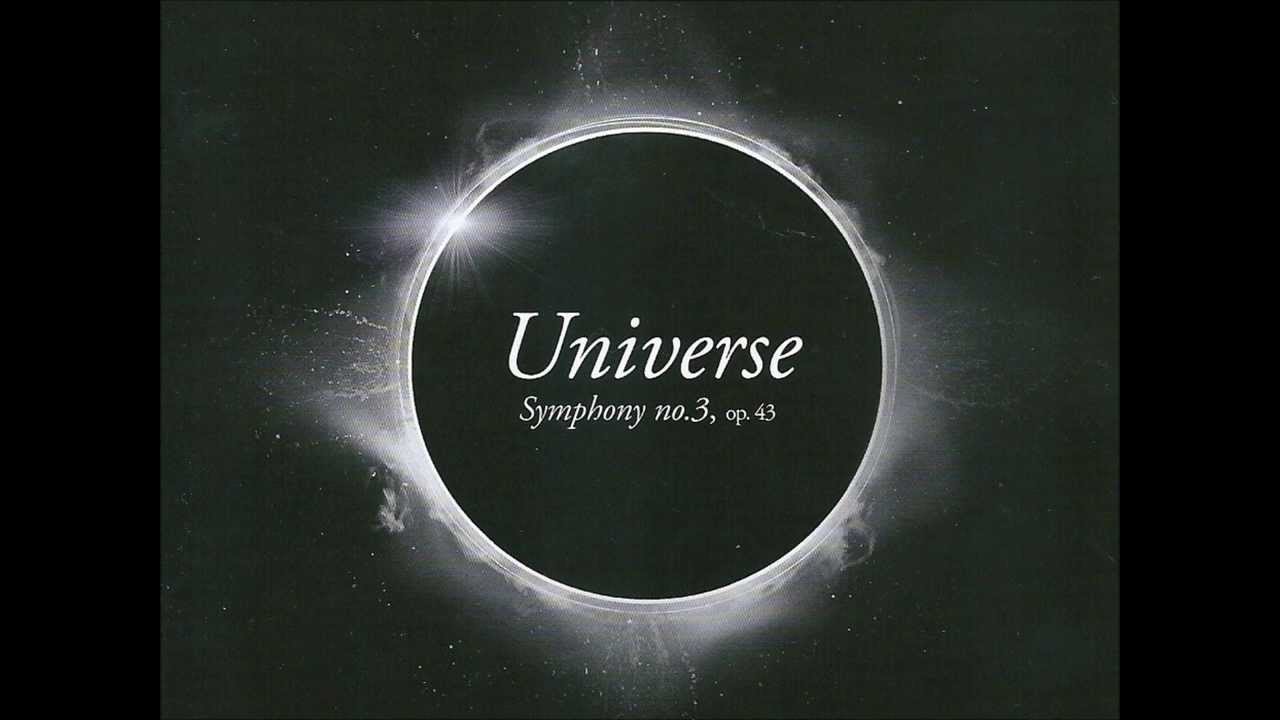
Hans Kox - Symphony No. 2
Автор: Dutch Composers
Загружено: 2014-01-05
Просмотров: 2128
Описание:
Hans Kox (1930-2019)
Symfonie 2 (1966)
1. Adagio-Allegro molto-Adagio-Allegro molto - 00:00
2. Lento-Allegro scherzando-Lento - 09:42
3. Allegro marcato-Sempre allegro-Grave - 19:05
Orchestra: Concertgebouw Orkest
Conductor: Eugen Jochum
Hans Kox was a Dutch composer. After early studies with his father, an organist and choral conductor, he attended the Utrecht Conservatory and was then a private composition pupil of Badings; his piano studies were completed with Jaap Spaanderman. He was director of the Doetinchem Music School 1956-1971, which he brought to a high standard. In 1974 he became director of the Concertgebouw Orchestra, but resigned shortly afterwards as a result of the critical reception of his opera Dorian Gray. Thereafter, he lived in Haarlem as a freelance composer, at the same time teaching composition at the Utrecht Conservatory.
He made his début with a string trio performed at the Gaudeamus Foundation in 1953, and he increased his reputation with the Piano Sonata No. 1 and the First String Quartet. He wrote his first large orchestral work, the Concertante muziek, in 1956 to a commission from the Concertgebouw Orchestra. Kox's music from these early years until 1963 is marked by classical forms and by the harmonic influences of Berg, Mahler and Badings, which gradually disappear; chief among the compositions of this period are the First Symphony, the Piano Concerto and the First Violin Concerto. The Symphony No. 2 (1966), in which Kox began to explore the implications of Mahler's work for contemporary music, brought this phase to a definite close, for Kox had felt the need for greater formal freedom and the desire to apply newer techniques. In works like Phobos (1970) and the Six One-Act Plays (1971), Kox experimented with Kaleidoscopic timbres in static constellations, similar to Ligeti's slowly shifting tonal fields. Occasionally, as in Requiem for Europe and Dorian Gray, he employed graphic and proportional notation.
In fact, this changing attitude to form was emerging much earlier. The main vehicle for his explorations in this field was his Cyclophony cycle, a series of 15 compositions he began in 1964 and to which he periodically returned. They are generally short pieces, scored for a wide variety of mostly chamber settings. The term 'cyclophony' refers to the unlimited possibilities of an open, unrestricted concept. No.7, for example, is made up of five blocks, each with seven subdivisions which may be played simultaneously or in different successions, and each allowing improvisation around given melodic and rhythmic formulae.
Large choral works hold an important position in his output, which now consists of more than 140 works in every conceivable genre. For the 25th anniversary of the Battle of Arnhem, Kox composed In Those Days, which won the Prix Italia in 1970. Each group has different starting-points in relation to the others, and so a fluctuating form is achieved. The Requiem for Europe is scored for four spatially disposed choirs with instrumental groups; some freedom is allowed to the conductor, whose choices are to be influenced by the acoustic of the hall. In later works, the accent on the metaphysical aspects of life increases. The persecution of Jews and the ruptured musical, spiritual and social harmony of this century are treated with growing intensity in monumental works like the Anne Frank Cantata (1984), Sjoah (1989), Das Credo quia absurdum (1995) and the Third Symphony (1980-1985), whose mottos come from the book of Isaiah. In the later concertos, chamber works and his more than ten works for saxophone (all written for the American alto saxophonist John-Edward Kelly), a dense, expressionist style has come to the surface. A curious form of disquiet is discernible, especially in the restless, virtuoso solo parts, which reveal a theatrical nature. Although his music, neglected for many years, is now gradually establishing itself in Dutch musical life, his second opera Das grüne Gesicht (1981-1991) remains unperformed.
Повторяем попытку...

Доступные форматы для скачивания:
Скачать видео
-
Информация по загрузке: