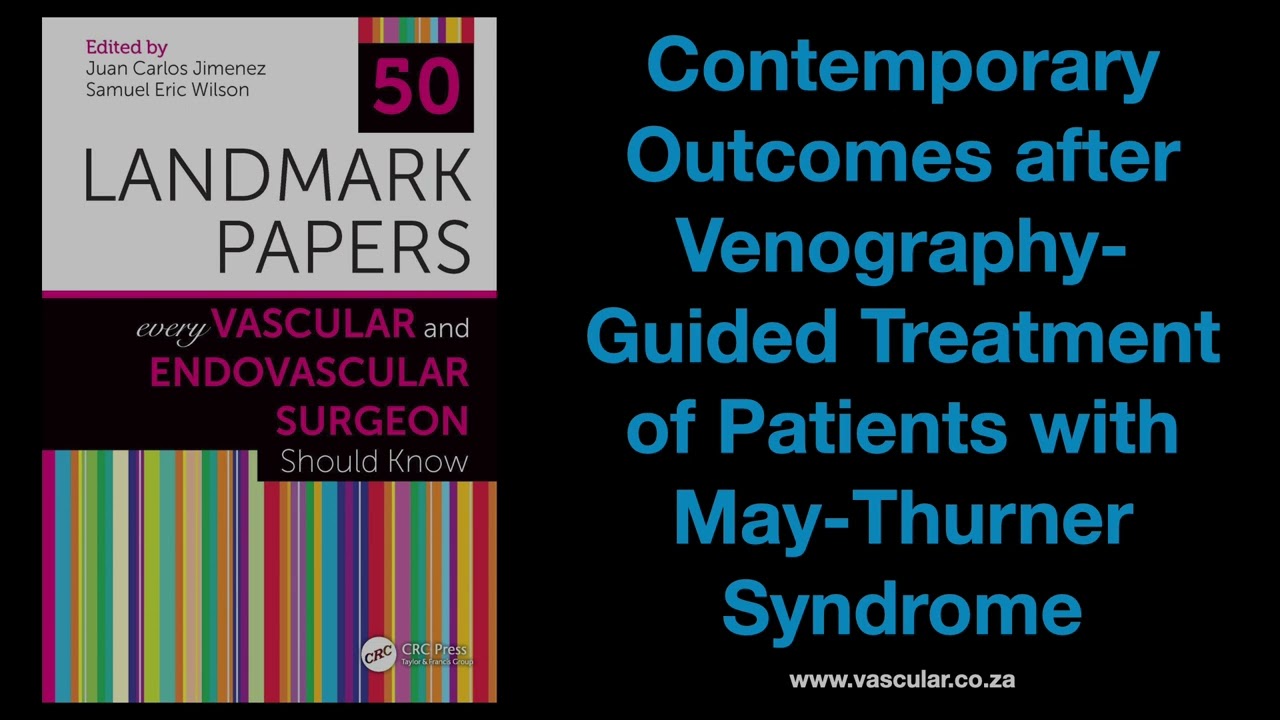
35 Contemporary Outcomes after Venography Guided Treatment of Patients with May Thurner Syndrome
Автор: Dr Gregory Weir: Vascular, Hyperbaric, Wound Care
Загружено: 2025-05-27
Просмотров: 53
Описание:
#MayThurnerSyndrome #MTS #VascularSurgery #VenousStenting #Venography #DVT #VenousClaudication #VenousInsufficiency #DeepVeinThrombosis #IliacVeinCompression
This video deep dive summarises a 2017 retrospective study by Rollo and colleagues in the Journal of Vascular Surgery, Venous and Lymphatic Disorders, examining outcomes of venography-guided treatment for symptomatic May-Thurner Syndrome (MTS). MTS occurs when the left common iliac vein is compressed by the right common iliac artery. The study focused on symptomatic patients, classifying them into non-thrombotic (51%) and thrombotic (49%) groups. Both groups presented with leg swelling, but venous claudication was more common in the thrombotic group. CEAP scores indicating chronic vein disease severity were similar at presentation.
The main treatment was venography-guided intervention, primarily stenting of the compressed vein (70% of patients). Some thrombotic patients received thrombolysis before stenting. A group was managed conservatively, mainly with compression therapy.
Outcomes showed striking differences: 95% of stented patients reported significant clinical improvement versus 58% in the non-stented group. CEAP scores decreased in 77% of the stented group but only 32% of the non-stented. Complete symptom resolution occurred in 64% of stented patients compared to 21% non-stented. Stent patency rates were good at two years (93% primary, 97% secondary).
The authors emphasized a selective stenting strategy for non-thrombotic patients. Treatment decisions should be based on significant symptoms, failure of conservative therapy (like compression stockings), and crucially, venographic evidence of flow disturbance (stagnation, collaterals). They explicitly stated IVUS alone shouldn't guide the decision to stent, as it might show compression without flow problems. IVUS was used technically after the decision to stent was made. Notably, conservative management in the non-thrombotic group did not lead to worsening disease or DVT in the study timeframe.
The study advocates for avoiding over-treatment based purely on anatomy, favouring physiology and symptoms to guide intervention. While retrospective with limitations, it supports a selective stenting approach for symptomatic, flow-obstructed MTS patients.
Повторяем попытку...
Доступные форматы для скачивания:
Скачать видео
-
Информация по загрузке: