The Quiet Work of Clarity: Seeing Into the Future at the End of Life
Автор: ASCO Podcasts
Загружено: 2026-01-13
Просмотров: 31
Описание:
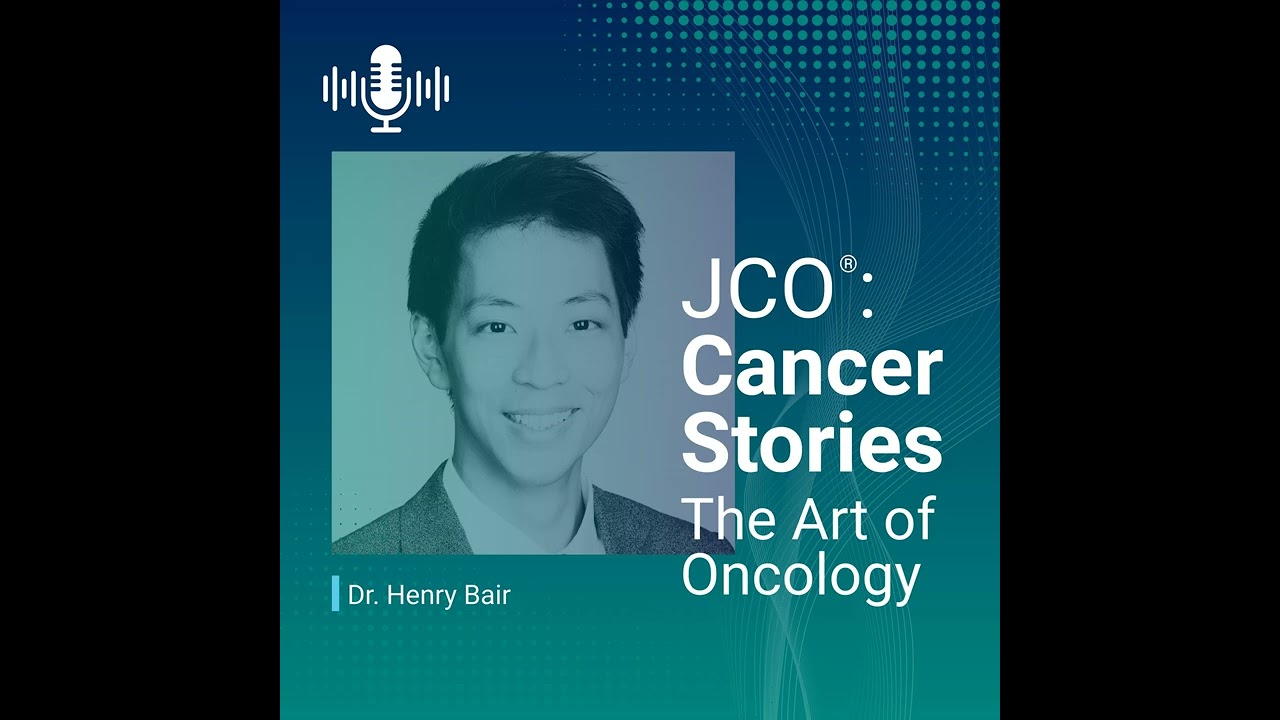
Listen to JCO's Art of Oncology article, "The Quiet Work of Clarity” by Dr. Henry Bair, who is an ophthalmology resident physician at Wills Eye Hospital. The article is followed by an interview with Bair and host Dr. Mikkael Sekeres. Dr. Bair explores how vision care can honor end-of-life goals and helps a patient with failing sight write to his children.
TRANSCRIPT
Narrator: The Quiet Work of Clarity, Henry, Bair, MD
Mikkael Sekeres: Welcome back to JCO's Cancer Stories: The Art of Oncology. This ASCO podcast features intimate narratives and perspectives from authors exploring their experiences in oncology. I'm your host, Mikkael Sekeres. I'm professor of medicine and Chief of the Division of Hematology at the Sylvester Comprehensive Cancer Center, University of Miami.
What a pleasure it is to have joining us today Dr. Henry Bair, an ophthalmology resident physician at Wills Eye Hospital, to discuss his Journal of Clinical Oncology Art of Oncology article, "Quiet Work of Clarity".
At the time of this recording, our guest has no disclosures.
Dr. Bair and I have agreed to call each other by first names.
Henry, thank you for contributing to the Journal of Clinical Oncology and for joining us to discuss your article.
Henry Bair: Thank you very much for having me.
Mikkael Sekeres: I love starting off by getting a little bit of background about our guests. I know a little bit about you, but I'm not sure all of our listeners do. Can you tell us about yourself and how you reached this stage of your training?
Henry Bair: Sure thing. Happy to start there. I was born and raised in Taiwan. I came to the United States when I was 18 for college. I was at Rice University. I was drawn to it because the Texas Medical Center was right over there, but the university had a small liberal arts feel and the university did not box me into any specific discipline. I went there and we didn't have to declare anything and we could take any class from any school over there. And I actually fell in love with medieval studies of all things. I just came upon it in one of the survey courses and I went deeper and deeper and deeper and eventually wrote my thesis on medieval Irish manuscripts.
That was really interesting. At the same time I was doing some clinical work and I realized that medicine might be a way to combine my interest in storytelling and the humanities with making a tangible difference in people's lives. Then I was in medical school at Stanford University, which was, in a similar way, I found a place that really let me explore what it meant to be a physician because the medical school let me take classes from all across the university: so the law school, the school of humanities, school of engineering, the business school. I got a chance to do a little bit of a lot of different things to try to figure out what I actually wanted to do with life. And I spent a lot of time actually doing a little bit of palliative care, a little bit of oncology, some medical education, some medical humanities.
I had a lot of time thinking about, “Okay, what kind of specialty do I want to do?” I found myself really enjoying procedural specialties, but also really liking the kinds of patient interactions and conversations I had in palliative care and oncology, and eventually found ophthalmology, interestingly. I often have to remind myself or explain myself how those two connect. And to me, the way they connect is that ophthalmology lets me do very fascinating, intellectually challenging things in terms of working with my hands, very rewarding surgical procedural work. But at the same time, the conversations that I get to have with patients about seeing well, I saw so many parallels between that and living well. To me it was so much about quality of life. And that's how I knew that ophthalmology was the right move for me. And so now I'm an ophthalmology resident.
Mikkael Sekeres: Fascinating. When I was an undergrad, the person who had the most influence on me was an English professor who was also a medievalist. There must be something about the personality and pouring over these old texts and trying to read things in Middle English that appeals to some character trait in those of us who eventually become physicians. I also remember when I was in medical school, we could also take classes throughout the university. So I wound up taking some writing classes with undergrads and with graduate students. It adds to this holistic education that we bring to medicine because it's not all about the science, is it?
Henry Bair: Yeah, it's also different ways of thinking and seeing the world and just hearing people's different stories. It's the people I've met in a lot of those different settings outside of medical school that I think really enhanced my formative years in medical education.
Mikkael Sekeres: You certainly bring it all together in this essay, which was...
Повторяем попытку...
Доступные форматы для скачивания:
Скачать видео
-
Информация по загрузке: