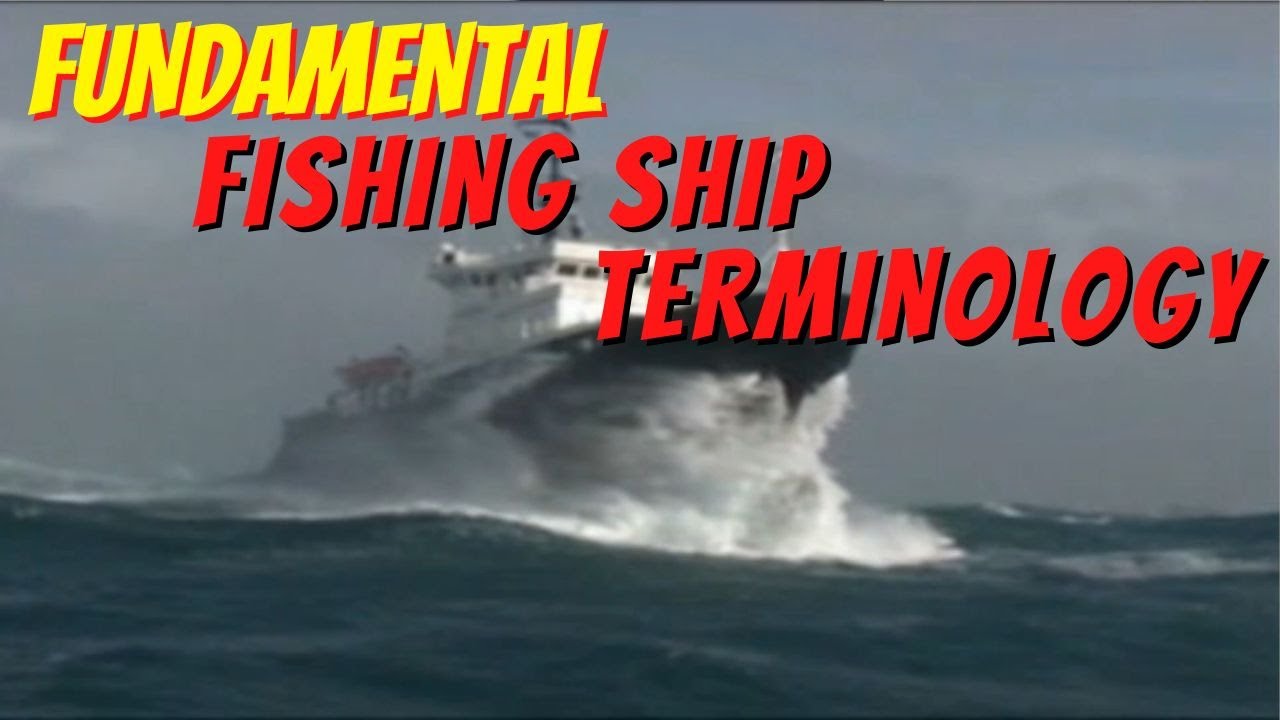
Fundamental Fishing Ship Terminology
Автор: Yusep Channel
Загружено: 2024-08-10
Просмотров: 68
Описание:
Dive into the fascinating world of fishing ship terminology in this essential guide for both seasoned sailors and newcomers! Understanding these fundamental terms is the cornerstone of nautical knowledge, enhancing your appreciation for ship construction and navigation. Learn about key components like the hull, bow, astern, port, starboard, forward, aft, gunwale, midship, and after peak. Discover how these terms provide clarity for shipbuilders, navigators, and maritime enthusiasts alike. Join us to explore the rich maritime language, crucial for smooth sailing and deeper appreciation of these magnificent vessels. Don't forget to like and share this video! #ShipTerminology #NauticalKnowledge #MaritimeLanguage #ShipConstruction #SailingEssentials #NauticalTerms #LearnToSail #MaritimeHistory
Let's start with the most basic yet crucial part of a ship- the hull. The hull is the backbone of any vessel, the essential structure that ensures the ship's functionality and safety. Imagine the hull as the ship's body; it's the watertight, outer shell that provides buoyancy and structural integrity. Without a well-designed hull, a ship would be unable to float or navigate the waters effectively. The hull is designed to withstand the immense pressure of the water and the forces of the sea, ensuring the vessel stays afloat and holds its shape. It must endure harsh conditions, from turbulent waves to the weight of the cargo it carries. Think of it as a giant, floating bathtub made of steel or other robust materials. These materials are chosen for their strength and durability, capable of withstanding the rigors of the maritime environment. The shape and size of the hull vary depending on the ship's purpose. Each design is meticulously crafted to meet specific needs, whether it's for speed, cargo capacity, or stability. A cargo ship, for instance, has a wide, spacious hull to maximize cargo capacity, allowing it to transport large quantities of goods across vast distances efficiently. while a sleek sailboat has a narrow hull designed for speed and maneuverability. This design helps it cut through the water with minimal resistance, making it ideal for racing or leisure sailing. Understanding the hull is fundamental to understanding ship construction.
Imagine yourself standing on a ship, feeling the sea breeze on your face. The direction you're facing is the bow, also known as the front of the ship. Conversely, the opposite end, the back of the ship, is called the astern. Think of it this way- the bow cuts through the water, leading the way, while the astern follows behind. The bow is often characterized by its pointed shape, designed to cut through waves efficiently. In contrast, the astern might house the ship's propeller and rudder, crucial for steering and propulsion. Understanding the bow and astern is fundamental for navigation. It provides a reference point for understanding the ship's direction and movement on the water.
While bow and astern define the front and back, port and starboard help us navigate left and right on a ship. Imagine yourself standing on the deck, facing the bow. Your right side corresponds to the starboard side of the ship. Similarly, your left side corresponds to the port side. An easy way to remember this is that port and left both have four letters. Starboard, on the other hand, is the longer word and corresponds to the right side. These nautical terms are essential for clear communication onboard. Instead of saying left or right, which can be confusing depending on the speaker's orientation, using port and starboard eliminates ambiguity. This is especially crucial during critical maneuvers or in emergency situations where every second counts. Next time you're watching a movie with a ship scene, pay attention to how the characters use port and starboard to give directions. It's a small detail that adds a touch of authenticity and highlights the importance of clear communication at sea. This terminology is not just for large ships; even small boats and yachts use these terms. Whether you're a seasoned sailor or a novice, understanding port and starboard can make your maritime experience safer and more enjoyable. So, next time you find yourself on a boat, remember these terms and use them confidently. It’s a part of the rich tradition of seafaring that has been passed down through generations.
While bow and astern pinpoint specific locations, forward and aft refer to directions relative to the ship's center. Forward indicates a direction towards the bow, the front of the ship. For instance, if someone tells you to move forward, they're directing you towards the front. Conversely, aft indicates a direction towards the astern, the back of the ship. So, moving aft means heading towards the back. Think of it like this- forward is synonymous with ahead, while aft is synonymous with behind but in a nautical context. These terms are crucial for understanding movement and directions on a ship.
Повторяем попытку...
Доступные форматы для скачивания:
Скачать видео
-
Информация по загрузке: