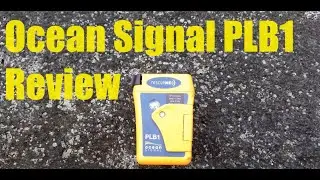
Ocean Signal RESCUEME PLB1 | Personal Locator Beacon | Review
Автор: Next72Hours
Загружено: 2025-05-26
Просмотров: 1115
Описание:
In this video, I review the Ocean Signal rescueME PLB1 personal locator beacon. This is a critical safety device which is worth its weight in gold.
I have had this one for around 4 to 4 1/2 years and carry it with me on any trips I do, be that local walks, back country trips or further afield. I also carry it with me on my search and rescue trainings, and deployments. A simple device like this could save your life.
I will walk you through all aspects of the device, basic specs, what all the buttons do, how to deploy the antenna, how to activate the PLB, what to expect when you do activate it, and what to do if you activate it accidentally.
I will also give you a very basic overview on how the process works, once the Personal Locator Beacon has been activated.
The RescueMe PLB1 Personal Locator Beacon is the smallest of its kind on the market, and weighs very little indeed, coming in at only 116 grams. Even for those who are into ultralight trips, this should not be too much weight to carry.
Overall a unit like the rescueME PLB1 is about as good as you can get for a backcountry emergency beacon. In many cases it will be your best, last chance.
The beacon transmits at 5 watts, as opposed to 1.5-1.6 for most Iridium-based satellite communicators like inReach. We do a lot of QRP Radio work, and known that 5 Watts at the right frequency will get you all the way around the world and back, as well as allow comms with the Space Stations, so this will well and truly do the trick.
The PLB1 sends its distress signal on a special frequency (406 MHz) that’s picked up by three types of satellites, some close to Earth, some farther away, and some that stay fixed over one spot. All of these satellites are equipped to hear your SOS and pass it down to a rescue coordination center on the ground. Here in New Zealand it will be going to the Rescue Coordination Centre. You can read more about them here,
https://www.maritimenz.govt.nz/about-...
These devices have save a multitude of lives over the years, if you want to read more about these rescues, or the Survivors Club then head on over to the following link to see the stores, they are all amazing.
https://oceansignal.com/survivor-stor...
As for pros and cons, I could not think of any cons for this device. Some would say the initial outlay, but that is the same with any device and with a PLB there is no ongoing costs apart from battery replacement in seven years time.
Some of the best features this device are
Free to use, no subscription charges – Government-funded global rescue coverage, no monthly fees or activation delays
Suitable for marine, aviation and outdoor uses
Dedicated 406 MHz distress signal with 66-channel GPS – Transmits directly to global Cospas-Sarsat satellites, bypassing third-party networks for faster, more reliable alerting
24+ hours operational life – Optimised for extended emergencies, unlike smartphone-based SOS systems
Rugged, waterproof to 15 m – Built for harsh environments, where smartphones and handhelds often fail
Compact and light-weight – weighs just 116 grams, clips onto lifejackets and backpacks
Fast accurate positioning
7 year battery life
Flotation pouch (as an accessory)
High intensity (1 candela) strobe
Easily deployed antenna
30 percent smaller the most other devices on the market
Homing Beacon to aid final location by search and Rescue craft
If you want to learn more about the company then check them out here
https://oceansignal.com/
If you have a beacon and want to register it here in New Zealand then check out the following link
https://beacons.org.nz/
Повторяем попытку...

Доступные форматы для скачивания:
Скачать видео
-
Информация по загрузке: