Tell it to your Mother – TLR-5
Автор: Niels Mohty
Загружено: 2017-09-09
Просмотров: 281
Описание:
SCRIPT BELOW:
Hello my name is Dieter/Niels. In this video, we will explain how the Toll-like-receptor 5 operates.
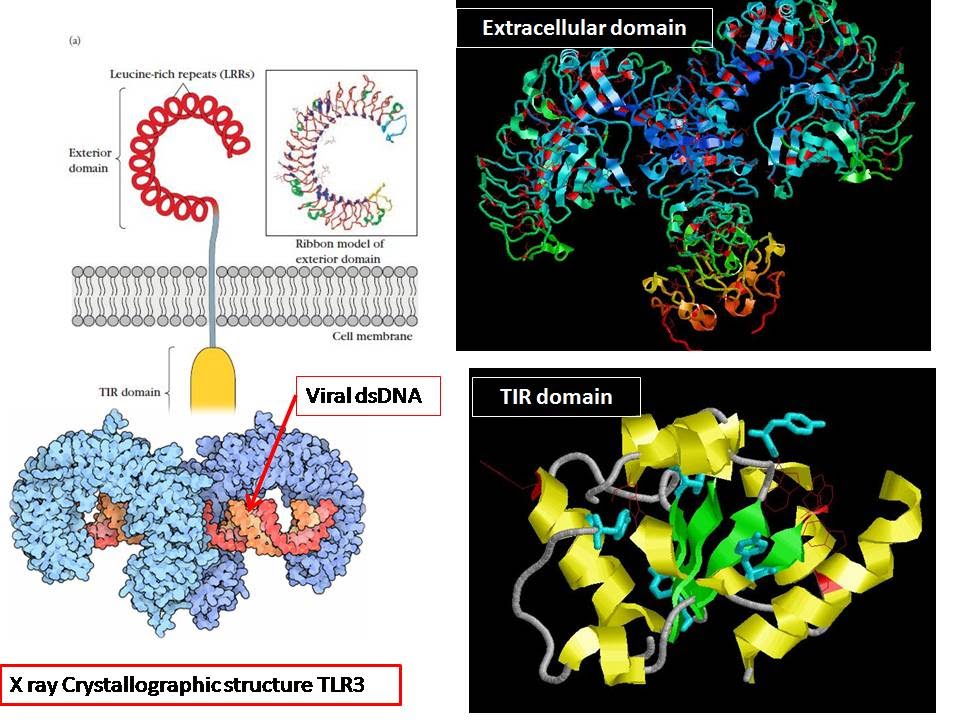
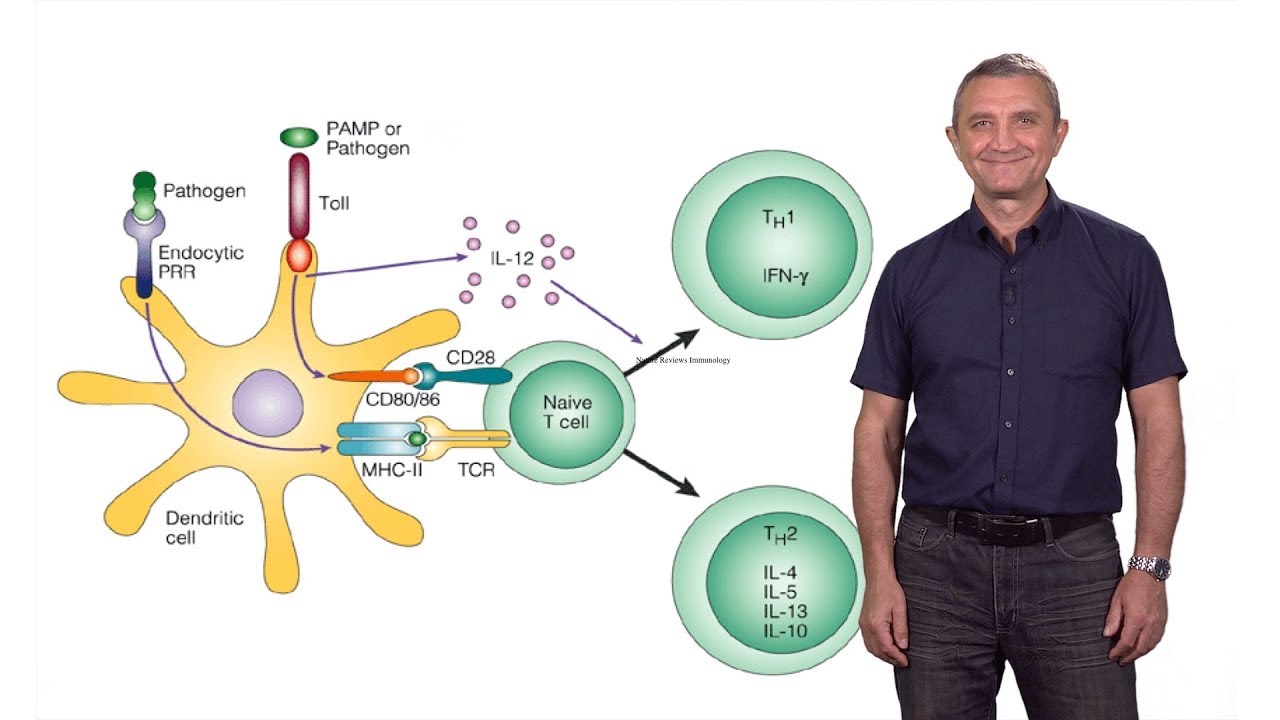
Toll like receptors, or TLRs, are receptors on cells used to defend the body. They do this by recognizing pathogen-associated-molecular-patterns, or PAMPs, which triggers a response to deal with the pathogen. This may be confusing, but; to elucidate the function of TLR-5 with respect to the innate immune system, we can compare it to a neighborhood watch.
Let’s think of the neighborhood as the cells that line our intestinal tract. Inside, there are specialized cells that are on the lookout for PAMPs, or clues, of malicious activity-- this is comparable to a neighborhood watch surveying the neighborhood for specific things indicative of a problem that pose a safety concern to the community.
This system works because the TLRs, like our watchmen, already know what to look out for and how to properly respond. They both operate on a basic schematic of surveying, detecting, and responding.
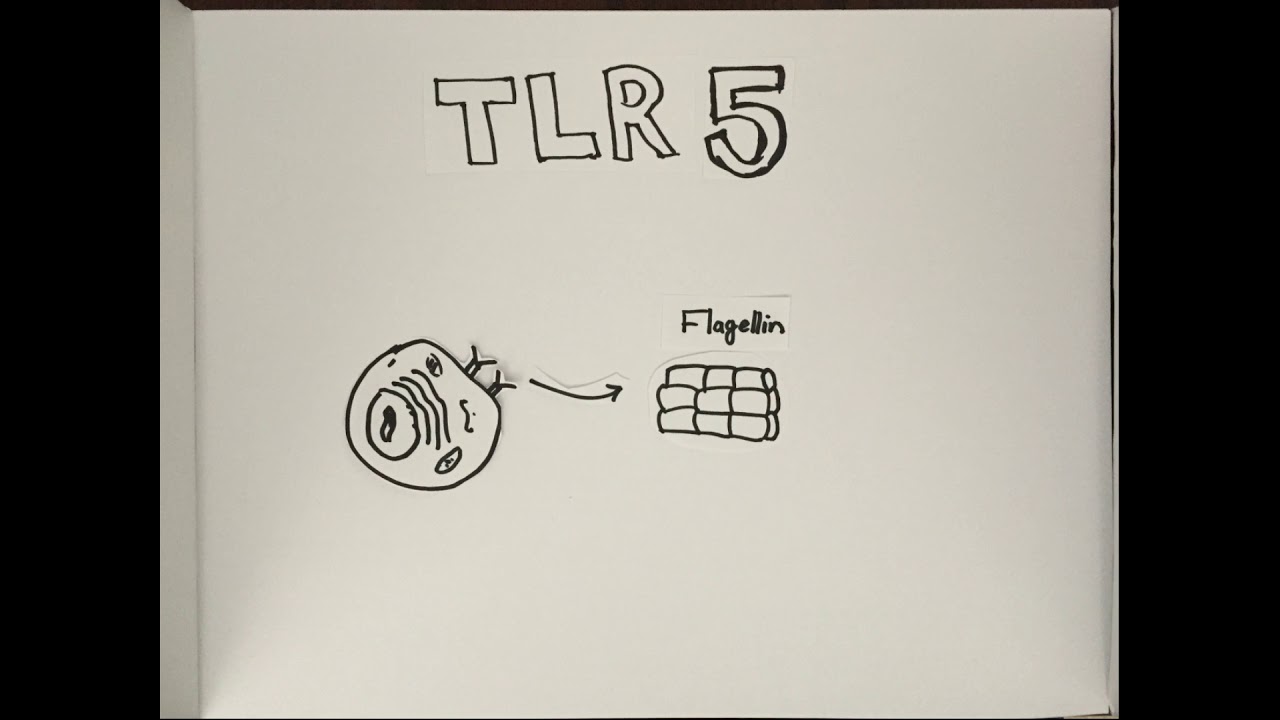
In the case of TLR-5, the cell’s receptor detects the binding of a specific part of a bacteria, namely flagellin. Flagellin is the protein subunit of a flagellum -- the tail used by almost all motile bacteria. So, TLR-5 binding flagellin indicates there is a bacterial pathogen present.
Going back to the neighborhood analogy … Suppose one of our watchmen is on the lookout for something indicative of a bear - lets say its bear poop.. So when he stumbles upon a pile of fresh bear poop, he becomes ‘alerted’ because he realizes this indicates bears are nearby!
Like our watchman, when the cell is alerted, it will respond appropriately. In the cell, this is accomplished by mobilizing chemical signals (or kinases) which in turn activate cytokines, adhesions and interleukins. These signals help in directing response teams (phagocytes and complement usually) to come in and do their job.
To make sense of these terms, think of the kinases as the police station on standby. When they receive the call (kinase activation) they will call animal control (or our macrophages/neutrophils/among other immune cells) to come in and do their job. They will also forward the warning to all the residents that there are bears nearby and to stay safe! (Interleukins)
There are a few outcomes of the arrival of the police and animal control. The first outcome is that they take the bear away in a truck. This is similar to the function of a phagocyte whose function is to engulf and process bacteria. Another outcome could be that the bear is shot. This is analogous to the complement formation MAC where holes are punched in the pathogens. This is also similar to how neutrophils release oxidizing agents that kill the pathogen. In the end, neutralization and elimination of the pathogen is the result.
So the neighborhood is safe again with the removal of any lingering bears. All of this started from a clue that a patroller found. This is the same mechanism of the TLR, where a PAMP binding to the TLR activates a chemical signaling pathway that results in the removal of the pathogen via response cells
Повторяем попытку...
Доступные форматы для скачивания:
Скачать видео
-
Информация по загрузке: