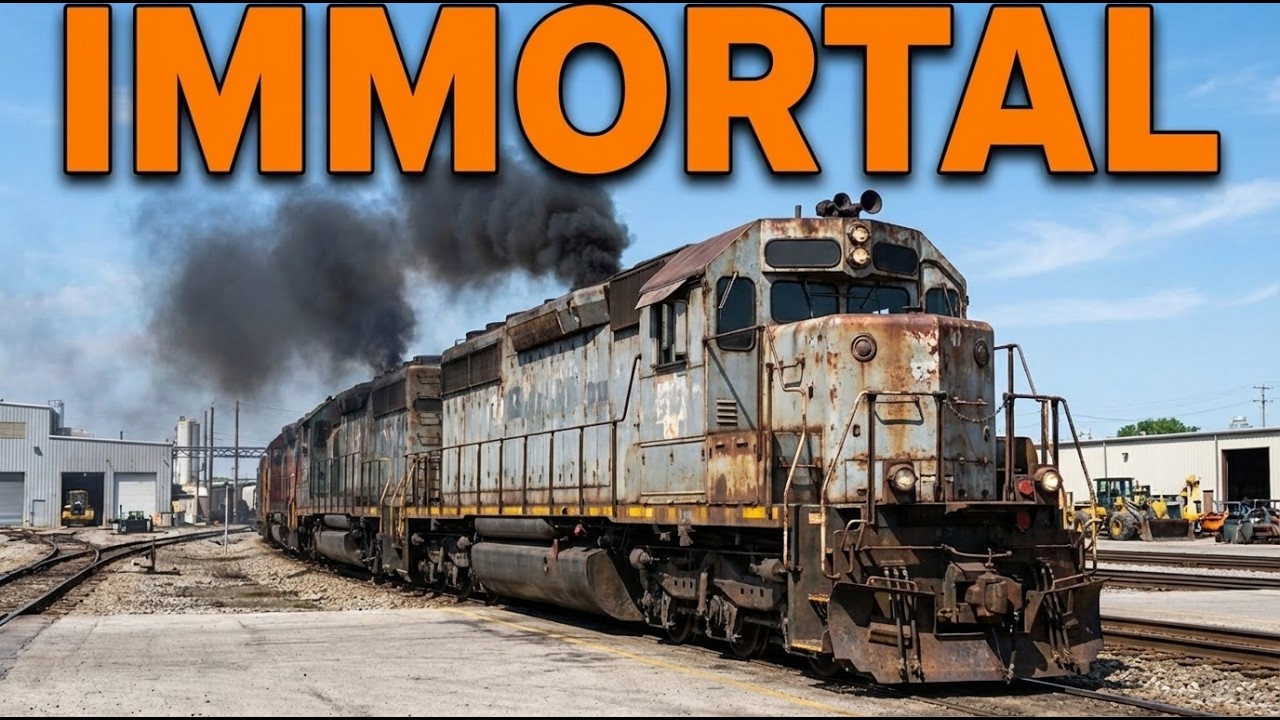
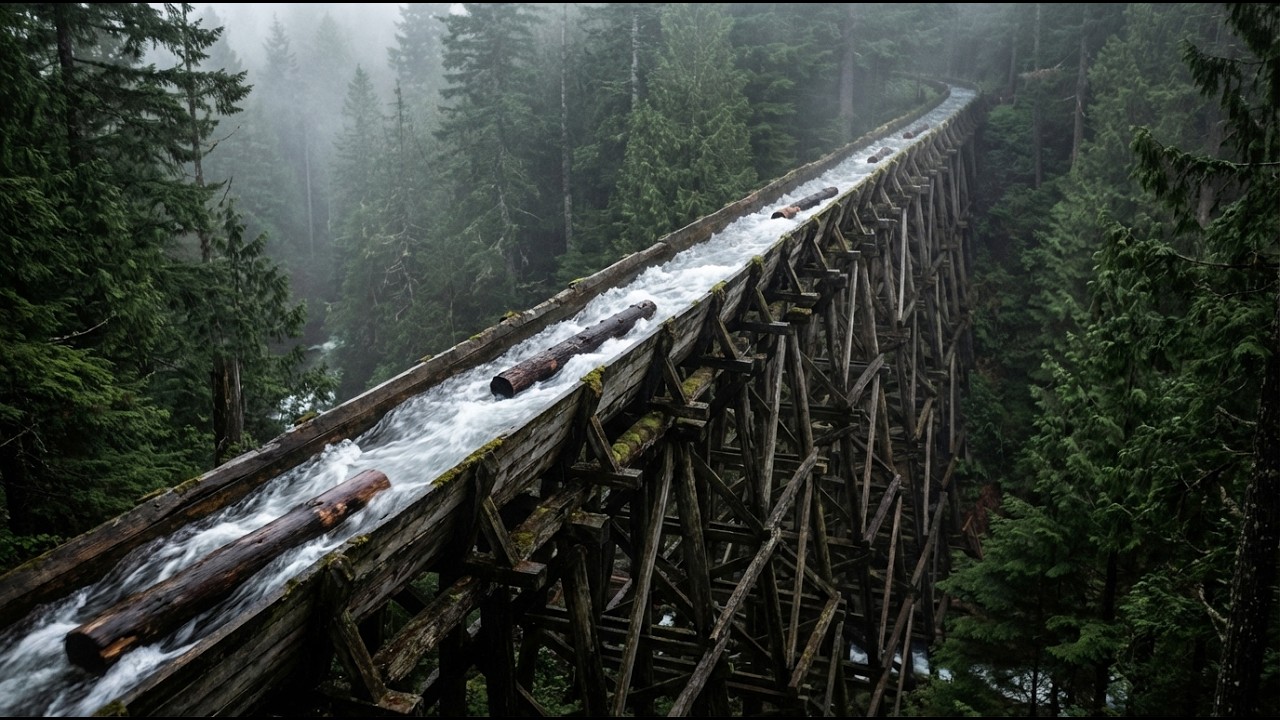
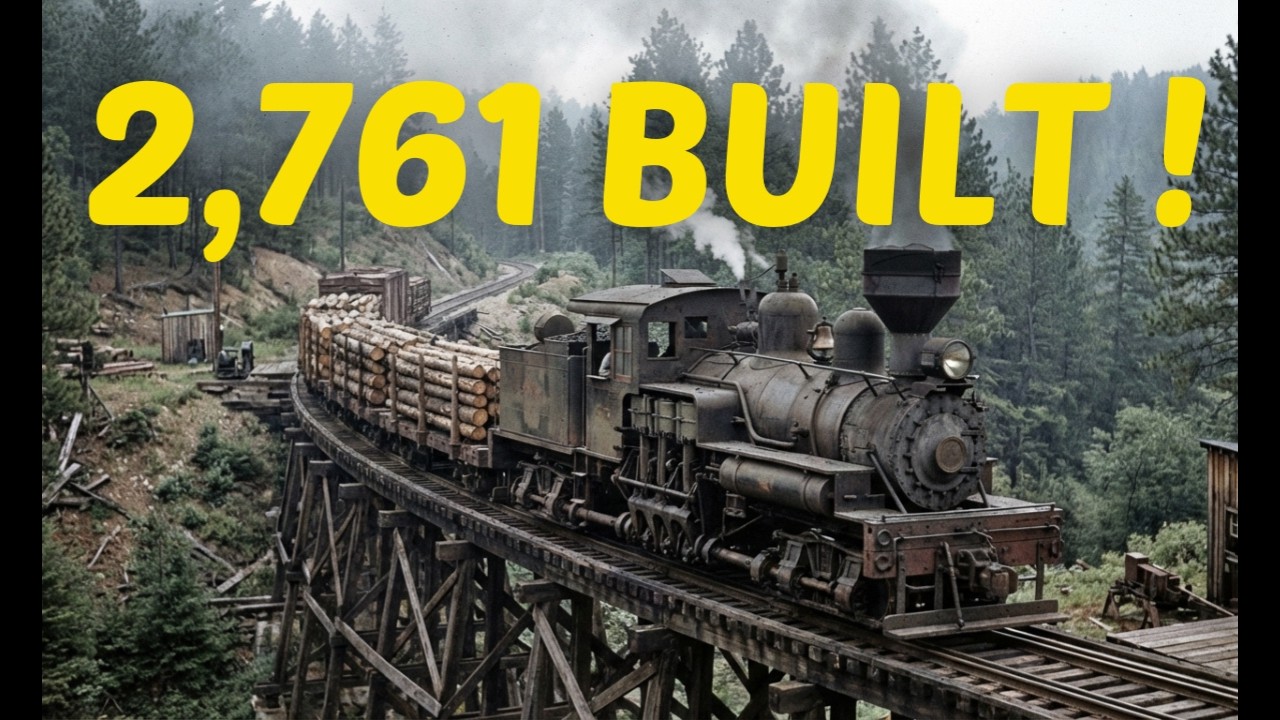
The 2,761 Geared Locomotives Engineers Called Ugly - Then They Climbed 45-Degree Grades
Автор: Rail Systems USA
Загружено: 2026-03-04
Просмотров: 14186
Описание:
When Ephraim Shay bolted gears to a locomotive in 1880, railroad engineers called him a fool. Gears belonged on mill machinery. Not locomotives. Everybody knew steam engines needed direct drive—pistons connected straight to wheels. That's how George Stephenson built the Rocket in 1829. That's how every serious railroad operated for fifty years.
Then Shay's clumsy, gear-driven contraption climbed a 45-degree logging track hauling 50 tons of timber while conventional locomotives sat useless at the bottom, unable to move past 4-degree grades. The locomotive that looked wrong, sounded wrong, and violated every principle of proper steam engineering became the most successful specialty locomotive in American history.
Over 2,761 Shays rolled out of Lima Locomotive Works between 1880 and 1945. Sixty-five years of continuous production. Compare that to most locomotive designs—five, ten, maybe twenty years before being superseded. Today, more than a century after Ephraim Shay died, his geared locomotives still run on tourist railroads, climbing grades that would destroy conventional engines in minutes.
The problem started in Michigan's forests. The 1870s and 1880s saw explosive timber demand. Railroads expanding across America needed railroad ties by the millions. Construction boomed in cities from Chicago to San Francisco. Fortunes waited in Michigan's vast hardwood forests for anyone who could get the timber out.
But Michigan's logging camps sat in terrain conventional railroads couldn't reach. Steep hillsides. Sharp curves following creek beds and ridge lines. Grades that pitched 8, 10, sometimes 15 percent up narrow mountain valleys. Standard railroad engineering specified maximum grades of 2 to 3 percent on main lines. Even short-line railroads rarely exceeded 4 percent. The physics were unforgiving. A locomotive's drivers had to grip the rail. On steep grades, weight shifted backward. Drivers lost traction. Wheels spun. The train stalled.
Logging companies tried everything. Cable inclines with stationary engines. Expensive, slow, limited capacity. Floating timber down rivers. Seasonal, unpredictable. Horses and oxen on skid roads. Labor-intensive, weather-dependent. None could move the tonnage railroads demanded at prices the market required.
Ephraim Shay wasn't a railroad engineer. He was a logger who owned timber operations in Michigan. In 1877, he operated a small sawmill near Haring, Michigan. He built a narrow-gauge tramway to bring logs from cutting sites to the mill. He tried conventional locomotives. They derailed on curves, slipped on grades, broke the light rail logging companies could afford.
Shay understood machinery. He'd built steam-powered equipment for his mill. He knew gears could multiply torque. Mills used geared systems to power saws and conveyors. Why not a locomotive? The idea seemed absurd to anyone trained in railroad engineering. Gears added complexity. More parts to maintain. More things to break. Conventional wisdom said direct drive was simpler, more reliable, more powerful.
Shay ignored conventional wisdom. In 1880, he built his first geared locomotive in his own shop. Instead of horizontal cylinders driving the wheels directly, Shay mounted vertical cylinders on the right side of the boiler. The pistons drove a crankshaft running lengthwise along the locomotive's frame. The crankshaft connected through bevel gears to a driveshaft running under the locomotive. The driveshaft connected through more gears to every wheel on the locomotive—not just the drivers, but every wheel.
The result looked ungainly. Cylinders stuck out the side like a growth. The entire right side was covered in exposed gears and driveshaft. It looked like someone had bolted a sawmill's power transmission system onto a boiler on wheels. Railroad men who saw it laughed. Some called it a steam donkey. Others just called it ugly.
Shay didn't care what it looked like. He cared whether it worked. The first tests proved the concept. On a 10-percent grade—steep enough to make standard locomotives spin their drivers and stall—the Shay pulled loaded log cars without slipping. The secret was mechanical advantage. The gears reduced speed but multiplied torque. At slow speeds, all power went into pulling, not maintaining momentum.
Word spread through Michigan's timber country. Other logging companies visited Shay's operation. They saw the geared locomotive working where conventional locomotives failed. Orders came in. In 1882, he licensed the design to Lima Machine Works in Lima, Ohio. Lima refined Shay's design, standardizing components and improving manufacturing.
Rail Systems USA - Exploring infrastructure, engineering, and decisions that shaped American railroads.
Повторяем попытку...
Доступные форматы для скачивания:
Скачать видео
-
Информация по загрузке: