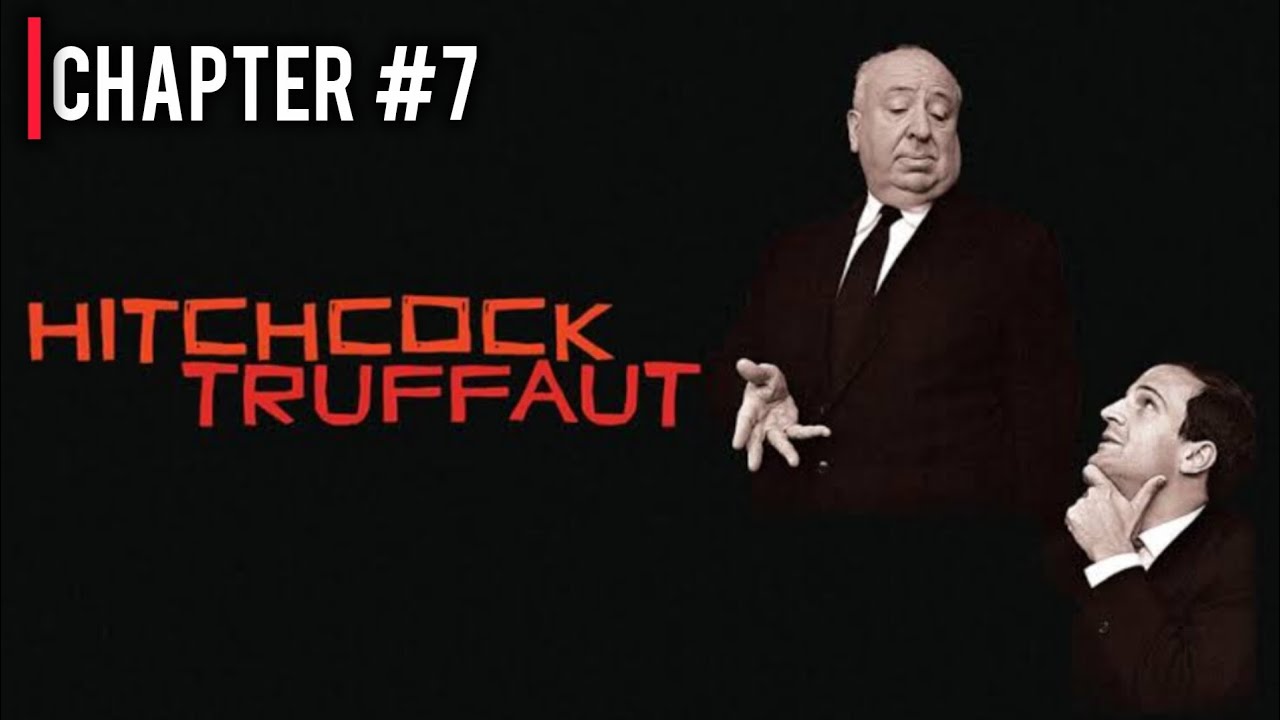
Hitchcock/Truffaut Chapter 7 | Hitchcock on Saboteur, Shadow of a Doubt, and Lifeboat
Автор: Let in Cinema
Загружено: 2025-12-16
Просмотров: 24
Описание:
🎬 Alfred Hitchcock (1942–1944): The Experimental War Years
How did Alfred Hitchcock navigate the constraints of WWII while redefining the visual language of cinema? In today’s video, we analyze the critical transition period between 1942 and 1944—a time when Hitchcock moved from sprawling cross-country "manhunts" to claustrophobic, psychological experiments.
We explore his frustrations with the studio system, his obsession with "logical" screenplays, and how he turned a simple newspaper ad into his most famous cameo.
🕒 Video Timestamps
00:00 – Executive Summary: Hitchcock’s Wartime Evolution
02:15 – The Manhunt Formula: Why Saboteur (1942) Frustrated Him
05:40 – The "Sleeve" Metaphor: Analyzing the Statue of Liberty Finale
08:20 – Shadow of a Doubt (1943): Hitchcock’s "Plausible" Masterpiece
12:10 – The Devil in Santa Rosa: Visual Symbolism & Uncle Charlie
15:45 – Lifeboat (1944): A Technical Gamble and Political Allegory
19:30 – The Controversial Nazi Villain & The "Reduco" Cameo
22:15 – The Lost Propaganda Shorts: Bon Voyage & Aventure Malgache
🔍 Key Highlights from the Briefing
1. The Flaws of Saboteur
Hitchcock viewed Saboteur as a "cluttered" precursor to North by Northwest. We discuss his three main production frustrations:
Casting Woes: Why he felt Robert Cummings and Priscilla Lane lacked the "dramatic weight" for a thriller.
The Hero-Villain Error: Hitchcock’s fascinating self-critique on why the hero, not the villain, should have been dangling from the Statue of Liberty.
2. The Perfection of Shadow of a Doubt
Often cited as one of his personal favorites, this film marks a peak in Hitchcock’s "psychological realism."
Collaboration with Thornton Wilder: A rare look at Hitchcock’s respect for literary structure.
Moral Ambiguity: The "Killer with an Ideal"—how Joseph Cotten’s Uncle Charlie challenged the hero/villain binary.
Visual Motifs: The "black smoke" of the train as a harbinger of evil.
3. Lifeboat: A Microcosm of War
Hitchcock restricted himself to a single setting to prove that 80% of film is the "close-up."
The Controversy: Why American critics were outraged by the "superior" German commander.
The Cameo: How Hitchcock used his own weight loss to solve the problem of appearing in a movie set entirely at sea.
🎥 Featured Films & Credits
Saboteur (1942) – Starring Robert Cummings, Priscilla Lane. Screenplay by Dorothy Parker.
Shadow of a Doubt (1943) – Starring Teresa Wright, Joseph Cotten. Screenplay by Thornton Wilder.
Lifeboat (1944) – Starring Tallulah Bankhead. Screenplay by Jo Swerling.
Bon Voyage & Aventure Malgache (1944) – Propaganda shorts for the British Ministry of Information.
#AlfredHitchcock #FilmAnalysis #Cinema #MovieReview #ShadowOfADoubt #Lifeboat #HitchcockTouch #FilmHistor #Cinephile
Повторяем попытку...
Доступные форматы для скачивания:
Скачать видео
-
Информация по загрузке: