Monteverdi: "Pur ti miro" [from L'incoronazione di Poppea] (Synthesized)
Автор: Carey R. Meltz
Загружено: 2025-02-14
Просмотров: 953
Описание:
For information on the visualization, please read the note at the end.
L'incoronazione di Poppea (SV 308, "The Coronation of Poppea") is an Italian opera by Claudio Monteverdi (baptised 1567 - 1643). It was his last opera, with a libretto by Giovanni Francesco Busenello (an Italian lawyer, librettist and poet of the period), and was first performed at the Teatro Santi Giovanni e Paolo in Venice during the 1643 carnival season. One of the first operas to use historical events and people, it describes how Poppaea, mistress of the Roman emperor Nero, is able to achieve her ambition and be crowned Empress.
The opera is in three acts, all set in ancient Rome in 65 A.D. The main characters are Nero, the Roman emperor; Poppea, his lover; Otho, Poppea’s fiancé; Drusilla, who is in love with Otho; and Octavia, Nero’s wife.
Poppea has caught the eye of the emperor Nerone (Nero), and he has fallen in love with her. He believes his wife, Ottavia, cannot have children, and he prefers the openness and affection that he gets from Poppea as opposed to the coldness he says he feels from his wife. He decides he wants to make Poppea his wife (and the empress of Rome).
To complicate things, Poppea had a lover before Nerone, Ottone (Otho), who has been away for several years, but who returns to find himself replaced by the emperor. Otho pleads with Poppea to remember their love, but her desire to become queen is far too strong. Ottone tries to forget her, even starting a relationship with Drusilla instead. However, when Ottavia gives Ottone the order to kill her husband’s lover, Ottone cannot go through with it. No matter how much it hurts, he still loves her, but is exiled by the emperor. Ottavia’s crime is also discovered, and she is forced to leave the kingdom.
Monteverdi’s opera begins with a clash between mythological deities. In the prologue which precedes the first act, the goddesses of Fortune and Virtue each argue that they hold the most power over humankind. Soon, their disagreement is interrupted by the god of Love, who claims the greatest power of all, with the bold proclamation, “I tell the virtues what to do, I govern the fortunes of men.”
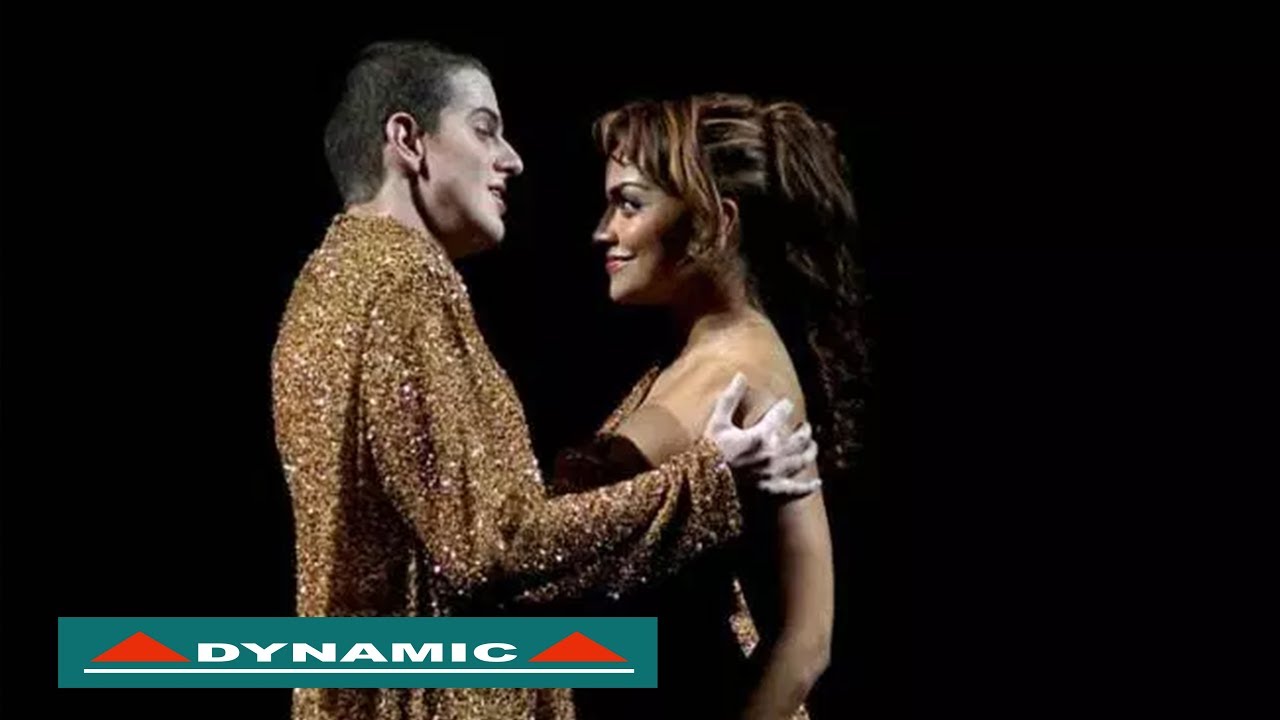
It’s a reality which is affirmed in the third act's rapturous final scene. Just before the final curtain falls, Nero and Poppea sing the love duet, "Pur ti miro, pur ti godo" (I gaze upon you, I desire you). When L’incoronazione di Poppea was premiered audiences would have known the horrors which lurked beyond this exquisite final scene. As the story goes, Nero, Emperor of Rome between 54 and 68 AD, went on to attack the pregnant Poppea in a fit of rage, leading to her death.
Regardless, "Pur ti miro" is one of opera’s most intimate and blissful expressions of romantic love. The challenges include weighting the stressed syllables to take advantage of beautifully aching dissonances that melt into sunny parallel thirds, and particularly in correctly placing the Italian diphthongs. The text is passionate and direct:
Text:
Pur ti miro, pur ti stringo,
Pur ti godo, pur t’annodo
Piu non peno, piu non moro,
O mia vita, O mio tesoro.
Io son tua, tuo son io.
Speme mia, l’idol mio,
Tu sei pur, si mio ben,
Si mio cor, mia vita, si.
Pur ti miro, pur ti stringo,
Pur ti godo, pur t’annodo
Piu non peno, piu non moro,
O mia vita, O mio tesoro.
Translation:
I adore you, I embrace you,
I desire you, I enchain you
No more grieving, no more sorrow,
O my dearest, O my beloved.
I am yours, O my love.
Tell me so, you are mine,
Mine alone, O my love.
Feel my heart, see my love, see.
I adore you, I embrace you,
I desire you, I enchain you
No more grieving, no more sorrow,
O my dearest, O my beloved.
The opera was revived in Naples in 1651, but was then neglected until the rediscovery of the score in 1888, after which it became the subject of scholarly attention in the late 19th and early 20th centuries. Since the 1960s, the opera has been performed and recorded many times.
As stated, "L’incoronazione di Poppea" was Monteverdi’s final opera. The composer died some six months after the premiere. Musicologists have speculated that, due to Monteverdi’s declining health, the opera was a collaborative effort which may have included Francesco Sacrati, Benedetto Ferrari, and Francesco Cavalli. The younger “apprentice” composers may have worked under Monteverdi’s direct supervision.
During the Baroque period, male roles were often performed by castrati, who sang in a range equivalent to a soprano or mezzo soprano. Countertenors often take the part in modern performances.
For those wanting to follow along, the MAMM (Music Animation Machine Midi) visualization displays the following instruments:
Poppea (Soprano) - Dark Orange
Nerone (Countertenor) - Light Orange
Lute - Greens/Blues
Cello - Yellow (presented an octave lower)
Harpsichord L.H. - Purple
Harpsichord R.H. - Pinks
The use of headphones will greatly enhance the listening experience.
Повторяем попытку...
![Monteverdi: "Pur ti miro" [from L'incoronazione di Poppea] (Synthesized)](https://imager.clipsaver.ru/1vSDHCU5sPA/max.jpg)
Доступные форматы для скачивания:
Скачать видео
-
Информация по загрузке: