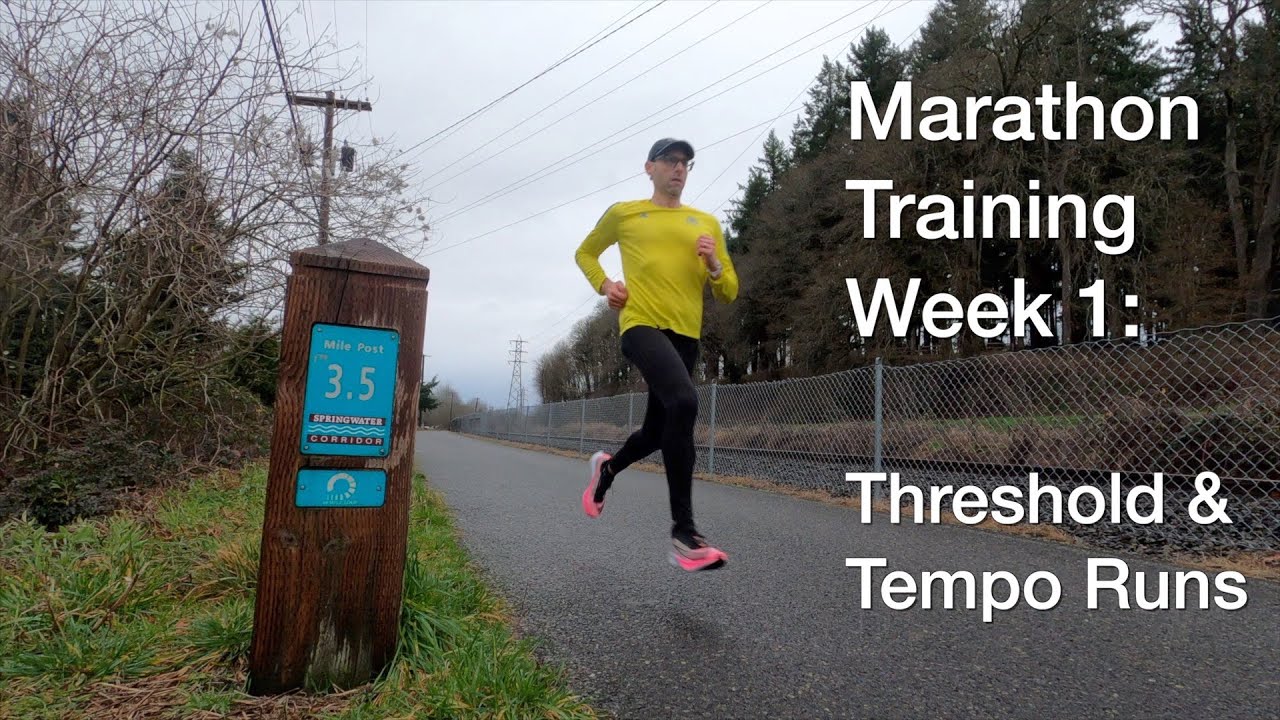
XC Training With Power
Автор: Running Otaku
Загружено: 2019-10-09
Просмотров: 545
Описание:
This video explains how I am using a running power meter to supplement my otherwise fairly standard XC training regimen.
******************
Connect With Me
******************
Strava: / strava
Instagram: @running.otaku
Blog: http://www.runningotaku.com
I’m part of a masters XC team and we have a number of 5K and 8K cross country races here in Portland.
Traditional XC Training
Even though I’m using a power meter, I’m still adhering to fairly traditional training- long runs to build aerobic base, tempo runs to improve lactate threshold, and shorter interval, Vo2Max workouts at 5K race pace. Furthermore, I’m training as much as possible surfaces and hills that mimic XC courses.
Using A Power Meter For Training
One difference in my training program is that I’m going to be doing all my workouts--even the VO2Max stuff-- on a wide variety of surfaces/hills instead of training on the track or flat roads. The power meter allows me to do this by giving my precise metrics so that I can run at the right EFFORT even if I’m going up or down a grass hill.
Now, I know that expert runners are really good at training by perceived effort. I can do this to a limited extent on flat, hard terrain, but my ability to perceive effort gets thrown out of wack on big hills or thick, heavy terrain.
Here’s how it works:
First I determined my paces on flat terrain with good traction for the following durations:
Moderate pace for long runs
1/2 Marathon pacefor tempo runs
10K race pace for threshold runs
8K race pace- for slightly faster than threshold (i.e. Fartleks)
5K race pace for Vo2Max
For each of those paces, I recorded my average wattage.
With that, I can simply prescribe my workouts in terms of wattage instead of pace, regardless of the terrain.
Here’s an example: 7 x 4 minutes @ threshold effort on a slightly muddy undulating trail. The paces were all over the place but my wattage per rep was quite consistent- I was getting threshold work done!
Now, I think you can replicate much of this with HR-- assuming you have a chest strap because I don’t think the watch-based Optical HR sensors aren't accurate (at least for me) at high paces when I'm swinging my arms hard. Thus VO2Max workouts are problematic for HR sensors
Also power meters provides other stats that can measure your mechanical running efficiency-- in other words, how much speed you can convert for a given amount of power and body weight. Its kind of like how two cars of equal horsepower and weight can have different top end speeds or 0-60 times.
The final benefit is that Running Stress Score (RSS) is a more interesting metric for measuring weekly intensity than is just looking at miles run. RSS takes a look at how hard you run each step, not just how long you’re running. See how different my 7x 4 minute workout (totaling 13 miles with warm up and cool down) RSS was (101) compared to a very easy 13 miles I ran pacing the half marathon the day before (71). Both runs were 13 miles total but the workout was 42% harder.
Music by Bensound
Повторяем попытку...

Доступные форматы для скачивания:
Скачать видео
-
Информация по загрузке: